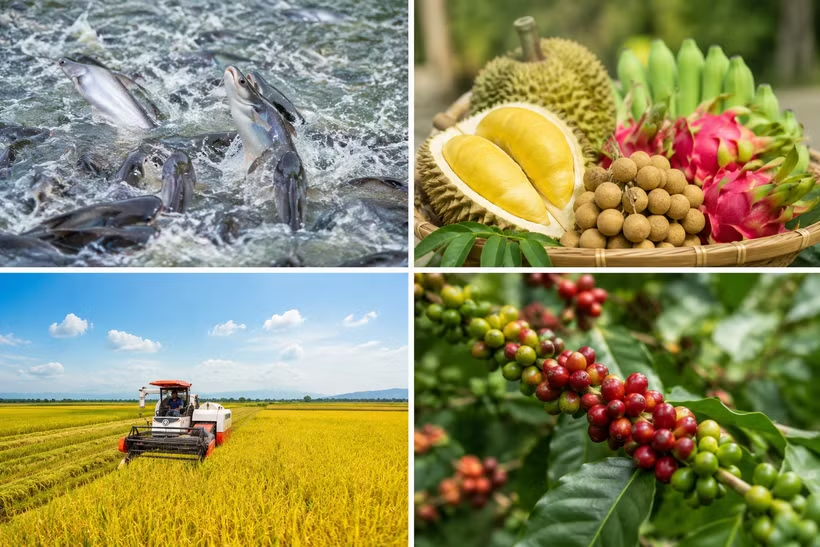
Hanoi (VNA) - As global markets impose increasingly stringent technical standards, innovation and digital transformation are becoming essential for Vietnamese agricultural exporters to stay competitive, optimise costs and achieve sustainable growth.
Entering the second quarter of 2026, Vietnam’s agricultural, forestry and fishery exports have continued to show positive recovery in turnover. Behind the growth figures, however, exporters are facing mounting pressure from increasingly sophisticated technical barriers in key import markets.
Vietnamese agricultural products are entering a critical transition phase as traditional advantages such as abundant resources, large-scale output and low-cost labour gradually diminish. In their place, technology adoption, data transparency and green standards are emerging as mandatory requirements for accessing international markets.
In major markets such as the EU, the US and Japan, regulations on traceability, quarantine procedures and environmental, social and governance (ESG) standards are becoming increasingly stringent. In particular, the EU’s Deforestation Regulation (EUDR) and Carbon Border Adjustment Mechanism (CBAM) are placing heavy pressure on key export sectors including coffee, rubber and wood products, requiring full supply chain transparency.
According to market reports, many Vietnamese firms continue to struggle due to slow adoption of management technologies, leading to bottlenecks in inspection procedures, rising storage costs and growing compliance expenses. The situation is forcing the agricultural sector to shift from quantity-driven production towards data-based quality management.
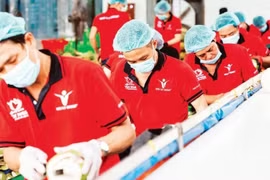
Facing growing international pressure, many Vietnamese agricultural exporters are accelerating restructuring efforts and viewing digital transformation and technological innovation as long-term strategies to improve competitiveness. The adoption of management software, electronic farming logs and automated processing systems has helped firms improve operational efficiency, reduce costs and better meet international standards.
Le Van Quyet, Director of Long Thanh Phat High-Tech Agricultural Cooperative, said digitalising traceability systems and integrating QR codes for each shipment helped the cooperative cut intermediary losses by 15%, while strengthening trust among European partners through real-time monitoring of production data.
At the same time, many enterprises are adopting circular economy models by reusing agricultural by-products as biomass energy, helping reduce electricity costs and lower carbon emissions during production.
Despite pioneering examples, innovation across the agricultural sector still faces major obstacles, particularly among small- and medium-sized enterprises due to limited financial capacity and weak technology absorption.
According to Nguyen Tien Huy, Director of the Vietnam Business Council for Sustainable Development (VBCSD) under the Vietnam Chamber of Commerce and Industry (VCCI), innovation is not simply about purchasing software or installing automated systems, but requires a broader transformation in management thinking.
He said Vietnam should develop specialised innovation centres and technology incubators for agriculture to help businesses access digital solutions at reasonable costs, while strengthening links between enterprises and research institutes to apply artificial intelligence (AI) and big data in weather forecasting, quality control and market analysis. Such measures will help the agricultural sector shift from passively responding to market changes to proactively shaping market demand.
The Government is currently focusing on building a national database on farming areas, simplifying administrative procedures and expanding early warning systems for trade risks to improve the competitiveness of agricultural exporters.
According to Nguyen Cam Trang, Deputy Director of the Agency of Foreign Trade under the Ministry of Industry and Trade, relevant agencies are coordinating efforts to digitalise the issuance of farming area codes, automate certificates of origin (C/O) procedures and upgrade early warning systems related to trade defence measures.
In the coming period, authorities will also work with credit institutions to roll out preferential green credit packages to support enterprises investing in technological upgrades and modernising deep-processing facilities in line with increasingly demanding international standards./.