Hanoi (VNA) - Vietnam and the Philippines are stepping up cooperation to ensure food security, with rice trade emerging as a key pillar of their partnership amid growing global uncertainties.
The year 2026 marks the 50th founding anniversary of diplomatic ties between the two ASEAN members. Entering a new phase of development, the two countries are seeking to further tap cooperation potential, particularly rice trade.
Since establishing diplomatic relations in 1976, Vietnam and the Philippines have built a strong and substantive partnership across sectors. Despite global uncertainties, bilateral ties have continued to deepen, underpinned by mutual respect, equality, and shared interests.
Economic cooperation has recorded steady progress, especially in agriculture. The bilateral trade turnover has maintained stable growth, with the two sides aiming to soon reach 10 billion USD.
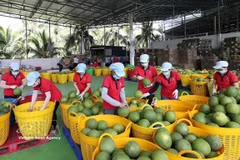
Agriculture and food security cooperation, particularly rice trade, stands out as a symbol of effective coordination in addressing shared challenges. Vietnam remains a reliable partner, ensuring stable rice supplies that help maintain market stability and food security in the Philippines.
According to the Vietnam Chamber of Commerce and Industry (VCCI), Vietnam exported 711,000 tonnes of rice to the Philippines in the first two months of 2026, up 30% year-on-year. The Philippines continues to be one of the largest importers of Vietnamese rice and agricultural products.
Recently, the Philippine Department of Agriculture signed an agreement with Vietnam to import an additional 1.5 million tonnes of rice through 2027.
Beyond trade significance, the agreement is expected to open broader opportunities for agricultural cooperation between the two nations. The Philippine Department of Agriculture noted that local consumers increasingly favour high-quality rice, particularly imports from Vietnam. Notably, Vietnam’s ST25 rice won first prize at the 15th World’s Best Rice Contest held in the Philippines.
In the current context, agricultural cooperation between the two countries has become even more critical. Geopolitical tensions in the Middle East have driven up gas prices - an essential input for fertiliser production - while disrupting international shipping routes. These factors are placing pressure on agricultural production costs and raising concerns over food price volatility, especially in Asia.
Against this backdrop, strengthening cooperation with Vietnam is seen as a proactive step by the Philippines to secure food supplies, as its domestic rice output is forecast to be affected by rising fertiliser costs and the impact of a strong El Niño.
To maximise cooperation potential, the two countries have been enhancing coordination between relevant government agencies and effectively implementing existing agreements on agriculture and rice trade. They are also promoting experience sharing and the application of advanced biotechnology to improve productivity and product quality.
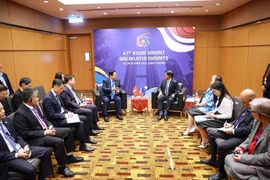
At a recent bilateral meeting on the sidelines of the 48th ASEAN Summit in the Philippines, Vietnamese Prime Minister Le Minh Hung and Philippine President Ferdinand Romualdez Marcos Jr agreed to prioritise key areas of cooperation under the Strategic Partnership between the two nations, including strengthening cooperation in ensuring food security.
The robust development of the strategic partnership coupled with extensive cooperation experience over the past five decades provide a solid foundation for further deepening relations between Vietnam and the Philippines. The two countries are determined to work together to address all challenges, including changes in the global food security system./.
VNA