ASEAN meeting highlights sustainable financing for nature-based solutions

The seminar featured presentations and experience-sharing from ASEAN member states on deploying nature-based solutions and establishing sustainable financing systems for forestry.

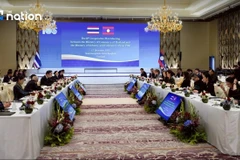
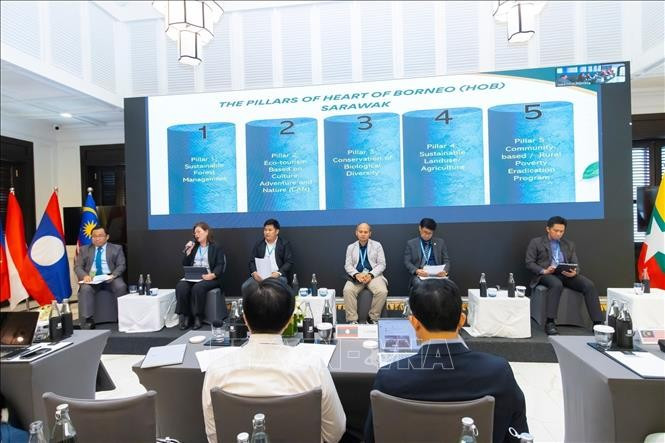
The 23rd international seminar of ASEAN senior officials on forestry (ASOF) in Luang Prabang on August 6, 2025. (Photo published by VNA)

Luang Prabang (VNA) – The 23rd international seminar of ASEAN senior officials on forestry (ASOF) took place in Luang Prabang, Laos, on August 6, addressing contemporary urgent challenges, particularly the scaling up of nature-based solutions (NbS) and ecosystem-based approaches (EbA) through sustainable financing mechanisms.

Speaking at the event, Dr. Somvang Phimmavong, Director of the Department of Forestry under the Lao Ministry of Agriculture and Forestry, highlighted the vital role of forests in Laos and across ASEAN.

Forests are not only critical ecosystems but also fundamental to economic and social wellbeing, he said, saying they contribute to carbon sequestration, climate change mitigation, and water regulation to ensure the sustainability of hydropower works which are crucial to energy security. Forests also support the livelihoods of 66% of the population, helping reduce poverty and promoting sustainable growth.

In recent years, Laos has promoted the implementation of the Payment for Forest Environmental Services (PfES) scheme, a promising tool to enhance conservation efforts and support local communities. In addition, the development of sustainable tourism has been identified as an effective means of generating income while preserving natural heritage, he went on.

Somvang candidly pointed out the severe threats facing ASEAN’s forests, including deforestation, ecosystem degradation, illegal logging, and changes in land use purposes, underscoring the urgent need for coordinated action.

In this context, discussions on sustainable financing for NbS and EbA were deemed critical. Participants emphasised the importance of sharing successful models such as PfES, carbon markets, and pooled funding mechanisms. They also called for stronger partnerships among governments, the private sector, and development organisations to attract investment, enhance knowledge, and build institutional capacity to ensure effective implementation.

The seminar featured presentations and experience-sharing from ASEAN member states on deploying NbS and establishing sustainable financing systems for forestry./.
VNA

See more

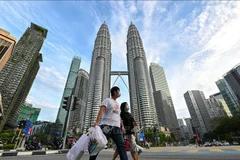
A view of Kuala Lumpur, the capital of Malaysia (Photo: AFP/VNA)

Malaysia's exports projected to moderate next year

Malaysia's exports in the first seven months of 2026 rose 29.2% year-on-year to 290 billion USD. Total trade increased by 24.7% to nearly 540 billion USD, while the trade surplus more than doubled to 42 billion USD.

At a supermarket in Bangkok, Thailand (Photo: Xinhua/VNA)

Thai economy under pressure from weak purchasing power

The Kasikorn Research Centre anticipates that the Thai economy will slow down in the second half of the year compared to the first half, with the "Thai Chuay Thai Plus" initiative offering some support to consumption in Q3 2026.

Malaysia tightens scrutiny of data centres

Malaysia tightens scrutiny of data centres

The Data Centre Task Force (DCTF) evaluates applications not only based on investment value but also on their requirements for energy, water and connectivity, as well as their potential contributions to Malaysia's long-term economic and digital goals.

Consumers select goods at a supermarket in Kuala Lumpur. (Photo: VNA)

Malaysian consumers tighten non-essential spending

CIMB Securities Sdn Bhd analyst Walter Aw Lik Hsin said shoppers are increasingly seeking cheaper products, convenience and value, while cutting back on clothing, lifestyle goods and other non-essentials.

Cambodian Chamber of Commerce president Kith Meng (right) meets with Malaysian ambassador to Cambodia Shaharuddin Onn on September 14. (Photo: phnompenhpost.com)

Cambodia, Malaysia pledge increased trade, investment cooperation

The General Department of Customs and Excise (GDCE) reported that Cambodia-Malaysia trade totaled 1.07 billion USD from January to August 2026, up 55.5% from the same period last year. Cambodia exported 151.76 million USD worth of goods to Malaysia, up 71.8%, while imports reached 921.19 million USD, an increase of 53.1%.

Smoke rises from a land fire in South Sumatra, Indonesia (Photo: Xinhua/VNA)

Indonesia: Thick smoke from forest fires disrupts flights

In a written statement on September 14, the Indonesian Ministry of Forestry said the latest monitoring data shows a significant decrease in so-called “high-confidence” hot spots, strongly suspected to be caused by forest fires, in Central Kalimantan and West Kalimantan.

Thailand upgrades GDP growth to 2.5% in 2026

Thailand upgrades GDP growth to 2.5% in 2026

Thailand's economic recovery will follow a K-shaped model, with growth concentrated in high-tech industries and large companies, according to the Centre for Economic and Business Forecasting at the University of the Thai Chamber of Commerce (UTCC).

A pepresentatives of UXO Lao programme briefs on mine survey and clearance in Luang Prabang province (Photo: VNA)

International delegates inspect UXO clearance efforts in Laos

To realise the Convention on Cluster Munitions’s goals, the Lao Government has incorporated all international targets into its “Safe Path Forward III 2021–2030” national strategy and stayed committed to its national Sustainable Development Goal 18 – “Lives Safe from UXO”.

The forum on ASEAN's role in the Indo-Pacific region and prospects for cooperation with Argentina takes place on September 10 (Photo: VNA)

ASEAN highlights its central role in Indo-Pacific

The Ambassador of Indonesia, the country holding the rotating chairmanship of ASEAN in Argentina, stressed that maintaining peace and stability, along with an open, transparent regional environment based on mutual respect, are fundamental conditions for a peaceful, inclusive, and prosperous Indo-Pacific.