Cambodia proposes life imprisonment for leaders of online scam networks

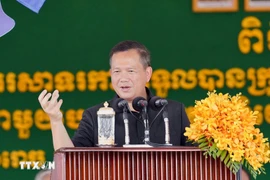
A 2024 report by the United States Institute of Peace estimated that illicit revenues from online scams in Cambodia could exceed 12.5 billion USD annually, equivalent to roughly half of the country’s GDP. Prime Minister Hun Manet has previously said the scam centres are seriously damaging Cambodia’s economy and international image, pledging to “clean up” the problem.

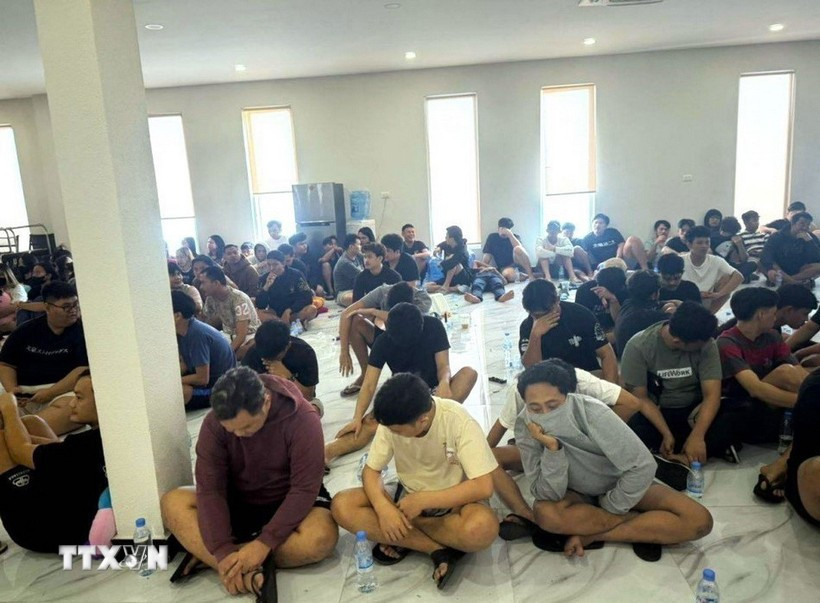
Authorities in Banteay Meanchey province raids a building used for online fraud in Poipet city, arresting more than 270 people and seizing a large amount of evidence in July (Photo: AKP/VNA)

Hanoi (VNA) – The Cambodian Government on March 13 approved a draft law introducing tougher penalties for operators of online scam networks, as the country faces growing challenges from transnational fraud groups and increasing scrutiny as a hotspot for cybercrime.

Under the draft legislation, ringleaders of online scam centres could face prison sentences of five to 10 years along with fines of up to 1 billion KHR (about 246,000 USD). If the operations involve violence, torture, unlawful detention, human trafficking or forced labour, the penalties could rise to 10–20 years in prison and fines of up to 2 billion KHR (around 502,000 USD).

In particularly serious cases, scam kingpins could face 15–30 years in prison or life imprisonment if their illegal activities result in one or more deaths.

According to the United Nations Office on Drugs and Crime (UNODC), this form of crime is expanding rapidly worldwide, generating estimated losses of around 64 billion USD each year.

A 2024 report by the United States Institute of Peace estimated that illicit revenues from online scams in Cambodia could exceed 12.5 billion USD annually, equivalent to roughly half of the country’s GDP. Prime Minister Hun Manet has previously said the scam centres are seriously damaging Cambodia’s economy and international image, pledging to “clean up” the problem.

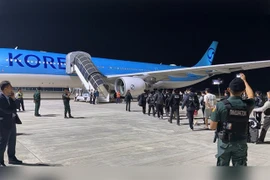
Cambodian authorities have continued to intensify their crackdown since launching a nationwide campaign in July last year. The effort has led to the closure of around 250 scam sites and 91 casinos, while roughly 10,000 foreign nationals have been deported. More than 200,000 people are believed to have left scam compounds and departed Cambodia as a result of the operation./.
VNA

See more

Deputy foreign ministers and senior officials of the 11 ASEAN member states and Russia pose for a group photo. (Photo: Ministry of Foreign Affairs)

ASEAN, Russia prepare for 35th anniversary summit

Deputy Minister Dang Hoang Giang reaffirmed that ASEAN views Russia as one of its key partners contributing to regional peace, stability and development. He proposed enhancing high-level strategic exchanges, strengthening cooperation in priority areas such as cybersecurity, including the effective implementation of the Hanoi Convention, and expanding collaboration within ASEAN-led mechanisms.

Thailand ready to share experience with Vietnam in green urban development: officials

Thailand ready to share experience with Vietnam in green urban development: officials

Thailand is ready to share its experience and successful models in green urban development with Vietnam, as the two countries share many similar characteristics, including rapid urbanisation, traffic congestion, flooding, canal networks and growing demand for greener public spaces, Thai officials have said in recent interviews with the Vietnam News Agency.

KKP cuts GDP forecast, warns Thailand faces recession risk. (Photo: The Nation)

Thailand’s economy may face recession risk

In its latest report, KKP Research noted that Thailand’s vulnerability goes beyond its reliance on imported crude oil and liquefied natural gas (LNG). Disruptions to shipping routes in the Middle East could also worsen shortages of fertilisers, affecting agricultural output, as well as petrochemical feedstocks, which would impact the plastics and textile industries.

Thai Prime Minister Anutin Charnvirakul speaks before Thai Parliament in Bangkok. (Photo: Xinhua/VNA)

Thailand plans tighter, targeted fiscal 2027 budget

Thailand's fiscal 2027 budget is projected at around 3.78 trillion THB (nearly 118 billion USD), a 2% increase from the previous year, with a focus on targeted spending and cutting unnecessary expenses, according to Prime Minister Anutin Charnvirakul.

Fitch downgrades Philippines’ outlook to ‘negative’. (Illustrative photo: Reuters)

Fitch downgrades Philippines’ outlook to ‘negative’

The Outlook revision reflects rising risks to the Philippines' strong medium-term growth prospects from recent disruptions to public investment, exacerbated in the near-term by elevated exposure to the ongoing global energy shock.

The Singapore Maritime Technology & Research Roadmap is aimed at advancing the sector’s efficiency and sustainability. (Photo: businesstimes.com.sg)

Singapore unveils new roadmap to boost innovation in maritime sector

The Singapore Maritime Technology & Research Roadmap is aimed at advancing the sector’s efficiency and sustainability. It highlights priorities – including digital technologies, decarbonisation and operational integration – to boost resilience, productivity and innovation in Singapore’s maritime ecosystem. It also addresses structural issues such as manpower, land and sea space limitations.

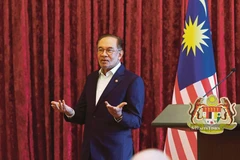
Malaysia considers establishing strategic petroleum reserve

Malaysia considers establishing strategic petroleum reserve

Malaysia, which was previously a net exporter, has now become a net importer due to declining domestic production and rising consumption, with demand estimated at around 800,000 barrels per day compared to production of about 400,000 barrels per day.

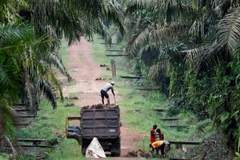
Indonesia to halt diesel imports from July

Indonesia to halt diesel imports from July

The move is part of the Indonesian Government’s efforts to strengthen national energy independence by utilising palm oil as an alternative fuel, said Agriculture Minister Andi Amran Sulaiman.

Malaysia’s growing microplastics crisis is largely self-inflicted, driven by domestic waste, weak recycling practices and everyday plastic use, said experts. (Photo: New Straits Times)

Malaysia seeks solutions to microplastic crisis

Microplastics originating from domestic waste and wastewater are increasingly entering the food chain, posing serious threats to seafood safety and the livelihoods of coastal communities.