Beijing (VNA) – Authorities of Dezhou city, a manufacturing powerhouse in China’s Shandong province, have put Vietnam squarely on their expansion radar, drawn by its improving investment climate and surging demand for industry, infrastructure and green transition.
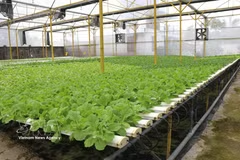
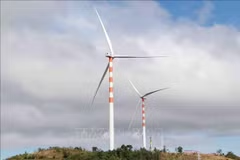
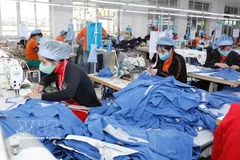
Modern agriculture, new energy, manufacturing, environment protection and urban development have been flagged as the most promising battlegrounds for future deals.
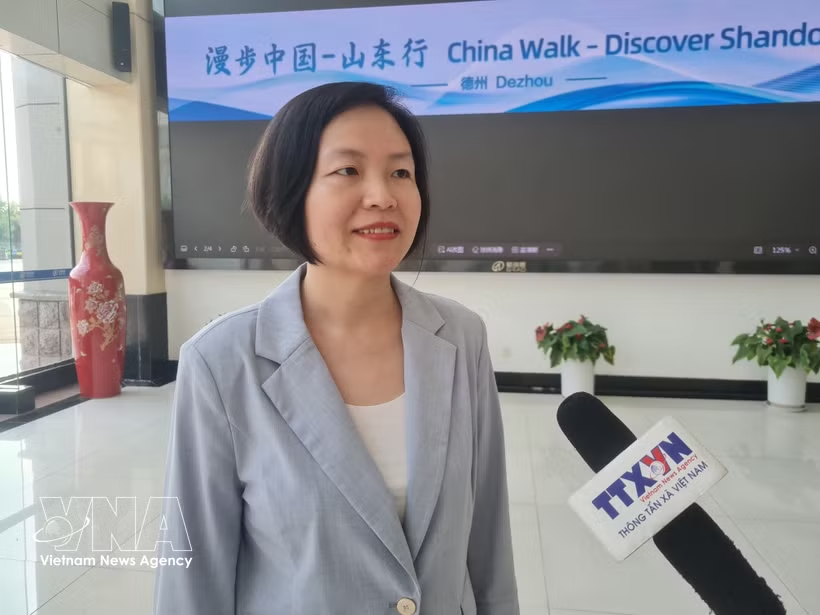
Tan Mingming, Deputy Director of the Foreign Affairs Office of the Dezhou Municipal People’s Government, told Vietnam News Agency reporters that the city has spent years deliberately tightening its links with the Association of Southeast Asian Nations (ASEAN), with Vietnam seen as a key partner.
She said Vietnam delivers a business-friendly environment, high operational efficiency, social stability and a massive market that still has plenty of room to run.
Beyond traditional sectors like modern agriculture, wooden furniture, food processing and seasonings, Tan said the real upside is in emerging industries, including new energy, electric vehicles, sports equipment, elevators and green manufacturing, where both sides have wide-open lanes for collaboration.
She pushed for a major ramp-up in business matchmaking, trade promotion conferences, exhibitions and economic forums so companies on both sides can lock in new partners. Beyond economic ties, deeper people-to-people exchanges, especially among the youth, will deepen mutual understanding and the foundation for long-term collaboration, she added.
Dezhou companies are already scouting for more opportunities as Vietnam races ahead with industrialisation and energy transition. Hu Shujun, General Manager of the International Trade & Engineering Company at Shandong-based Gerui De Group, said her firm has been shipping central air-conditioning systems, ventilation devices, cooling towers and environmental treatment equipment to Vietnam for years.
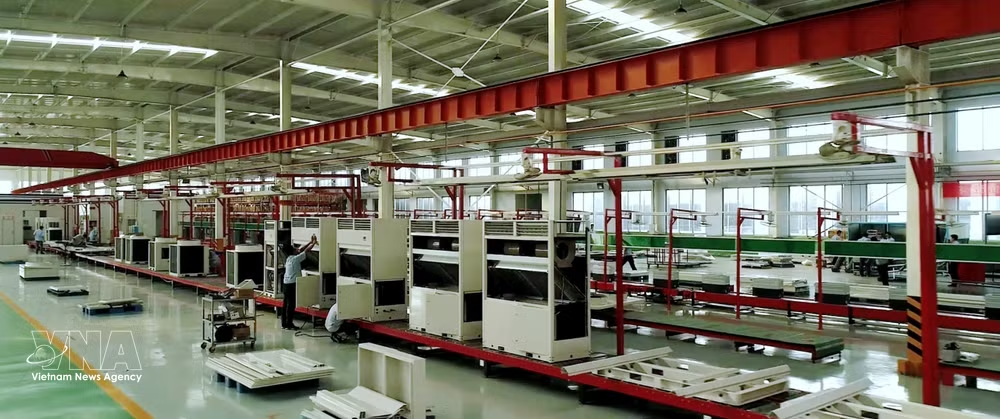
Hu pointed to Vietnam’s breakneck urbanisation and industrialisation as engines that are driving heavy demand for energy-saving tech, environmental protection solutions and infrastructure.
She identified green construction, industrial environmental treatment, renewable energy, advanced materials and smart operations management as sectors with ample cooperation potential.
Both sides, Hu said, should be pushing harder to smooth out trade platforms, make it easier for firms to explore each other’s markets, widen technology cooperation and fast-track joint ventures and investment projects inside Vietnam.
According to her, stronger business cooperation won’t just extend market access but also tighten the links in regional supply chains, lining up neatly with ASEAN’s push for green and sustainable development./.