Con Dao National Park enters IUCN’s Green List

Con Dao National Park in Ho Chi Minh City has been awarded the coveted IUCN Green List designation, an international accolade reserved for protected areas demonstrating exceptional management and sustainable conservation practices.

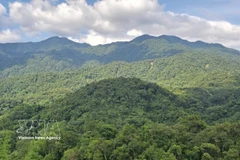
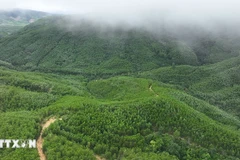
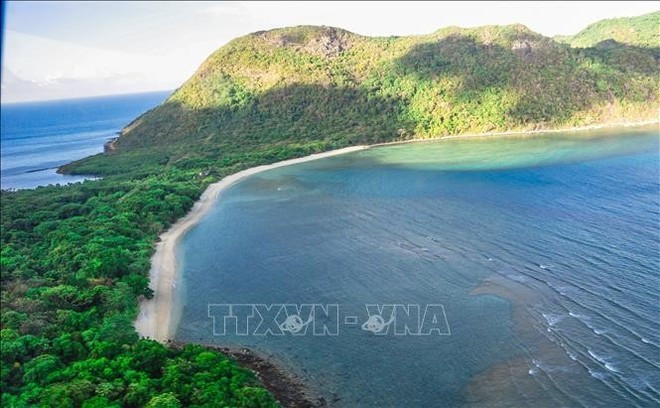
A corner of Con Dao National Park (Photo: VNA)

Hanoi (VNA) - Con Dao National Park in Ho Chi Minh City has been awarded the coveted IUCN Green List designation, an international accolade reserved for protected areas demonstrating exceptional management and sustainable conservation practices.

Pham Hong Luong, Deputy Director of the Vietnam Forestry Administration under the Ministry of Agriculture and Environment made the announcement on September 24.

The recognition makes Con Dao Vietnam's second national park and third protected area overall to achieve this distinction, following Van Long Wetland Nature Reserve in northern Ninh Binh province and Cat Tien National Park in southern Dong Nai province.

The IUCN Green List certification is valid for five years, during which a mid-term review will be conducted to validate continued alignment with the standards. The IUCN also advises Con Dao to continue updating the progress of meeting the requirements to maintain its status until 2030.

According to Luong, the inclusion of the park in the IUCN Green List until 2030 is an important milestone. This is not only a recognition but also a testament to the efforts to fulfil commitments to biodiversity conservation and the natural values in Vietnam as well as in Con Dao National Park.

At the same time, this also represents a responsibility for Con Dao to continue maintaining and enhancing the achievements that have been made.

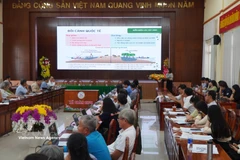
To be listed, Con Dao National Park underwent a rigorous multi-stage assessment involving independent experts, conservation organisations, and local community representatives. The park’s management was evaluated on criteria including governance, design, planning, and the effectiveness of conservation outcomes.
con-dao.jpg
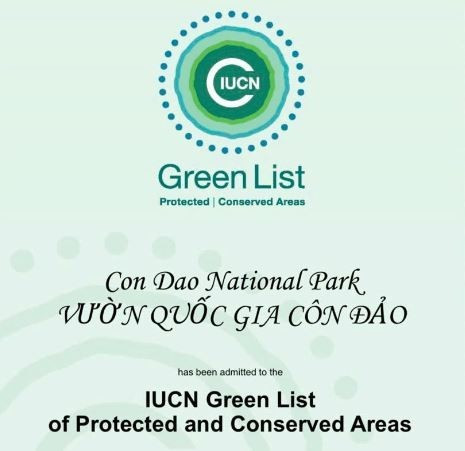
Con Dao National Park of Ho Chi Minh City has been awarded the coveted IUCN Green List designation.

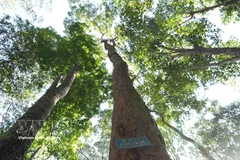
The park covers an area of over 15,000 hectares of land and nearly 14,000 hectares of marine area, regarded as one of the most important marine and island conservation areas in Vietnam. It is home to a diverse ecosystem of special-use forests, coral reefs, seagrass beds, and mangrove forests, playing a key role in ecological balance and climate change adaptation.

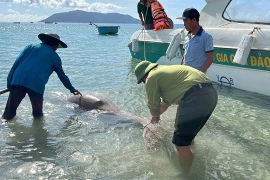
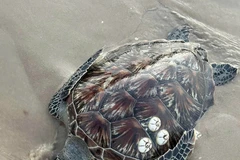
Con Dao is famous for being the largest sea turtle nesting site in the country, welcoming thousands of mother turtles each year to lay their eggs. The park has implemented a sea turtle conservation programme for decades, resulting in millions of hatchlings being incubated and released into the ocean, contributing to the preservation of rare sea turtle populations in the Southeast Asian seas.

The park’s biodiversity is remarkable, with 1,077 plant species, 155 forest animal species, and 1,725 marine species, including 360 coral species, 205 reef fish, 187 mollusks, and 116 crustaceans. Among these, 76 forest and 72 marine species are classified as endangered.

In addition to conservation efforts, the management team also focuses on developing eco-tourism linked to environmental education.

Experiential programmes such as watching turtles lay eggs, visiting mangrove forests, snorkeling and exploring marine ecosystems are organised under strict control processes.

These initiatives not only create livelihoods for local people but also raise tourists' awareness of nature conservation. These models have contributed to affirming Con Dao’s status as a unique destination, harmonising economic development with resource conservation.

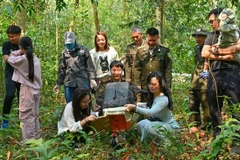
Con Dao National Park team has continuously expanded international cooperation, working with various conservation organisations, research agencies, and development partners to enhance management capacity, apply advanced monitoring technologies, and share experiences.

Technical and financial support projects from international organisations not only help improve conservation effectiveness but also contribute to connecting the local community in efforts to protect forests, seas, and wildlife./.
VNA

See more

Residents of Tuyen Quang province take part in the One Billion Trees Programme. (Photo: VNA)

Tree-planting programme exceeds one-billion-tree goal

The total comprises 573.9 million scattered trees and 865.2 million trees grown in concentrated plantations, equivalent to 429,125 hectares of forest. Provinces posting the strongest results include Phu Tho with 177.9 million trees, Lao Cai with 108.8 million, and An Giang with 98.5 million.

Construction activity is one of the causes of air pollution in Hanoi. (Photo: VNA)

Hanoi takes urgent measures to curb air pollution

The city requires the enhanced application of advanced technologies and remote monitoring systems, including satellite remote sensing, drones, and AI-integrated traffic cameras, to monitor, detect, and strictly address the illegal burning of garbage, straw, and agricultural by-products.

The World Bank delegation holds working session with Can Tho city People's Committee and relevant units (Photo: VNA)

World Bank delegation surveys Can Tho urban resilience project

The project is jointly financed by the WB with up to 250 million USD and a 10-million-USD non-refundable grant from the Swiss State Secretariat for Economic Affairs (SECO), along with counterpart funding from the Vietnamese Government. Its goal is to build a climate-resilient and sustainable city that can drive socio-economic growth across the Mekong Delta, mitigate flood vulnerability in central Can Tho, and improve inter- and intra-regional transport connectivity.

The direction of Storm Koto as of 04:00 on November 27. (Photo: VNA)

Lam Dong province’s coastal localities brace for Storm Koto

Local authorities have activated round-the-clock duty operations, continuously updated storm warnings and flood information and intensified inspections of riverside and seaside areas, low-lying zones, and locations at high risk of landslides and deep flooding.

Border guard officers at Ky Ha Port Border Gate are assisting residents in securing their boats. (Photo: VNA)

VPA General Staff directs urgent response to Storm Koto

Military Regions 4, 5 and 7 were tasked with directing provincial military commands to advise local authorities, review response plans, and coordinate with relevant departments and sectors to identify disaster-prone areas, including locations at risk of flash floods, landslides, major dykes, embankments and reservoirs, and flood-prone zones, particularly those heavily affected by recent rains.

In 2024–2025, the project has implement seven pilot models in Can Tho city and the provinces of Vinh Long, Dong Thap, and An Giang. (Photo: VNA)

One-million-hectare high-quality, low-emission rice project changes mindset of producers

A project on sustainable development of one million hectares of high-quality, low-emission rice cultivation associated with green growth in the Mekong Delta by 2030 has so far helped shift the awareness and mindset of rice producers toward greater responsibility and toward adopting production trends aligned with global orientations for “green development.”

Two rangers check a camera trap in jungle of the Saola Nature Reserve in Hue city. (Photo: VNA)

Vietnam’s forests show signs of wildlife recovery

Vietnam’s forests are among the world’s most biodiverse, yet wildlife remains threatened by habitat loss and snaring. A new WWF-Vietnam survey, using 350,000 camera-trap days across 21 forests, reveals urgent conservation needs and signs of recovery.

A thin layer of frost covered the wooden deck atop Fansipan, where tourists often gather to admire the clouds. (Photo published by VNA)

Fansipan sees first frost of winter season

Visitors and local residents reported that the frost formed shortly before dawn, leaving a light white coating on pathways, stone steps and wooden platforms used for cloud viewing. The cold spell influencing Lao Cai has continued to strengthen and then stabilise, and forecasts suggest temperatures on Fansipan will remain low from late night to early morning on November 22, meaning frost may reoccur.