HCM City (VNS/VNA) - The Dugong (sea cow) population in Ho chi Minh City’s Con Dao island, the only known habitat of the species in Vietnam, is facing an alarming decline and could disappear entirely without timely intervention, according to conservation experts and local authorities.
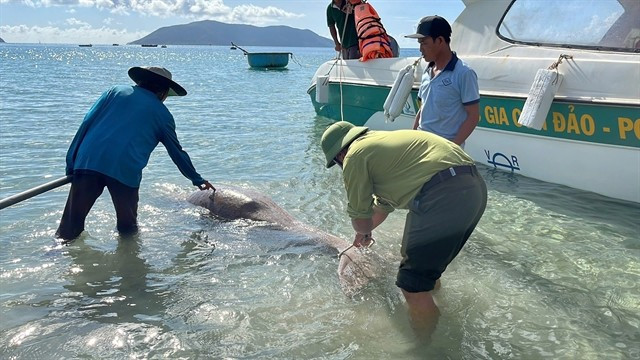
The Con Dao National Park Management Board has reported a series of Dugong deaths since the beginning of 2025 and has sought technical support from the city’s Department of Science and Technology to identify the causes and recommend urgent protection measures.
Known in folklore as the “mermaid of the sea,” the Dugong is a gentle marine mammal that depends almost entirely on seagrass for food.
Its presence is not only an indicator of the health of marine ecosystems but also part of the country’s natural heritage.
Once found in several coastal areas of the country, Dugongs are now only recorded in the waters surrounding Con Dao, making the archipelago their last refuge in the country.
Protecting habitats, regulating human activities
The Dugong is classified as “Vulnerable” on the 2023 IUCN Red List and is listed among species prioritised for protection under Government Decree No. 64/2019.
Globally, its populations have been declining rapidly due to habitat degradation, pollution, boat collisions, entanglement in fishing gear and, in some cases, illegal hunting.
Con Dao currently hosts only a small Dugong population, concentrated mainly in shallow waters around Ben Dam, Con Son Bay, and Bay Canh islet.
A survey by the Institute of Marine Environment and Resources in 2023 estimated just 12 Dugongs remained.
However, since early this year, four Dugongs have been found dead, with the causes still under investigation.
Experts warn that the survival of Dugongs is closely linked to the health of seagrass beds, their sole food source.
Con Dao once had over 329 hectares of seagrass across 12 locations.
By 2022, however, seagrass was recorded in only two areas, including Con Son Bay and Bay Canh islet.
This severe loss of habitat is largely attributed to pollution, unregulated tourism activities, and destructive fishing practices.
Director of Con Dao National Park Nguyen Khac Pho said efforts to protect and restore seagrass meadows are at the heart of Dugong conservation.
“Improving water quality by strictly managing plastic waste, sewage, and other pollutants is essential for seagrass recovery,” he said.
Conservationists stress the importance of regulating human activities in Dugong habitats.
Establishing strictly protected zones, restricting bottom trawling and gill nets, and imposing speed limits on tourist boats are among the urgent measures being recommended.
Support for fishermen to adopt environmentally friendly gear and training on how to respond if Dugongs are accidentally caught could reduce fatalities.
Developing alternative livelihoods, such as responsible eco-tourism, is also seen as a way to engage local communities in conservation.
Nguyen Van Quan, director of the Institute of Marine Environment and Resources, said management and conservation efforts have not achieved significant breakthroughs because communities have not been fully involved.
“Biodiversity management must engage the people who live closest to these ecosystems,” he said.
He proposed a community-based conservation model for Con Dao, along with the establishment of a Dugong rescue centre on the island.
“With the rising number of boats for tourism and fishing, accidents and bycatch are inevitable.”
A dedicated centre could treat and rehabilitate Dugongs and other marine animals such as turtles, dolphins and whales, while also serving as a hub for research and education, he said.
Raising awareness, international cooperation
Experts agree that protecting Dugongs is not only the responsibility of scientists and authorities but also requires broader public participation.
Environmental education campaigns targeting schools and local communities in Con Dao could foster greater awareness of the Dugong’s ecological importance, particularly among young people.
International cooperation is also regarded as crucial for long-term success.
Vietnam could learn from countries such as Australia, Thailand and the Philippines, which have implemented effective Dugong conservation strategies.
Partnerships with global organisations, including the IUCN and WWF, would provide both expertise and financial resources.
Modern technologies, such as satellite tagging and drone monitoring, could help track Dugong movements and better understand their behaviour, providing data to design more precise conservation strategies.
Despite the challenges, conservationists remain cautiously hopeful.
“The Dugong is more than just a species. It symbolises the health of the marine environment and the responsibility we share in protecting it,” Quan said.
The fate of the country’s last Dugong population is now hanging in the balance.
Saving Dugongs will require coordinated action: restoring seagrass habitats, regulating human activity, involving communities, and strengthening international collaboration.
For Con Dao, the race is on to ensure that its Dugongs not only survive but can thrive, safeguarding a priceless part of the nation’s natural heritage for future generations./.

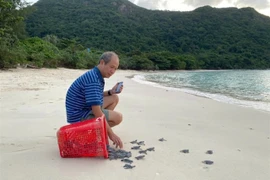
Con Dao island limits turtle tours to protect nature’s gems
This activity is one of the iconic ecotourism products of the southern archipelago, which was once home to an infamous war prison in the 20th century.