Con Dao turns carbon into assets, shapes up green economic model

With the harmonious combination of conservation, eco-tourism, and community participation, Con Dao could turn its potential into a strong driver for sustainable development. This not only protects its green lungs and blue carbon sinks but also reinforces Vietnam’s efforts in the fight against climate change.

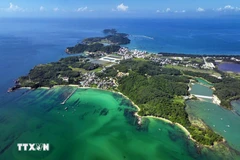
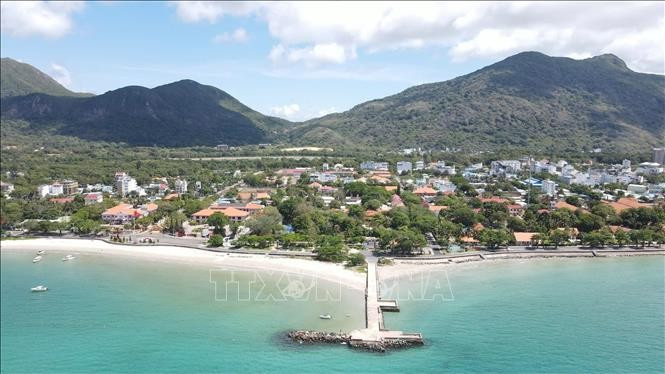
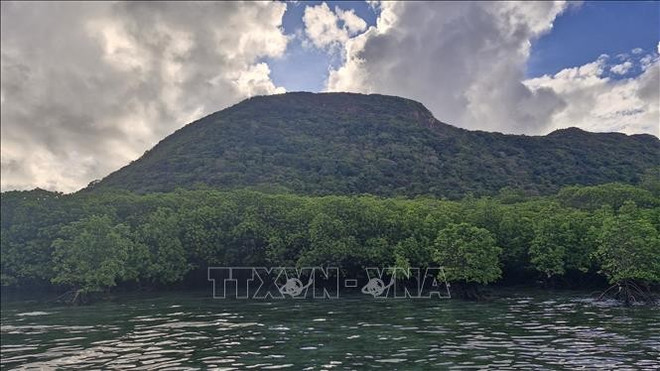
Con Dao special zone has emerged as a potential hub for sustainable development. (Photo: VNA)

HCM City (VNA) – Ho Chi Minh City’s 75.79-square-kilometre Con Dao special zone has emerged as a potential hub for sustainable development with its rich forest and marine ecosystems. Capitalising on its ecological wealth, Con Dao plans to develop a carbon trading model as a breakthrough step to deliver on the country’s commitments to greenhouse gas reduction.

Carbon reservoirs in the forest, sea

Con Dao's extraordinary natural wealth lies in its dual carbon storage systems. The zone's 6,462 hectares of forests and forestry land, with natural forests comprising 92.88% of the total area, hold nearly 430,000 tonnes of stored carbon. The marine component adds another 318.02 tonnes of oceanic carbon storage, plus approximately 15 tonnes from seagrass meadows.

Dr Pham Van Duan, Deputy Director of the Institute for Forest Ecology and Environment, emphasises the importance of comprehensive management of natural carbon reservoirs. He suggests utilising advanced technologies, such as drone surveillance and satellite monitoring systems, to identify violations and enhance management effectiveness.

Due attention should be paid to restoration projects like mangrove planting and coral reef rehabilitation, as they not only help increase the surface of the carbon reservoir but also contribute to coastal protection against erosion, as well as the creation of habitats for marine species. Con Dao should sharpen its focus on seagrass restoration, one of the planet’s most efficient carbon reservoirs.

In the long term, experts held that the special zone needs to study and apply a green financial model, calling for investment from international organisations and enterprises. Revenues from carbon credits could be reinvested in conservation, creating economic incentives for local communities. With its vast forests, Con Dao is well-placed to join voluntary carbon credit mechanisms.

Although marine carbon contributes a smaller share, it could be valuable to the "green carbon" portfolio if monitoring, reporting, and verification adhere to international standards and a rational legal framework.
con-dao-10925-11.jpg
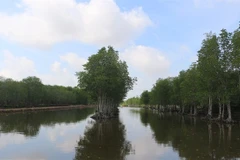
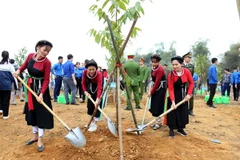
The planting of new mangrove forest and coral reefs not only expands the carbon reservoir but also helps protect coastlines, prevent erosion, and create habitats for aquatic species. (Photo: VNA)

Development potential

Deputy Director of the Ministry of Agriculture and Environment’s Department of Forestry and Forest Protection, Pham Hong Luong, said that Vietnam has made initial strides in carbon conversion. Carbon reserves and emission reduction potential in Con Dao are crucial for establishing a circular economy that promotes sustainable development.

Nguyen Khac Pho, Director of the Management Board of Con Dao National Park, emphasised that environmental conservation combined with tourism development can create a circular economic model that brings real benefits to residents. He stated that it is essential to develop eco-tourism options that focus on small-scale, carefully regulated activities. These activities could include forest exploration tours, coral diving expeditions, and programmes for observing sea turtle nesting.

The carbon market is a new model, requiring Con Dao to meet international standards, said Deputy Director of the municipal Department of Science and Technology Luong Thi Le Hang. She underscored the significance of evaluating emission potential, which will provide a basis to build the model, helping to formalise the city’s green, sustainable and smart development.

With the harmonious combination of conservation, eco-tourism, and community participation, Con Dao could turn its potential into a strong driver for sustainable development. This not only protects its green lungs and blue carbon sinks but also reinforces Vietnam’s efforts in the fight against climate change, she added./.


VNA

See more

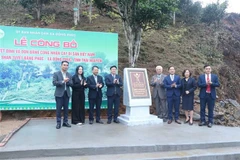
Official heritage plaque i sinstalled on the 12 recognised Shan Tuyet tea trees in Dong Phuc commune. (Photo: VNA)

Thai Nguyen: 12 ancient Shan Tuyet tea trees win national heritage status

The recognition honours the biological, cultural and historical values of these centuries-old Shan Tuyet tea trees – natural treasures deeply woven into the livelihoods, traditions and identity of local ethnic communities. The title affirms the community’s commitment to preserving and promoting the value of this iconic local tea variety.

Sarus cranes at Tram Chim National Park (Photo: VNA)

Return of sarus cranes: Hope takes wing in Dong Thap wetland

Beneath the wide Mekong Delta sky, Tram Chim National Park is racing against time, pouring heart and science into a decade-long (2022–2032) plan to rescue the Eastern sarus crane – an elegant, scarlet-headed bird listed as endangered on the International Union for the Conservation of Nature (IUCN) Red List and a living emblem of both the park and all of Dong Thap province

French Ambassador Olivier Brochet speaks at the press conference in Hanoi on December 11 to mark the 10th anniversary of the Paris Agreement on climate change and highlighting the COP30 outcomes. (Photo: VNA)

International community ready to support Vietnam in energy transition, climate response

In a video message to the press conference, UN Resident Coordinator in Vietnam Pauline Tamesis said the UN is ready to support Vietnam in building a pipeline of projects capable of absorbing financing mobilised under the Political Declaration on establishing the Just Energy Transition Partnership (JETP), as well as from global climate finance sources, including the Green Climate Fund and the Loss and Damage Fund.

Forest rangers in Son La province apply technological devices and software to forest management, monitoring, and protection. (Photo: nhandan.vn)

Digital technology application enhances forest management, protection

With a total forest area of over 14 million hectares, including more than 10 million hectares of natural forests, forests exist in all 34 provinces and cities across the country. Given the large area and limited workforce, applying digital solutions in forest management and protection has become a top priority for the forestry sector.

Sunda pangolins (Manis javanica), also known as the Javan pangolin, are listed in Group IB – critically endangered and strictly protected from all commercial exploitation (Photo: VNA)

Quang Ngai releases rare pangolin back into nature

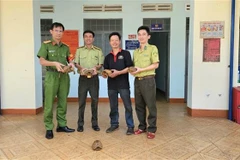
Initial verification showed that the animal weighed 3.7kg and measured over 60cm. It was identified as a Sunda pangolin (Manis javanica), also known as the Javan pangolin, listed in Group IB – critically endangered and strictly protected from all commercial exploitation.

Residents of Tuyen Quang province take part in the One Billion Trees Programme. (Photo: VNA)

Tree-planting programme exceeds one-billion-tree goal

The total comprises 573.9 million scattered trees and 865.2 million trees grown in concentrated plantations, equivalent to 429,125 hectares of forest. Provinces posting the strongest results include Phu Tho with 177.9 million trees, Lao Cai with 108.8 million, and An Giang with 98.5 million.

Construction activity is one of the causes of air pollution in Hanoi. (Photo: VNA)

Hanoi takes urgent measures to curb air pollution

The city requires the enhanced application of advanced technologies and remote monitoring systems, including satellite remote sensing, drones, and AI-integrated traffic cameras, to monitor, detect, and strictly address the illegal burning of garbage, straw, and agricultural by-products.