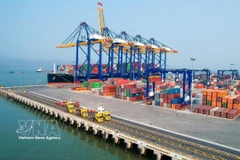
Da Nang pledges best conditions for investors in Free Trade Zone development

In recent years, Da Nang has streamlined administrative procedures, launched a transparent digital platform for investors, upgraded transport, logistics, seaport, and airport infrastructure, and developed a startup and innovation ecosystem. Preferential policies and flexible cooperation mechanisms have also helped attract both domestic and foreign investors.

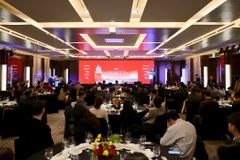
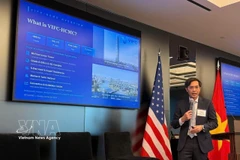
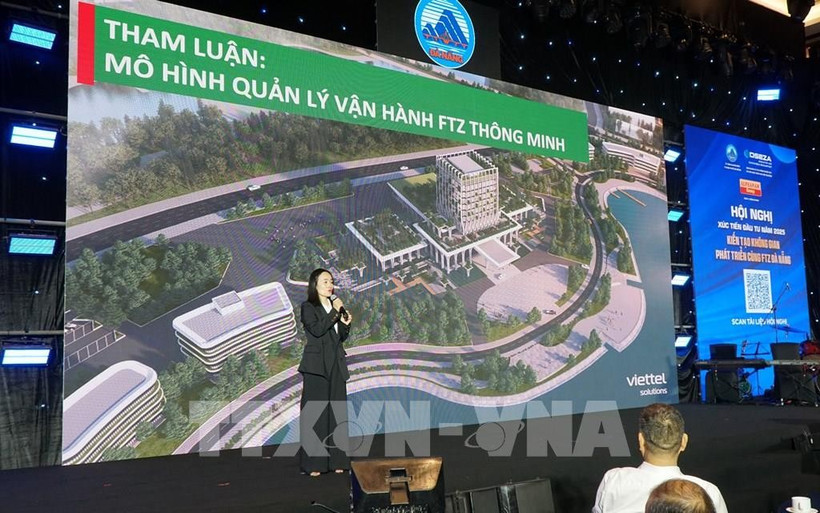
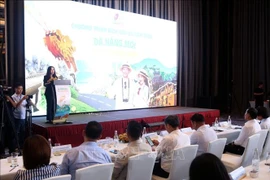
Deputy Director of Viettel Da Nang Le Thi Hue speaks at the conference. (Photo: VNA)

Da Nang (VNA) – The central city of Da Nang is committed to creating the most favourable conditions for projects to be implemented quickly, effectively, and sustainably, Vice Chairman of the municipal People’s Committee Tran Chi Cuong has said.

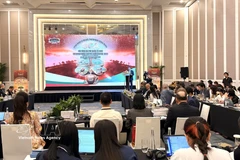
He made the statement at a conference on investment promotion for the Da Nang Free Trade Zone (FTZ) on August 18, attended by more than 200 delegates, including city leaders, representatives of business associations, and domestic and foreign investors.

Cuong stressed that with its strategic location, concerted infrastructure, dynamic young workforce, and open policies, Da Nang is confident in becoming a leading destination for high-quality investment, while pioneering in smart city development, digital economy growth, and green transition. Developing the FTZ, he said, is a strategic step to generate new momentum for the city’s long-term growth.

In recent years, Da Nang has streamlined administrative procedures, launched a transparent digital platform for investors, upgraded transport, logistics, seaport, and airport infrastructure, and developed a startup and innovation ecosystem. Preferential policies and flexible cooperation mechanisms have also helped attract both domestic and foreign investors, he added.
da-nang.jpg
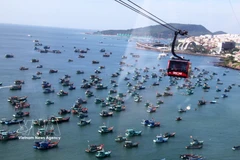
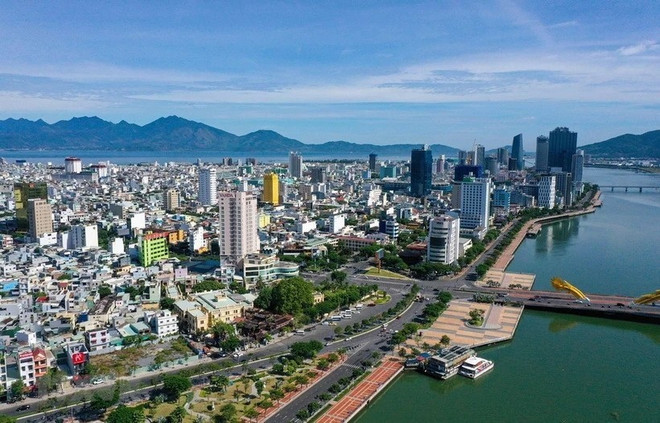
A corner of Da Nang city (Photo: VNA)

At the event, Vu Quang Hung, Head of the Da Nang Specific Economic Zones Authority (DSEZA), introduced the FTZ’s core functions, which include international logistics, manufacturing, commerce, services, finance, tourism, high-quality healthcare, and innovation. Delegates also learned about preferential policies on investment, tax, customs, and land use, along with incentives for experts and scientists.

Hung noted that DSEZA has applied Building Information Modeling (BIM) to integrate geographic and digital infrastructure data, supporting planning and site clearance while optimising costs, reducing risks, and ensuring effective management across the FTZ’s seven functional areas.

During discussions, city leaders and investors exchanged views on policy mechanisms, challenges, and planning solutions, including proposals for a smart FTZ model to improve investment management and oversight.

Nguyen Canh Hong, Chairman of the Sao Do Business Club, described Da Nang as the “heart” of central Vietnam – a hub of commerce, services, and industry with modern infrastructure and a strong innovation ecosystem. He said the FTZ will be a key foundation to attract investment and drive future growth, while investors expect further reforms, digital transformation, and an improved business climate.

Le Thi Hue, Deputy Director of Viettel Da Nang, proposed managing the FTZ through an intelligent digital operations centre integrating subsystems, automated task assignment, big data analysis, and decision-making support. She recommended continued investment in digital infrastructure, piloting sandbox model for new technologies, and expanding digital transformation in services and operations.

Established under the Prime Minister’s Decision No. 1142/QĐ-TTg, the Da Nang Free Trade Zone covers 1,881ha across seven sites. Each functional area has its own mission but shares the goal of deepening integration, applying preferential investment and trade policies, and forming a new growth pole for the central and Central Highlands region./.

VNA

See more

Prime Minister Pham Minh Chinh (third from right) and officials launch the Ministry of Construction’s new information technology systems at the conference on December 21. (Photo: VNA)

Modern, comprehensive infrastructure – a need for fast, sustainable development: PM

The Party and State continue to define infrastructure development as one of the three strategic breakthroughs, with priority given to building comprehensive and modern infrastructure, particularly transport facilities, technological infrastructure, and green – digital transition infrastructure, to help realise the national target of double-digit growth, the PM said.

Prime Minister Pham Minh Chinh addresses he third meeting of the National Steering Committee implementing the Politburo’s Resolution 68 in Hanoi on December 20. (Photo: VNA)

PM pushes trust, breakthroughs to accelerate private sector growth

Prime Minister Pham Minh Chinh noted that since the rollout of Resolution 68, alongside supporting resolutions from the National Assembly (NA) and Government, there has been a marked change in understanding the private sector’s critical position and role in Vietnam’s socialist-oriented market economy.

PM Pham Minh Chinh chairs the meeting (Photo: VNA)

Private sector thrives eight months after Resolution 68’s launch: PM

The private sector has shown marked progress eight months after the launch of Resolution 68, registering about 18,000 new enterprises monthly and pushing the nationwide total to nearly 1.1 million, Prime Minister Pham Minh Chinh told the third meeting of the National Steering Committee in Hanoi on December 20.

Phin Ho Tra – a national five-star OCOP product. (Illustrative photo: VNA)

Hanoi to host Vietnam OCOP Festival 2025

The festival is seen a practical activity celebrating the achievements made by the capital and the country in 2025, affirming OCOP’s role in rural economic development, contributing to realising Vietnam’s aspiration for strong economic growth in the context of deep integration.

The expanded Hoa Binh Hydropower Plant (Photo baochinhphu.vn)

EVN launches major power projects

Among the flagship projects inaugurated was the expanded Hoa Binh Hydropower Plant with a total installed capacity of 480MW per year and average annual output of about 488 million kWh.

An ultra-intensive shrimp farming model linked with environmental protection in Ca Mau province. (Photo: VNA)

Fisheries take the lead in the Mekong Delta’s green transition

Across the Mekong Delta, leading aquaculture producers, processors and exporters, along with suppliers of inputs, are transitioning to circular, high-tech and clean production models that cut greenhouse gas emissions and comply with international certification standards.

A perspective view of the Red River Landscape Boulevard project in Hanoi (Photo: VNA)

Works starts on Hanoi’s Red River Landscape Boulevard Axis project

The project is among the 234 key works and projects being launched, inaugurated or technically opened simultaneously across 34 cities and provinces nationwide to mark the 14th National Party Congress. Its launch contributes to implementing the country’s strategic development orientations while concretising Hanoi’s development goals in the new period.