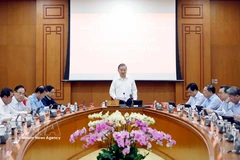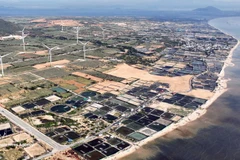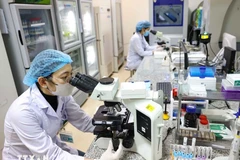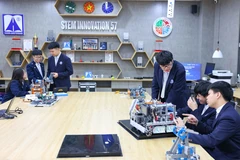
Da Nang (VNA) – Based on its e-administration infrastructure, the central city of Da Nang is fast-tracking the integration of advanced technologies in public administration and digital economy development.
With the launching of its two-tier local administration model, the city is incorporating technologies such as artificial intelligence (AI) and blockchain to enhance service delivery for citizens and businesses, aligning with the Politburo’s Resolution 57-NQ/TW on breakthroughs in science, technology, innovation, and national digital transformation.
From testing ground to digital governance pioneer
Da Nang has become a leader in applying technology to public administrative management. AI and blockchain, once viewed as futuristic, are now central to reshaping administrative systems - streamlining processes, reducing paperwork, improving services, and enhancing transparency through real-time, data-driven decisions.
In support of this, the Prime Minister approved Decision No. 1236/QD-TTg for a national blockchain strategy through 2025, with a 2030 vision. This framework enables cities like Da Nang to build blockchain ecosystems, particularly for digital assets and land management.
According to Nguyen Hoai Tuong, Director of the Big Data and AI Centre, blockchain strengthens data security and transparency while opening new avenues for managing public services. Pilot models, especially sandbox testing, are the key to realising this potential, he held.
The city increasingly uses data dashboards and alert systems to guide governance, tracking key indicators like pending administrative procedures, public feedback, and weather data, boosting responsiveness at ward and commune levels.
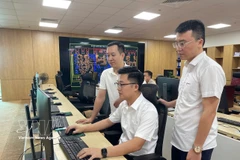
Da Nang’s public service hotline 1022 now includes an AI-powered chatbot, available round the clock across Facebook Messenger, Zalo, and the hotline website. The city’s Intelligent Operations Centre (IOC) further decentralises data access, supporting real-time decisions. IOC Director Nguyen Van Quoc noted that the centre issues deadline alerts and notifies relevant ward-level leaders, ensuring timely service delivery and improving citizen satisfaction.
Da Nang has built one of Vietnam’s most integrated digital infrastructures. This foundation enables widespread AI and blockchain applications in urban management, infrastructure, land use, and public services.
Le Son Phong, Deputy Director of the municipal Department of Science and Technology, stated that digital transformation is not only a trend but also a driver of economic growth, government modernisation, and quality of life.
Online administrative services now make up nearly 60% of total procedures, with nearly 50% of adults holding digital citizen IDs. The IOC is central to delivering data-driven governance.
Digital economy, e-commerce development in line with regional connectivity
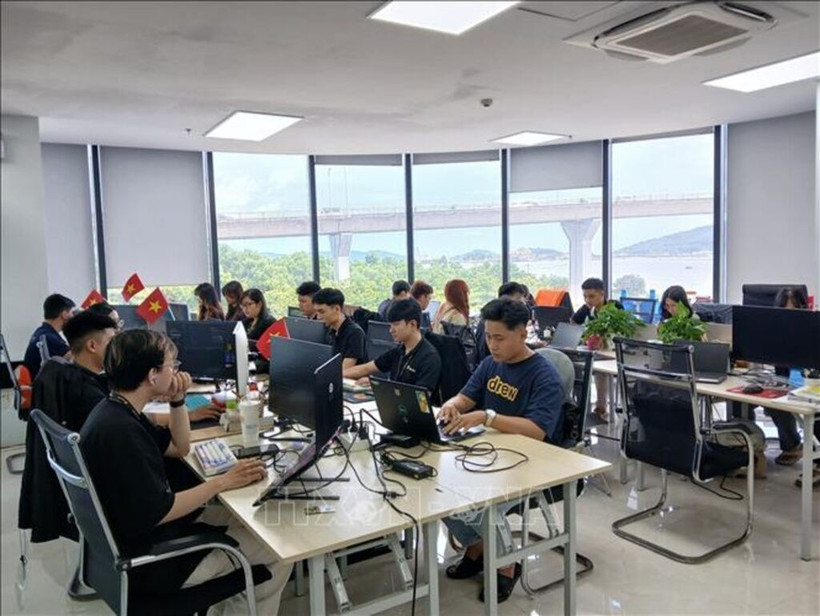
Information and communication technology is one of Da Nang’s five key economic sectors. In 2024, the city’s ICT industry earned 39.88 trillion VND (1.52 billion USD). With 2,556 digital enterprises - 2.35 per 1,000 residents, nearly triple the national average, and a tech workforce of 57,000 (7.7% of the labour force vs. the national average of 2.7%), Da Nang is well ahead.
Vice Chairman of the municipal People’s Committee Ho Quang Buu reported the digital economy contributed 20.96% to Da Nang’s GRDP in 2023 (national average is 16.5%) and is expected to reach 22% in 2024 (national average is 18.3%). The city aims for 35–40% by 2030, surpassing Resolution 57’s 30% target, he said.
Digital integration across sectors is driving growth and shifting Da Nang toward a digital-first economy. Local tech companies are becoming more self-reliant, creating “Made in Da Nang” platforms and applications.
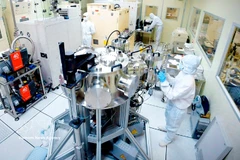
Tran Quoc Chinh, CEO of CMC Cyber Security, highlighted the city’s strengths in chip manufacturing and data application. He said that the firm aims to establish a data centre in Da Nang to support digital economic growth.
With its central location, modern logistics, and e-administration base, Da Nang attracts e-commerce and digital businesses. From 2023–2025, regional e-commerce integration has advanced through training, platform development, and partnerships, creating a vibrant digital commerce ecosystem.
Le Hoang Oanh, Director of the Ministry of Industry and Trade’s Department of E-commerce and Digital Economy, praised Da Nang as a regional pioneer. The city’s proactive transformation has built a strong foundation for a connected, sustainable digital economy, the official commented.
From 2026–2030, the ministry plans to enhance regional e-commerce links by improving infrastructure, policies, skills, and collaboration across local administrations, businesses, and service providers, with Da Nang expected to remain a key hub.
Under Resolution 57, Da Nang has defined 51 development goals. By 2050, it aims for the digital economy to contribute at least 60% of GRDP, higher than the target of 50% set by the resolution, and to foster at least three global-level digital enterprises. The city also targets attracting one top-tier international tech corporation to invest in local R&D and production.
This roadmap positions science, technology, and digital transformation as growth pillars. Fully digitised administration operations and services will cement Da Nang’s place as a leading innovation and tech hub in Vietnam and Southeast Asia./.
See more
Experts give ideas to build AI economy from data
Vietnam’s economic growth over past decades has largely relied on labour expansion, capital accumulation, export promotion and deep global trade integration, but as the country enters a higher development stage, this model is showing limitations.
Vietnam, India ink deal to step up IT cooperation
Under the terms of the MoU, the two sides will jointly push trade and investment in IT and services, arrange business delegations and business-to-business meetings, share market and policy information, and help companies access partnership opportunities and expand into new markets.
Vietnam looks to Europe for AI, nuclear medicine expertise
Vietnam needs a long-term strategy to develop specialised research and development centres in nuclear medicine, a process that will require substantial time, resources and meticulous planning.
Vietnam approves atomic energy development strategy, targeting civil applications
Tran Chi Thanh, Director of the Vietnam Atomic Energy Institute under the Ministry of Science and Technology, underscored that in the coming period, the institute and its affiliated units will continue promoting their strengths to promote the safe and secure application of atomic energy, contributing effectively to socio-economic development goals.
FPT joins top 35 global AI application development service providers
The recognition reflects FPT’s end-to-end AI capabilities, spanning strategic consulting, solution design, application development, and the integration and deployment of AI systems in real-world operations. Notably, the company has developed IvyHub, an integrated agentic AI platform that enables enterprises to design, deploy and manage AI agents at scale.
FPT, Korean firm seal deal on comprehensive automotive cybersecurity solutions
The partnership is intended to strengthen FPT’s cybersecurity capabilities in automotive software projects while laying the groundwork for joint development of solutions for software-defined vehicles (SDVs) in the RoK and the world.
Ho Chi Minh City sets sights on becoming semiconductor hub
A central component of the plan is expanding cooperation with global technology leaders such as AMD, NVIDIA and Qualcomm. These partnerships are expected to support technology transfer, strengthen chip design capabilities and help the city move further up global semiconductor value chains.
Resolution 57 delivers tangible outcomes from local practice
In the course of implementing this resolution, the northern province of Quang Ninh has emerged as one of the early movers in translating strategic orientations into comprehensive development models linked to innovation and digital transformation.
Ho Chi Minh City launches upgraded technology exchange platform
The upgraded platform represents a comprehensive shift from a simple information-sharing model to a managed online technology trading system, enabling monitoring and measurement of real transaction outcomes. It is built on three pillars, namely new tradable technology products, a modern digital platform, and an improved operational model.
Resolution 57: Vietnam advances domestic AI ecosystem
At the forefront of this push are major technology groups such as VNPT, Viettel, FPT and CMC Corporation, which are playing a leading role in shaping the domestic AI ecosystem.
AI powers business growth amid Vietnam’s digital transformation
Amid sweeping digitalisation, AI is being rapidly deployed across core business functions, from customer service and operations to risk management and product development.
Viettel partners with NVIDIA to build sovereign AI ecosystem
Viettel aims to strengthen domestic capabilities by building and operating advanced AI systems based on NVIDIA’s computing platforms.
Conquering 6G networks helps Vietnamese businesses master strategic technologies
The global 6G alliance marks not only a technological milestone but also an opportunity for Vietnamese enterprises to strengthen their position on the global technology landscape. With the involvement of FPT, Viettel and VNG, Vietnam is gradually emerging as an early mover in the development and application of 6G technology.
Party chief demands urgent acceleration on strategic tech push
Party General Secretary To Lam stressed that strategic technologies must directly serve the goals of raising productivity and economic competitiveness, forming new industries, and securing technological autonomy in key sectors.
Hanoi summit advances operation of ASEAN product safety portal
The Online Product Safety Summit in Hanoi on March 18 focused on practical enforcement solutions for identifying and removing non-compliant goods from online marketplaces, thereby strengthening consumer protection amid the rapid growth of e-commerce.
Strategy approved for peaceful development, application of atomic energy
Atomic energy activities must ensure the highest standards of safety and security for people, the environment and society, while fostering a strong culture of safety and security as the foundation of all operations.
Resolution 57 charts directions for Vietnam’s technology ecosystem
Vietnam's sci-tech sector must evolve from a manufacturing base toward mastering technologies and ultimately developing original products independently, which requires shifting away from outsourcing and assembly models to one where domestic scientists lead in design, development and ownership of core technologies.
Resolution 57: Pilot scheme hoped to bridge gap between research and practice
During the pilot period from 2026 to 2028, the city aims to bring at least 10 science and technology products to market, increase the commercialisation rate to 8–10%, and strengthen cooperation among the State, research institutes, universities and enterprises.
Resolution 57 refines technology priorities for new growth phase
The Ministry of Science and Technology is seeking feedback on a draft Prime Minister decision outlining four key categories: priority high technologies for investment, encouraged high-tech products, strategic technologies, and strategic tech products. The move is intended to capture emerging technology trends while strengthening the policy framework for high-tech development.
European experts highlight potential for AI cooperation with Vietnam
Experts believe that as demand for technological innovation grows and international partnerships expand, Vietnam has big opportunities to deepen cooperation with European partners in high-tech agriculture, healthcare, digital transformation and artificial intelligence.