Hanoi (VNA) - After 50 years of national reunification and nearly 40 years of “Doi Moi” (Renewal), Vietnam has overcome numerous challenges to achieve remarkable accomplishments, enabling the nation to rise in the era of international integration.
However, many experts have pointed out that as the country advances, it not only offers an opportunity to conserve nature, but also put the responsibility for today’s generation to do even better than what the ancestors preserved. A century from now, GDP may increase tenfold, and technology may transform every aspect of life, but if there are no clean rivers, no green forests, no birds singing in the fields, and no habitat for wildlife to survive, can such development truly be meaningful for humanity?
Therefore, for the nation to rise and develop sustainably in the new era, its development models must also be renewed with a green orientation. This highlights that Vietnam must now adopt a long-term vision for nature - a comprehensive, continuous, and steadfast strategy where nature is not an afterthought in planning but a core component of sustainable development.
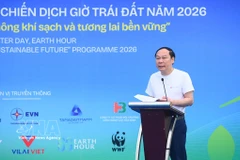
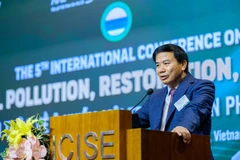
Deputy Minister of Agriculture and Environment Nguyen Quoc Tri emphasised that nature and biodiversity are the foundation of all life and the basis for sustainable human development on Earth.
Conserving biodiversity means protecting the future of humanity. That is why countries around the world have adopted the Kunming-Montreal Global Biodiversity Framework and have shown strong commitment to halting biodiversity loss for the sustainable development of the planet.
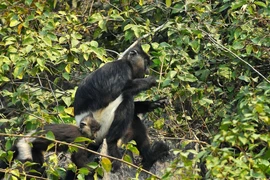
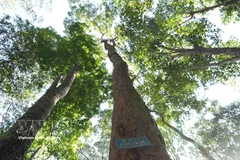
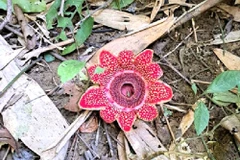
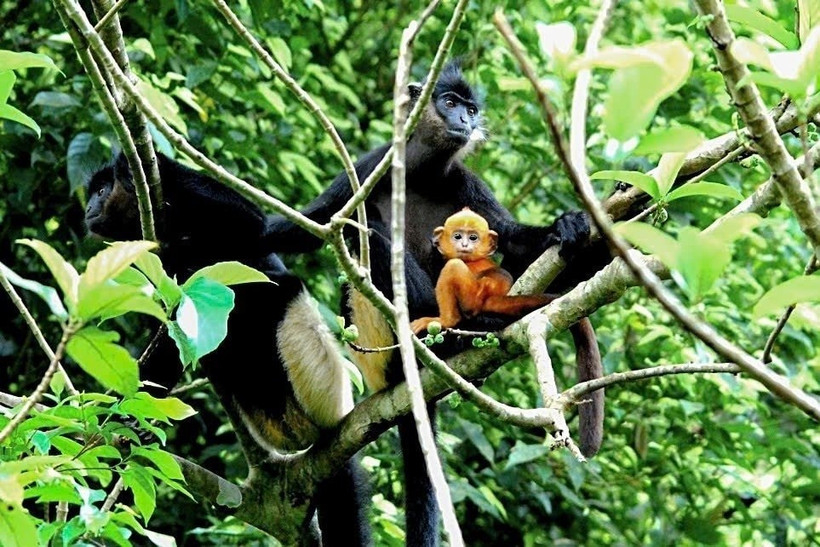
Vietnam ranks 16th in the world in terms of biodiversity, and is home to many endangered, rare species and valuable wild genetic resources of national and international importance. In recent years, the system of nature reserves has been continuously expanded, and many of them have been recognised by UNESCO for their international significance. However, nature and biodiversity conservation are also under intense pressure from economic development, climate change, environmental pollution, forest degradation, and the invasion of alien species.
“These losses will be irreversible if we do not act promptly and decisively, mobilising the strength of the entire society," Tri stressed.
Believing that streamlining the administrative apparatus and merging provinces and cities present a major opportunity to strengthen governance and act to halt ecosystem decline, the deputy minister recommended that these regions take practical action to improve nature and biodiversity conservation.

A key solution, he stressed, is to improve policies in a way that harmonises conservation with the reasonable exploitation and use of biodiversity, and links sustainable use with poverty reduction, the development of green livelihoods, ecotourism, and environment-related education.
At the same time, these regions need to promote science and technology, and digital transformation in ecosystem monitoring and restoration. It is important to strengthen cooperation with domestic and international partners to attract and maximise financial support and investment for nature and biodiversity conservation. Ensuring equitable sharing of benefits derived from genetic resources is very important, while developing sustainable livelihood models for local communities, added the official.
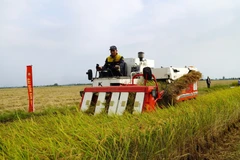
Nguyen Cao Son, Vice Chairman of the Ninh Binh provincial People’s Committee, acknowledged that recent research and assessments show the province’s biodiversity is facing numerous challenges. Some rare species are declining in number, primarily due to environmental pollution and the overuse of chemical fertilisers and pesticides in agricultural production.
These challenges require greater and united efforts to develop the economy and society in tandem with sustainable resource use and environmental protection, he stated, highlighting the strong determination in leadership, direction, and implementation of biodiversity conservation and environmental protection to ensure the sustainable development of the province.

Provincial merger – restarting conservation, promoting green growth
The merger of Ha Nam, Nam Dinh and Ninh Binh into Ninh Binh province will unlock tremendous potential for the sustainable development of natural conservation zones.
Dr. Nguyen Song Tung, Director of the Institute of Human Geography and Sustainable Development under the Vietnam Academy of Social Sciences, emphasised that expanding and improving the effectiveness of marine protected area management is a pressing need, as it forms the foundation for sustainable development.
However, Dr. Tung noted that marine conservation cannot rely solely on central-level policies or state management agencies. It requires the active participation of coastal communities, businesses, and every individual citizen.
Emphasising that the loss of biodiversity threatens fundamental pillars of the economy, food security, and human health, Patrick Haverman, Deputy Resident Representative of the United Nations Development Programme (UNDP) in Vietnam, stated that this is not merely a national concern but reflects a global crisis that requires urgent action.
Haverman also shared that to support Vietnam in effectively fulfilling its international commitments, UNDP is working closely with both central and local partners to promote nature-based solutions, improve the management of protected areas, and support community-led conservation initiatives. These efforts are helping Vietnam move closer to achieving the Sustainable Development Goals, including SDG 13 (Climate Action), SDG 14 (Life Below Water), SDG 15 (Life on Land), and SDG 1 (No Poverty).
Thibault Ledecq, Conservation Director at WWF-Vietnam, also emphasised that biodiversity is the foundation of food security, climate change resilience, the livelihoods of millions of people, and the potential for green growth. Therefore, as Vietnam transitions toward a green economy, circular economy, and deeper international integration, nature conservation must be regarded as a critical factor in enhancing national competitiveness./.