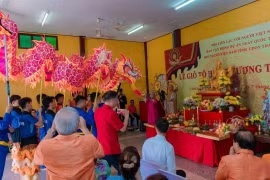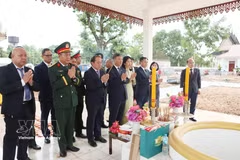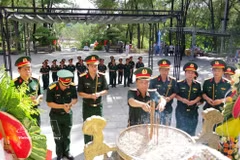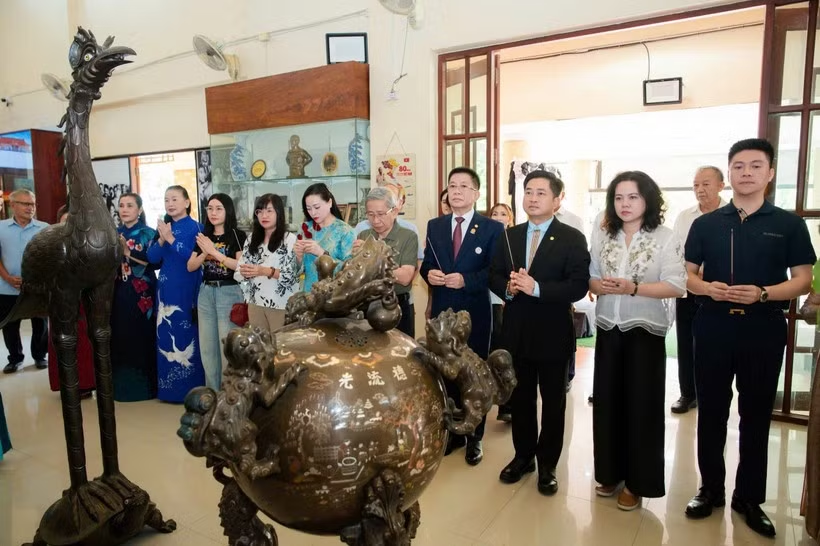
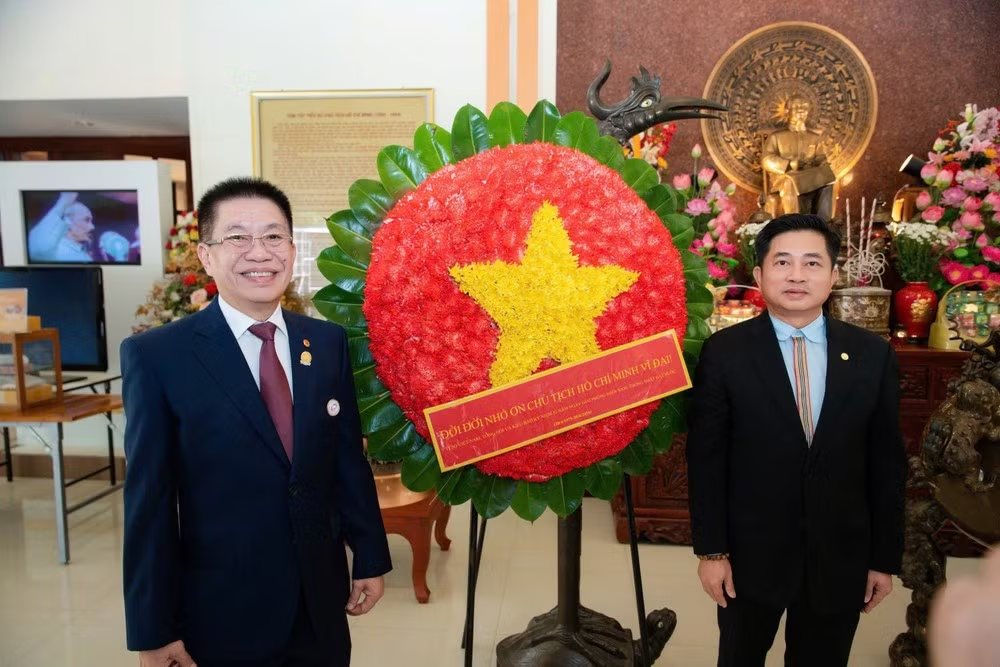
Bangkok (VNA) – The Consulate General of Vietnam in Khon Kaen, in coordination with the Association of Vietnamese in Thailand and the Thailand–Vietnam Business Association, held an incense- and flower-offering ceremony at the President Ho Chi Minh Memorial Site in Udon Thani on April 29 to commemorate the 51st anniversary of the Liberation of the South and National Reunification (April 30, 1975–2026).
The event drew a large number of overseas Vietnamese from across Thailand, who gathered to pay tribute to President Ho Chi Minh and express gratitude for his contributions to Vietnam’s national liberation.
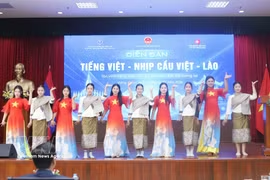
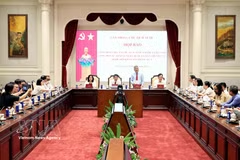
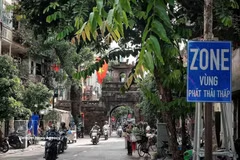
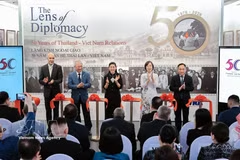
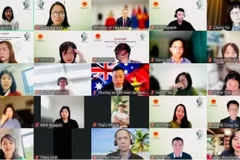
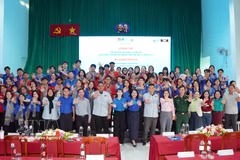
Later the same day, at the headquarters of the Vietnamese Association of Udon Thani province on Vietnam Street, the Consulate General, together with the Udon Thani Rajabhat University, organised a seminar titled “Enhancing the Teaching and Learning of Vietnamese Language and Culture in the Vietnamese Community in Northeast Thailand.”
The event was held in a hybrid format, connecting 50 venues and attracting more than 200 participants, including representatives of Vietnamese organisations, Vietnamese language teachers, overseas Vietnamese and Thai friends.
The seminar was one of the activities marking the Day to Honour Vietnamese Language among overseas Vietnamese communities.
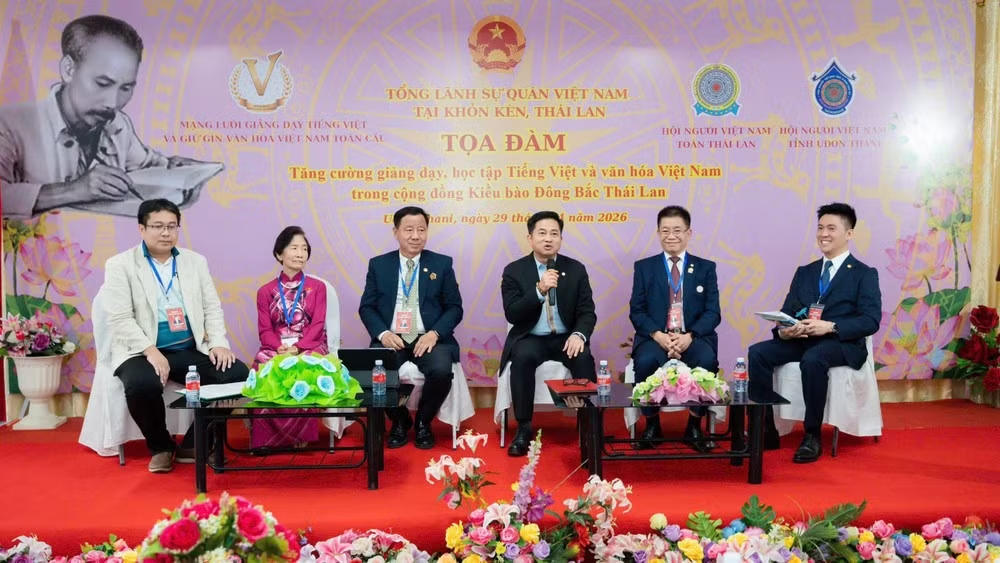
Opening the seminar, Consul General Dinh Hoang Linh stressed that the Vietnamese language embodies the soul of Vietnam. Nearly a century ago, President Ho Chi Minh established Vietnamese language classes in Udon Thani for overseas Vietnamese. Following his example, generations of Vietnamese people in Thailand have helped preserve and promote the language among both the Vietnamese community and Thai friends.
Ho Van Lam, President of the Association of Vietnamese in Thailand and President of the Thailand–Vietnam Business Association, said efforts to preserve the Vietnamese language should be integrated into community life, from education and family to economic activities and cultural exchanges.
When Vietnamese is used in daily life, in workplaces, and in community interactions, it will not only be preserved but also nurtured and developed for future generations, he noted.
Luong Xuan Hoa, member of the Central Committee of the Vietnam Fatherland Front and President of the Vietnamese Association of Udon Thani province, said that Vietnamese is not only a language but also a sacred bond connecting overseas Vietnamese with their homeland.
According to him, preserving the language also means preserving cultural identity, collective memory, and the connection between generations of Vietnamese living abroad, especially in communities that have experienced significant historical changes.
Nguyen Duy Anh, Secretary-General of the Global Network for Vietnamese Language Teaching and Cultural Preservation, emphasised that community consensus is the key to safeguarding the language.
Preserving Vietnamese means preserving the cultural foundation and long-term vitality of Vietnamese communities overseas,” he said.
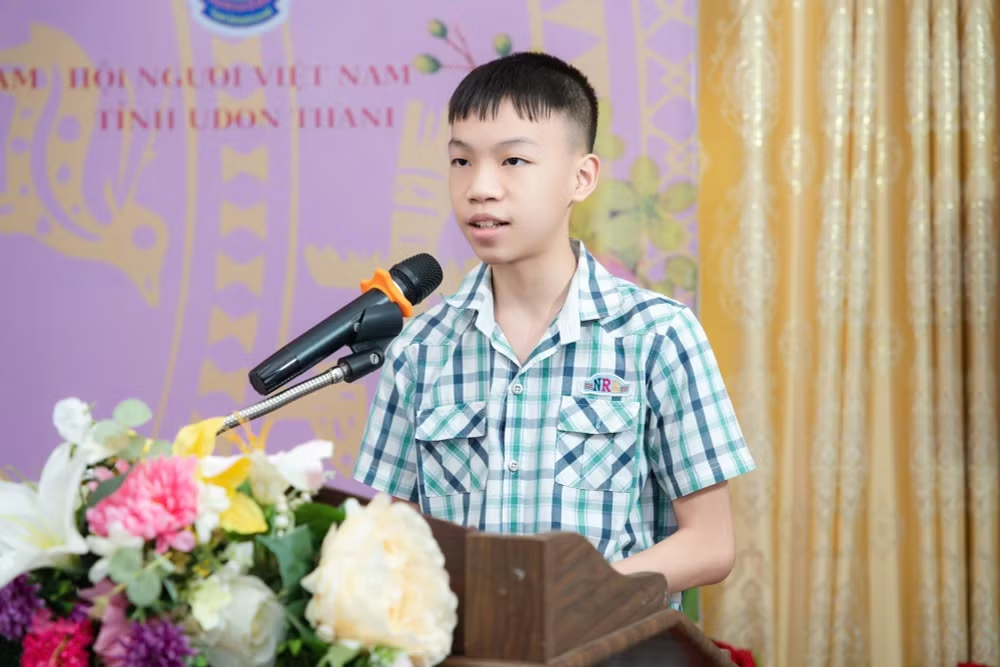
Participants also heard presentations from teachers, parents and students of Khanh An School, who shared their experiences and aspirations regarding Vietnamese language education.
The seminar identified a range of measures to strengthen Vietnamese language teaching and learning within the community. Delegates agreed on the need to create practical incentives for language use in schools, families and broader society, particularly to encourage younger generations to learn and speak Vietnamese.
Recommendations included introducing Vietnamese language programmes at various levels of Thailand’s education system, especially in areas with large Vietnamese populations; expanding the “Vietnamese Bookshelf for the Community” model to promote reading culture; creating more employment opportunities requiring Vietnamese language skills; and integrating activities honouring the Vietnamese language and traditional cultural values into community events.
Participants also proposed organising Vietnamese language and culture competitions and strengthening coordination between Vietnamese associations and Vietnam’s representative agencies in Thailand to promote the language.
Through these initiatives, organisers hope to build a comprehensive Vietnamese-language ecosystem within the community, ensuring that the language is not confined to classrooms but becomes an integral part of everyday life for overseas Vietnamese in Thailand./.