PM orders urgent response to floods and landslides in northern provinces

As of 16:00 on September 30, the storm and subsequent flooding had left 27 people dead, 21 missing, and 112 injured across 17 provinces and cities from the northern to central regions.

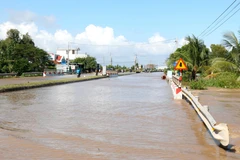
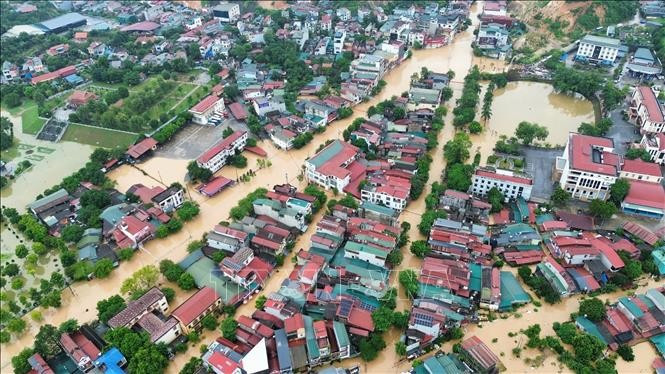
More than 5,000 households in Yen Bai ward, Lao Cai province, are affected by flood. (Photo: VNA)

Hanoi (VNA) – Prime Minister Pham Minh Chinh has ordered urgent measures to overcome the consequences of heavy rains, flash floods, and landslides triggered by Typhoon Bualoi – the 10th storm to hit the East Sea this year – which has caused severe human and material losses across northern and central provinces.

The Prime Minister on September 30 signed official dispatch No. 181/CD-TTg, directing authorities in the northern mountainous provinces of Cao Bang, Tuyen Quang and Lao Cai, as well as Phu Tho, Thai Nguyen, Thanh Hoa and Nghe An provinces, along with relevant ministries, to mobilise all available resources to ensure timely search, rescue, and relief operations.

According to the Ministry of Agriculture and Environment, torrential rains brought by the typhoon’s circulation have triggered flash floods and landslides in the northern mountainous provinces. In Cao Bang, a flash flood swept through a workers’ camp at Dong Dang–Tra Linh expressway construction site, leaving three workers missing, two injured, and two dead. In Tuyen Quang, four people remain missing due to landslides, while in Lao Cai, four people have been reported dead or missing.

On behalf of the Party and State, Party General Secretary To Lam and Prime Minister Chinh expressed their deepest condolences to families who lost loved relatives and conveyed solidarity with people suffering from the disaster.
cuu-te.jpg
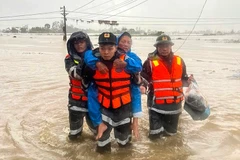
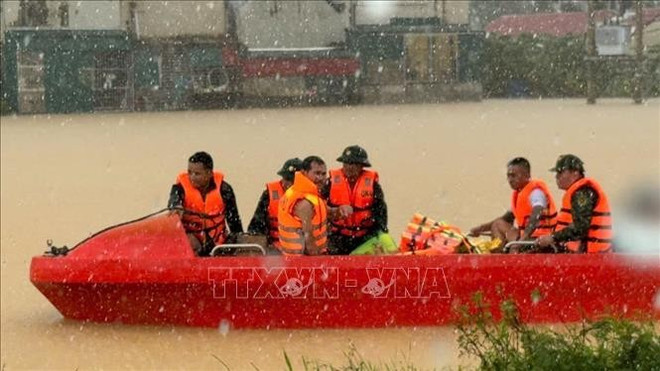
Thanh Hoa's public security officers urgently deploy rescue plans, evacuate people from dangerous areas, and supply food and necessities to isolated areas in Nong Cong commune. (Photo: VNA)

The PM instructed the Chairpersons of the Cao Bang, Tuyen Quang, and Lao Cai provincial People's Committees to directly lead relief efforts, mobilise necessary forces and equipment, and quickly reach disaster-hit areas to conduct search and rescue while ensuring the safety of rescue teams.

The Ministry of Agriculture and Environment was tasked with guiding the provinces to strengthen flood and landslide prevention, organise timely evacuation of residents from high-risk zones, and ensure the safety of dikes, dams, and reservoirs.

The Ministries of National Defence and Public Security were ordered to coordinate closely with local authorities to search for the missing and assist people in recovering from the disaster.

The Ministry of Construction was directed to tighten safety supervision at construction sites, particularly along expressways in mountainous and north-central regions, to minimise risks to workers and equipment during the rainy season.

The Office of the National Steering Committee for Civil Defence and the Government Office will monitor developments, coordinate with localities, and promptly report unexpected issues to the PM and the Deputy PM in charge of the work.

The Ministry of Agriculture and Environment reported that, as of 16:00 on September 30, the storm and subsequent flooding had left 27 people dead, 21 missing, and 112 injured across 17 provinces and cities from the northern to central regions. Nearly 158,500 houses were destroyed, damaged, or inundated, while more than 26,600 hectares of rice and crops were ruined. Infrastructure damage was widespread, with thousands of power poles pulled down, roads blocked at over 1,100 locations, and tens of thousands of trees uprooted.
cao-bang.jpg
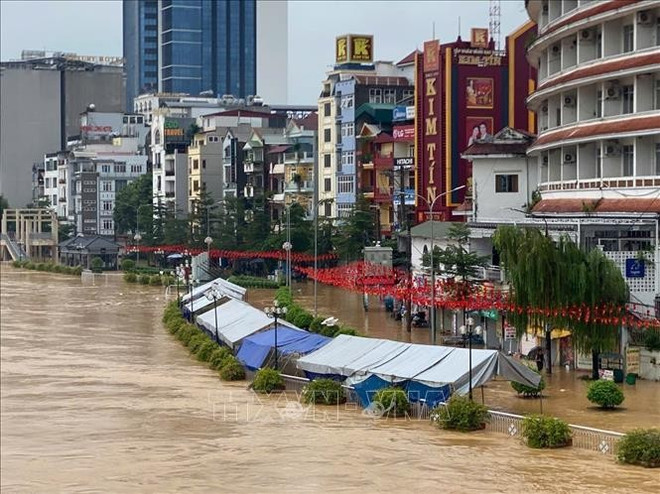
Flooding in northern Cao Bang province. (Photo: VNA)

The ministry further reported that extensive flooding submerged nearly 14,000 homes, particularly in Lao Cai, Thanh Hoa, and Nghe An provinces, while 9,500 ha of aquaculture farms were damaged. Fifteen dike incidents have been recorded in Ninh Binh, Thanh Hoa, Nghe An, Ha Tinh, and Quang Tri provinces.

Weather forecasts indicate that heavy rains are likely to persist in the coming days. Between the evening of September 30 and the morning of October 1, Lai Chau, Lao Cai, and Tuyen Quang provinces are expected to receive 50–100mm of rainfall, with some areas exceeding 170mm. Floodwater in several rivers, including Thao, Ma, Hoang Long, and Ca rivers, are projected to remain at or above danger levels.

Authorities also warned of a continued high risk of flash floods and landslides in northern mountainous provinces and urge people to stay vigilant./.
VNA

See more

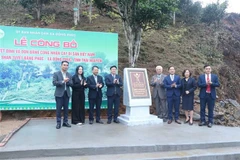
Official heritage plaque i sinstalled on the 12 recognised Shan Tuyet tea trees in Dong Phuc commune. (Photo: VNA)

Thai Nguyen: 12 ancient Shan Tuyet tea trees win national heritage status

The recognition honours the biological, cultural and historical values of these centuries-old Shan Tuyet tea trees – natural treasures deeply woven into the livelihoods, traditions and identity of local ethnic communities. The title affirms the community’s commitment to preserving and promoting the value of this iconic local tea variety.

Sarus cranes at Tram Chim National Park (Photo: VNA)

Return of sarus cranes: Hope takes wing in Dong Thap wetland

Beneath the wide Mekong Delta sky, Tram Chim National Park is racing against time, pouring heart and science into a decade-long (2022–2032) plan to rescue the Eastern sarus crane – an elegant, scarlet-headed bird listed as endangered on the International Union for the Conservation of Nature (IUCN) Red List and a living emblem of both the park and all of Dong Thap province

French Ambassador Olivier Brochet speaks at the press conference in Hanoi on December 11 to mark the 10th anniversary of the Paris Agreement on climate change and highlighting the COP30 outcomes. (Photo: VNA)

International community ready to support Vietnam in energy transition, climate response

In a video message to the press conference, UN Resident Coordinator in Vietnam Pauline Tamesis said the UN is ready to support Vietnam in building a pipeline of projects capable of absorbing financing mobilised under the Political Declaration on establishing the Just Energy Transition Partnership (JETP), as well as from global climate finance sources, including the Green Climate Fund and the Loss and Damage Fund.

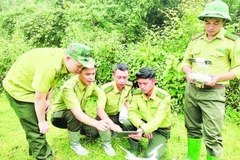
Forest rangers in Son La province apply technological devices and software to forest management, monitoring, and protection. (Photo: nhandan.vn)

Digital technology application enhances forest management, protection

With a total forest area of over 14 million hectares, including more than 10 million hectares of natural forests, forests exist in all 34 provinces and cities across the country. Given the large area and limited workforce, applying digital solutions in forest management and protection has become a top priority for the forestry sector.

Sunda pangolins (Manis javanica), also known as the Javan pangolin, are listed in Group IB – critically endangered and strictly protected from all commercial exploitation (Photo: VNA)

Quang Ngai releases rare pangolin back into nature

Initial verification showed that the animal weighed 3.7kg and measured over 60cm. It was identified as a Sunda pangolin (Manis javanica), also known as the Javan pangolin, listed in Group IB – critically endangered and strictly protected from all commercial exploitation.

Residents of Tuyen Quang province take part in the One Billion Trees Programme. (Photo: VNA)

Tree-planting programme exceeds one-billion-tree goal

The total comprises 573.9 million scattered trees and 865.2 million trees grown in concentrated plantations, equivalent to 429,125 hectares of forest. Provinces posting the strongest results include Phu Tho with 177.9 million trees, Lao Cai with 108.8 million, and An Giang with 98.5 million.

Construction activity is one of the causes of air pollution in Hanoi. (Photo: VNA)

Hanoi takes urgent measures to curb air pollution

The city requires the enhanced application of advanced technologies and remote monitoring systems, including satellite remote sensing, drones, and AI-integrated traffic cameras, to monitor, detect, and strictly address the illegal burning of garbage, straw, and agricultural by-products.