Resolution 80 paves way for new momentum in Vietnam’s cultural development

The initial results in heritage conservation, digital transformation, cultural industry development and artistic creativity facilitation suggest that Resolution No. 80 is gradually taking effect across the country.

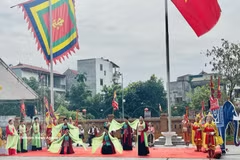
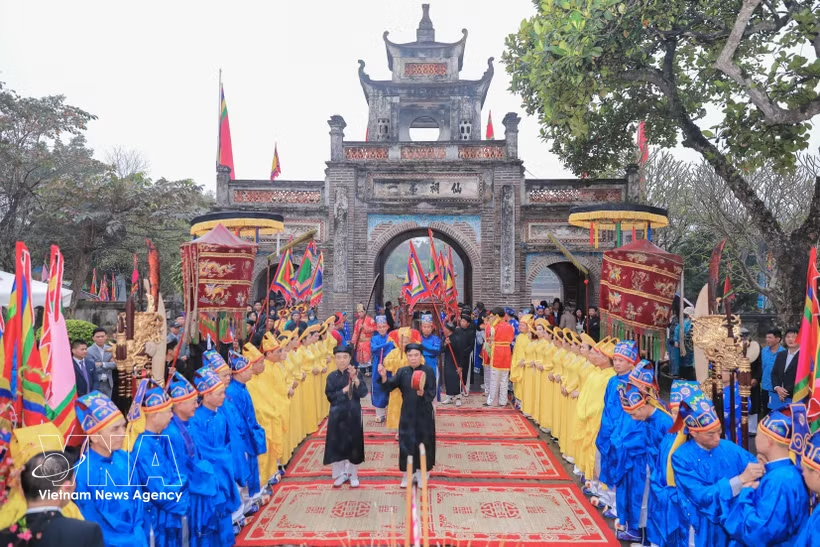
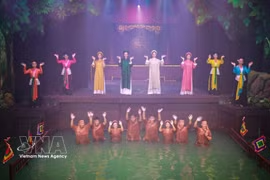
The ritual ceremony at the Co Loa Festival 2026 in Hanoi. (Photo: VNA)

Hanoi (VNA) – More than six months after the Politburo issued Resolution No. 80-NQ/TW on the development of Vietnamese culture, localities and agencies across the country have stepped up efforts to preserve cultural heritage, accelerate digital transformation, expand cultural industries, and encourage artistic creativity.

At the recent second meeting of the Central Steering Committee for the Development of Vietnamese Culture, Party General Secretary and State President To Lam reviewed progress in the resolution implementation while pointing out shortcomings that need to be addressed.

He outlined strategic directions for the next stage of cultural development, stressing the need to identify and bridge four major gaps and carry out three key transformations. These priorities are intended to make culture a genuine driving force for national development rather than simply a field for preservation.

Following these directions, ministries, sectors and localities are expected to continue introducing practical measures to safeguard and promote Vietnam's cultural values.

vnanet-potal-nguoi-tre-tim-ve-tieng-phach-ca-tru-o-bich-cau-dao-quan-8826030.jpg
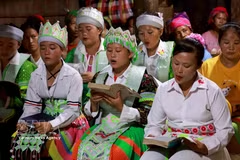
Three generations of female "xam" singers from Bich Cau Dao Quan perform together. (Photo: VNA)

Hanoi has been among the most active localities. The capital is completing nomination dossiers for several cultural heritage elements, including pho, water puppetry, ao dai, and the Co Loa relic site, for submission to UNESCO for recognition.

The city is also accelerating the digitalisation of cultural heritage by applying digital technology, artificial intelligence and virtual reality to preservation, research and public engagement.

Community-based heritage preservation has also continued to produce positive results. One notable example is the free “ca tru” singing class held regularly at the Bich Cau Dao Quan historical and cultural site. Guided by experienced folk artisans, the programme has attracted both local residents and international visitors interested in learning about one of Vietnam's oldest performing arts.

In Ho Chi Minh City, young artists are exploring new ways to bring traditional culture to modern audiences. Many music projects combine folk elements with contemporary styles and are distributed through digital platforms to reach wider audiences.

Meanwhile, programmes featuring revolutionary music and patriotic songs have also been refreshed through more creative performances, helping them appeal to people, espacially younger generations.

In the Mekong Delta, An Giang province is promoting its rich cultural heritage through exhibitions and long-term development projects.

An exhibition themed "Southern Ceramics – Stories, Beliefs and Daily Life" showcased more than 100 ceramic artefacts, highlighting the region's cultural identity and craftsmanship.
vnanet-potal-hai-hien-vat-oc-eo-duoc-cong-nhan-la-bao-vat-quoc-gia-8438533.jpg
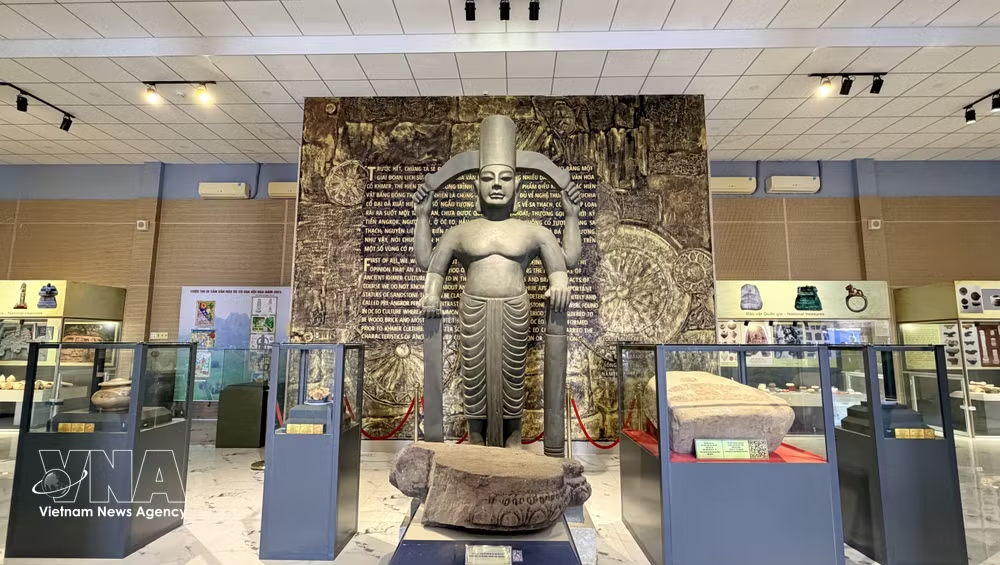
National treasures from the Oc Eo culture on display at an exhibition. (Photo: VNA)

At the same time, the nomination dossier for the Oc Eo – Ba The archaeological site is being evaluated by UNESCO and the International Council on Monuments and Sites (ICOMOS) for possible inscription on the world heritage list.

The province is also implementing a cultural tourism development project centred on the Oc Eo Civilisation for the 2026–2030 period, aiming to make better use of its archaeological assets while supporting local socio-economic growth.

The initial results in heritage conservation, digital transformation, cultural industry development and artistic creativity facilitation suggest that Resolution No. 80 is gradually taking effect across the country.

These efforts not only help preserve and promote Vietnam's rich cultural heritage but also create new opportunities for economic development through tourism, creative industries and digital technology.

As Vietnam enters a new stage of development, culture is increasingly recognised as both the spiritual foundation of society and an important source of internal strength for sustainable development.

The wider use of technology in heritage preservation, together with policies that encourage creativity and bring cultural values into everyday life, is opening up new opportunities for culture to contribute more significantly to the country's progress. With continued support from authorities at all levels, culture is expected to become an even stronger driver of a fast-growing, sustainable and culturally rich Vietnam./.
VNA

See more

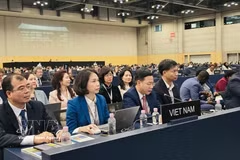
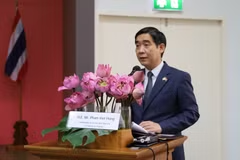
Deputy Minister of Foreign Affairs Ngo Le Van, Chairman of the Vietnam National Commission for UNESCO, speaks at plenary session of the 48th session of the UNESCO World Heritage Committee in Busan on July 20, 2026. (Photo: VNA)

Vietnam proposes priorities to strengthen international cooperation on world heritage conservation

On behalf of Vietnam, the deputy minister proposed three priorities of strengthening international cooperation and capacity-building for member states, particularly developing countries; promoting science-based conservation that strikes a balance between preservation and development while placing local communities at the centre; and enhancing coordination among relevant conventions and programmes, alongside the responsible application of digital technologies and artificial intelligence in heritage conservation.

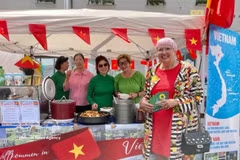
Claudia Roth, a member of the German Bundestag, visits the Vietnamese booth at the festival. (Photo: VNA)

Vietnam attends multicultural festival in Germany as guest of honour

The Vietnamese booth attracted a large number of visitors with traditional dishes such as "nem cuon" (fresh spring rolls) and "bun cha" (grilled pork with vermicelli), along with displays of ao dai (traditional long dress), conical hats and cultural performances imbued with Vietnamese identity. These activities helped spread Vietnamese culture and foster understanding and closer ties between the Vietnamese community, German residents and international friends.

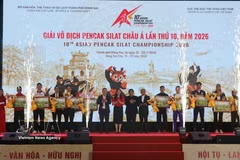
Representatives of countries and territories participating in the Asian Pencak Silat Championship. Photo: VNA)

10th Asian Pencak Silat Championship opens in Dong Nai

Speaking at the opening ceremony, Director of the municipal Department of Culture, Sports and Tourism Le Thi Ngoc Loan said the championship offers athletes an opportunity to compete in a spirit of fairness and sportsmanship while promoting exchanges, mutual understanding and friendship among participating countries.

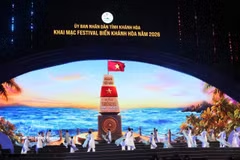
A special art performance at the Khanh Hoa Sea Festival 2026 (Photo: VNA)

Khanh Hoa Sea Festival 2026 opens, promoting sustainable marine development

Having been held 10 times, the Khanh Hoa Sea Festival has evolved beyond a local celebration into an event of national significance in culture, economy and external relations. This year's edition continues to honour Vietnam's maritime cultural heritage while promoting tourism, the marine economy and international integration.

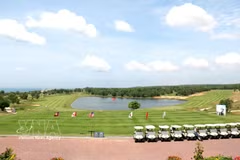
The golf course at NovaWorld Phan Thiet will host international tournaments during Sports Festival 2026. (Photo: VNA)

Around 7,000 athletes to compete at Sports Festival 2026

This year's festival will feature 12 sports, introducing several new events such as national youth triathlon and beach tennis championship, while expanding its international scope by bringing together clubs, athletes, and police forces from ASEAN countries for events such as the ASEAN Police Open Golf Tournament 2026.

A performance of Cheo Tau folk singing, a distinctive cultural tradition of O Dien commune in Hanoi. (Photo: VNA)

Beyond preservation: Unlocking the value of Vietnam's heritage

Dr. Nguyen Thu Hanh, Director of the Centre for Research and Development of Vietnam Cultural Industry (SDCI), said Vietnam has traditionally focused on preserving heritage rather than creating new value from it. The key obstacle, she noted, is the weak connection between heritage and science, technology, education, design, communications and the marketplace, limiting its economic, educational and social impact despite the country's abundant cultural resources.

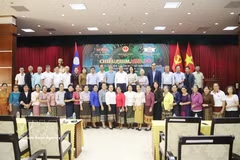
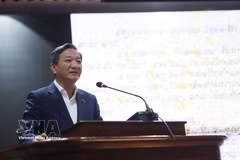
Vietnamese Ambassador to Laos Nguyen Minh Tam speaks at the event. (Photo: VNA)

Film screening in Vientiane highlights Vietnam-Laos strategic cohesion

A screening of the special Vietnamese feature film Mua Do (Red Rain) was held in Vientiane on July 16 to mark the 49th anniversary of the signing of the Vietnam-Laos Treaty of Amity and Cooperation (July 18, 1977–2026), reaffirming the two countries' strategic cohesion through cultural exchange.

Digital transformation in heritage should adopt people-centred approach: UNESCO

Digital transformation in heritage should adopt people-centred approach: UNESCO

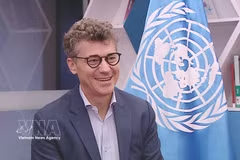
Digital transformation in the heritage sector should adopt a people-centred approach, ensuring the meaningful participation of communities at every stage-from documentation and preservation to the management, use and dissemination of cultural data. Jonathan Baker, Representative of the United Nations Educational, Scientific and Cultural Organization (UNESCO) told the Vietnam News Agency during an interview on July 8.

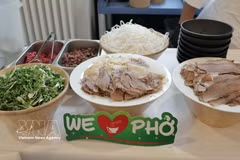
After covering more than 4,000 km across Europe, the Pho Cultural Roadshow Europe 2026 makes its final stop at Viet Pho Restaurant in Berlin. (Photo: VNA)

Pho roadshow ends European journey with Berlin finale

The initiative brought together eight leading Vietnamese chefs and culinary experts, who introduced pho and other traditional dishes at eight destinations – Prague, Warsaw, Trnava, Bratislava, Vienna, Budapest, Bochum and Berlin. Each stop celebrated a different facet of Vietnam's culinary heritage while fostering professional exchanges and discussions on the future of Vietnamese cuisine.

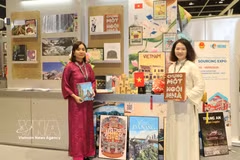
The Vietnamese Consulate General's booth at the Hong Kong Book Fair (Photo: VNA)

Vietnamese cultural heritage promoted at Hong Kong Book Fair

The booth of the Vietnamese Consulate General in Hong Kong has attracted considerable attention with a vibrant display featuring traditional conical hats painted with Vietnamese landscapes, red lanterns and large images of popular destinations such as Ha Long Bay, Sa Pa, Hue and Da Nang.

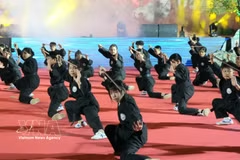
Martial arts practitioners demonstrate techniques using a flute. (Photo: VNA)

First int’l martial arts festival to debut in Hanoi

Hanoi will host its inaugural International Martial Arts Festival from August 7–9 at the Thang Long Imperial Citadel and other venues across the capital, bringing together thousands of martial arts practitioners from Vietnam and overseas.

Members of the Mong ethnic group in Cao Bang province say that embracing Protestantism and participating in local congregations has brought positive changes to their lives, fostering closer bonds and a strong sense of solidarity among followers. (Photo: VNA)

Digital transformation in religion: When religious teachings spread with a single tap

As Vietnam's digital transformation continues, technology is opening new avenues for religious communities to share their teachings more quickly, more broadly and with more diverse audiences than ever before. Yet these opportunities also bring responsibilities: safeguarding the authenticity of religious teachings, cultivating a healthy and trustworthy digital environment, and equipping religious communities with the digital literacy needed to navigate the online world responsibly.