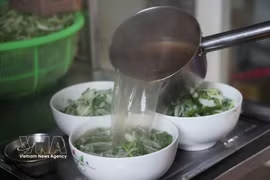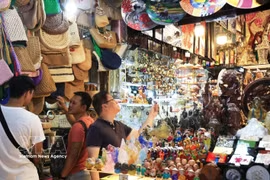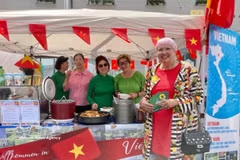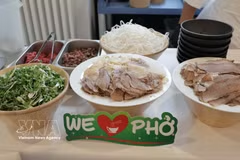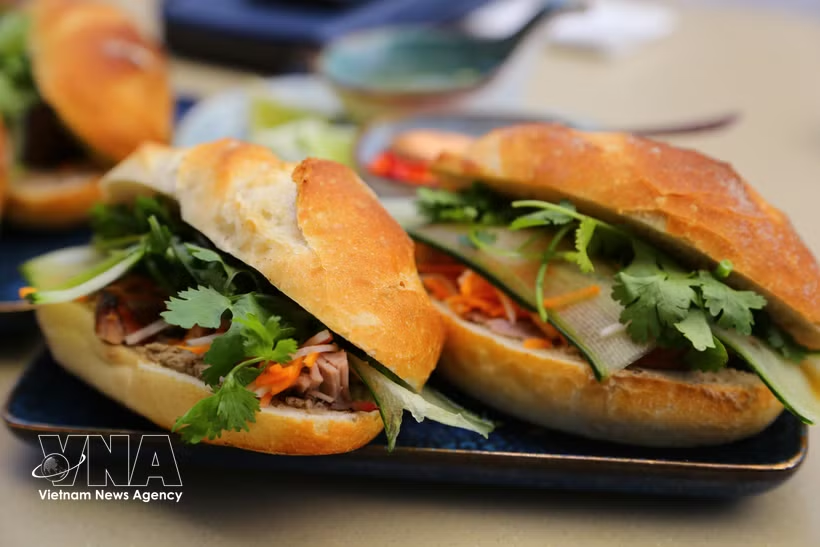
Hanoi (VNA) – As travellers increasingly seek authentic cultural experiences, experts say Vietnam must move beyond simply promoting its cuisine to creating immersive food experiences, turning its internationally acclaimed culinary heritage into a catalyst for sustainable tourism and a stronger national brand.
Vietnam’s cuisine earns growing global acclaim
As Vietnam’s tourism industry continues to expand, its culinary reputation has continually gained international recognition. The country was named Asia’s Best Culinary Destination by the World Culinary Awards for five consecutive years from 2019 to 2023, and World’s Best Culinary Destination in 2022 and 2023. Since 2023, the Michelin Guide has extended its coverage to Hanoi, Ho Chi Minh City and Da Nang, helping elevate Vietnamese cuisine on the global stage.
In late 2025, UK travel magazine Time Out ranked Vietnam among the world's 20 best winter destinations for 2025–2026 and named it the "Best for Food" destination. Meanwhile, the TasteAtlas 2025/2026 rankings placed the country 16th among the world's 100 best cuisines, up three places, reinforcing food as one of the country's strongest tourism assets.
According to the World Food Travel Association, 81% of travellers seek local culinary experiences and are willing to allocate 25–35% of their travel budgets to food and beverages. Vietnam's culinary tourism market is projected to reach 20.17 billion USD by 2034, expanding at an average annual rate of 13.92% between 2026 and 2034.
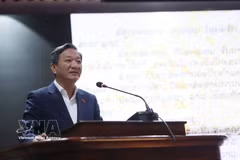
Nguyen Thi Lan Huong, a specialist at the Vietnam National Institute of Culture, Arts, Sports and Tourism (VICAST) under the Ministry of Culture, Sports and Tourism, said Vietnamese cuisine is evolving from a supporting tourism product into one capable of driving travel demand. Yet, she noted that global recognition reflects only the country's untapped potential.
Culinary tourism still focuses largely on dining while interactive, participatory and community-based experiences remain underdeveloped, she pointed out, calling for a shift from showcasing individual dishes to designing immersive cultural experiences that allow visitors to actively engage in creating value alongside local communities.
Against the backdrop of digital transformation, the rise of the creative economy and deeper international integration, Huong said unlocking the cultural value of Vietnamese cuisine requires fresh thinking, supportive policies and innovative development models. Politburo Resolution No. 57-NQ/TW, which identifies science, technology, innovation and digital transformation as key drivers of national development, provides a foundation for digitising culinary heritage, developing a national culinary database and digital food map, applying artificial intelligence to destination marketing, and creating smart culinary tourism products.
At the same time, Politburo Resolution No. 68-NQ/TW on private sector development opens the door wide for tourism operators, restaurants, hotels, technology companies and start-ups to help build a comprehensive culinary tourism ecosystem.
Under Vietnam's tourism development strategy to 2030, cuisine is expected to serve not only as a tourism product but also as a defining element of the country's tourism brand.
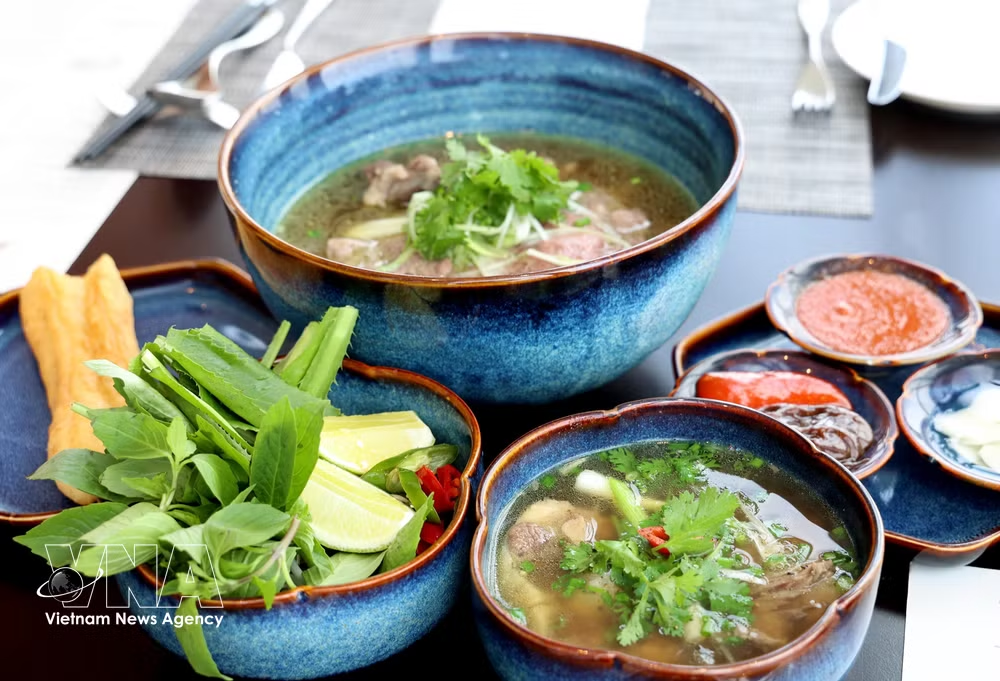
Turning food into cultural experiences
Nguyen Thi Hoa Mai, Deputy Director of the Vietnam National Authority of Tourism, said competition among destinations, particularly in Southeast Asia, is intensifying. In response, the Ministry of Culture, Sports and Tourism has submitted to the Government a proposal to promote Vietnam's tourism and cuisine overseas during 2026–2030, with cuisine positioned as the core of the national tourism brand and a key factor in strengthening the country's competitiveness.
Mai said countries including China, Thailand, Japan, the Republic of Korea and Italy have adopted methodical national strategies for culinary tourism, focusing not only on promoting signature dishes but also on sharing the history, traditions and cultural identity embedded in every meal.
Specialist Hoang Dao Bao Cam from VICAST said that as global tourism shifts from sightseeing to culturally immersive experiences, cuisine has evolved beyond a consumer product into a cultural asset and an instrument of cultural diplomacy. Given this, culinary tourism should place visitors at the heart of the experience, enhancing destination appeal while safeguarding and promoting traditional values.
However, Cam noted that Vietnam's culinary tourism still prioritises cooking delicious food over crafting compelling cultural narratives. Products remain fragmented, service quality varies widely, while food safety standards, workforce capacity and promotional efforts all need improvement. It is the stories behind each dish, he said, that create lasting memories, transforming a meal into a journey of cultural discovery that visitors are eager to share.
Experts agree that cultural storytelling is the soul of cuisine, enriching destination appeal and creating fresh momentum for tourism and the creative economy./.