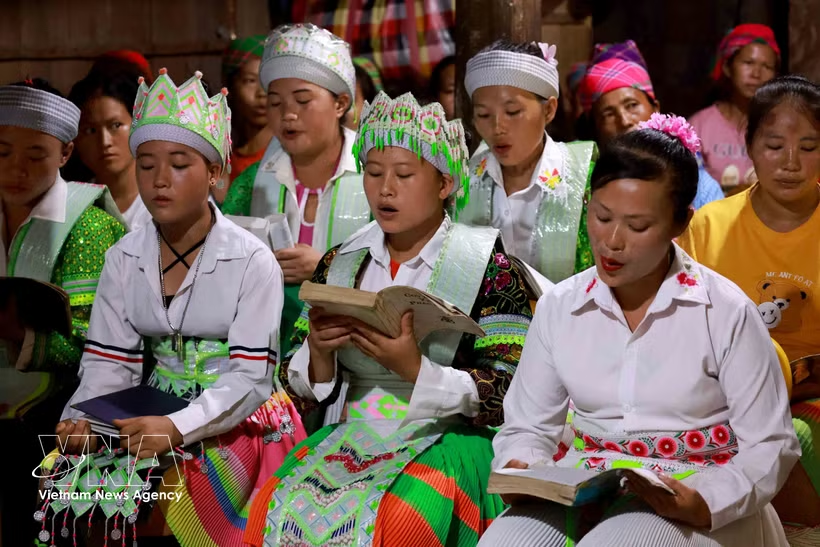
Hanoi (VNA) – Not long ago, those wishing to listen to a sermon or religious teachings had to travel to a pagoda, church or place of worship. Today, with nothing more than a smartphone and an Internet connection, believers can join religious services, sermons and scripture studies virtually from anywhere.
As Vietnam advances its national digital transformation agenda, religious communities are embracing technology in unprecedented ways. Buddhist Dharma talks on YouTube, Facebook and TikTok, livestreamed Catholic Masses, and online Protestant Bible sermons are becoming increasingly common, allowing religious teachings to reach wider audiences than ever before. However, behind those broadcasts lies a challenging journey of adaptation and exploration of digital transformation for the religious preachers themselves.
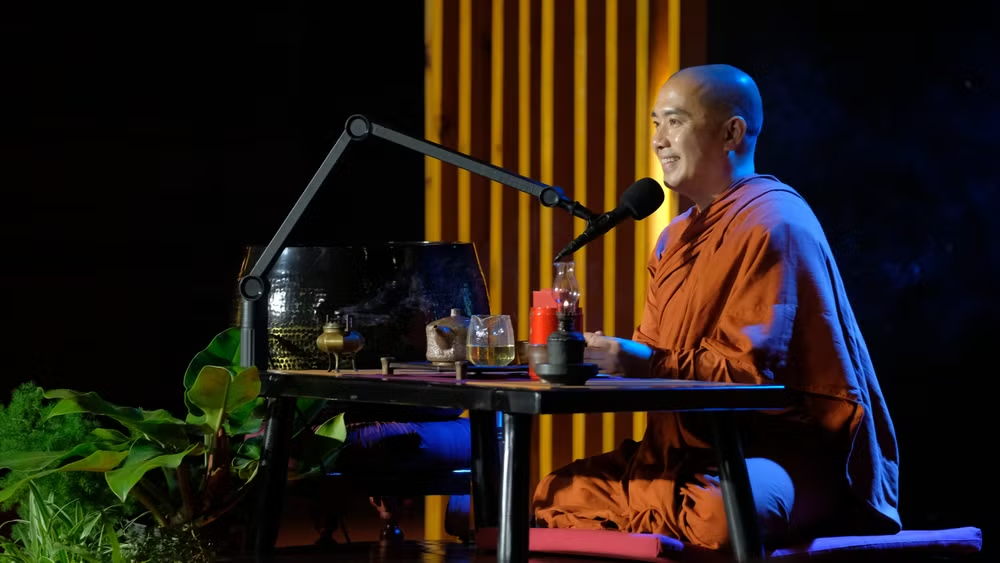
Zen Master Thich Minh Niem, who has been livestreaming Dharma talks for nearly a decade, said speaking to a camera is fundamentally different from delivering a sermon before a live audience. Without direct interaction, he explained, every gesture, pause and facial expression is captured by the camera, requiring speakers to develop an entirely new way of communicating.
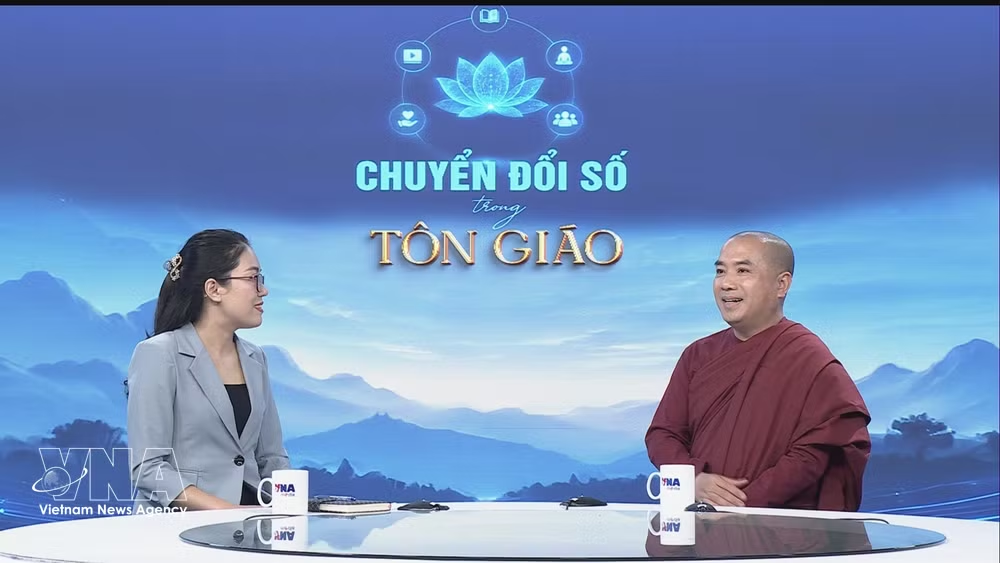
At the same time, he views the Internet as a historic opportunity for religious outreach. For previous generations of Dharma teachers, it would have been difficult to imagine that a single sermon could reach tens of thousands of people across different countries almost instantly, he said, adding that digital platforms, however, can never replace face-to-face encounters.
The Dharma is conveyed not only through words, but also through presence, energy and direct experience. Those dimensions are difficult to transmit fully through a screen, he noted, stressing that while technology enables Buddhist teachings to travel farther, genuine personal transformation still depends on direct spiritual practice and lived experience. According to Zen Master Thich Minh Niem, the value of digital religious engagement became particularly evident during the COVID-19 pandemic, when in-person worship and religious gatherings were suspended. Online sermons, livestreamed services and radio programmes provided comfort and spiritual support for countless people facing uncertainty and isolation.
They also helped maintain close ties between overseas Vietnamese communities and their cultural and spiritual roots.
For Hoang Thi Minh Phuong, a Vietnamese living in France, online Buddhist teachings have become an important source of emotional strength. Receiving religious teachings in Vietnamese, she added, allows her to better understand the messages while preserving her connection to Vietnamese customs, rituals and cultural traditions.
Vu Thi Duyen, an engineer working in Japan's Aichi prefecture, shared the same sentiment. She described online Dharma talks from Vietnam as an invaluable spiritual anchor during life abroad. "Listening to teachings from monks in Vietnam helps ease my homesickness and restore balance in my life," she said.
Although Japan has many Buddhist temples, she continues to participate virtually in Vietnamese Buddhist communities because of the shared language, customs and religious practices.
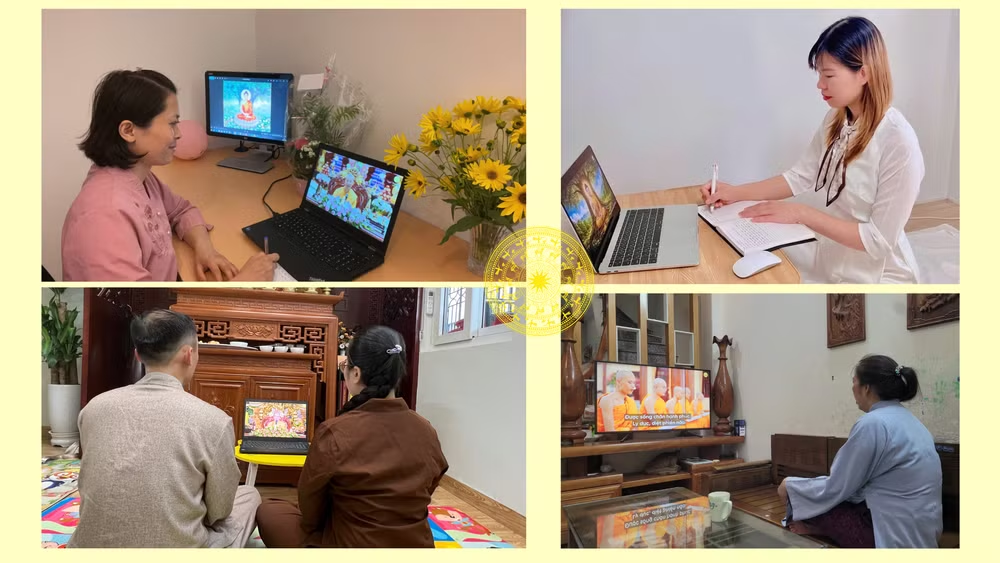
Digital technology is also making religious teachings more accessible to older followers within Vietnam. Tran Thi Ha, a Buddhist follower from Ninh Binh province, said that after learning how to use a smartphone with help from her children and grandchildren, she can now listen to Dharma talks without leaving home. When the talks are connected to a television, the entire family watches together, and the younger generations also learn valuable lessons about morality, compassion and how to treat others from the teachings, she shared.
From the perspective of religious institutions, Most Venerable Thich Nhat Tu, standing member of the Vietnam Buddhist Sangha (VBS)'s Executive Council, believed that the digital era has given rise to a new form of religious community. He described cyberspace as an "online spiritual practice centre" that effectively complements traditional forms of religious life by making authentic teachings more accessible while meeting increasingly diverse spiritual needs in the digital age.
Preserving authentic religious values in the digital era
While digital platforms offer unprecedented opportunities to disseminate religious teachings, they also present new challenges. The speed and openness of online communication raise concerns about maintaining the dignity, authenticity and doctrinal integrity of religion in an environment where information spreads rapidly and often without verification.
Zen Master Thich Minh Niem stressed that technology should always remain a supporting tool rather than a substitute for the fundamental values of spiritual life.
Pastor Nguyen Huu Mac, head of the Evangelical Church of Vietnam (North), said the Internet has greatly expanded opportunities for sharing faith, but has also become a breeding ground for misinformation. Some individuals misuse religion for personal purposes or deliberately publish misleading content that distorts public understanding of recognised religious organisations, he noted.
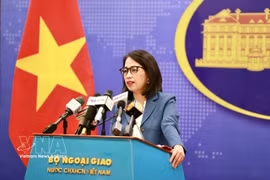
To address these challenges, he suggested, religious organisations must proactively establish credible official communication channels and encourage followers to use social media responsibly and ethically. From the perspective of state management, Minister of Ethnic and Religious Affairs Nguyen Dinh Khang said competent authorities are accelerating digital transformation in the administration of religious affairs.
According to the minister, digital technologies and artificial intelligence (AI) are being deployed to detect and respond more effectively to false information, while government agencies are working closely with religious organisations to strengthen official digital communication channels and improve the digital skills of religious dignitaries and followers.
These efforts aim to foster a healthy, trustworthy and civilised digital environment for religious activities, added Khang.
Building digital literacy for spiritual life
Having followed online Buddhist teachings for many years, Tran Thi Ha believed the most important principle is to seek information from trustworthy and officially recognised sources.
She said sermons delivered by respected religious teachers not only deepen understanding of Buddhist teachings but also provide guidance for daily life and inner peace. However, she warned that followers should remain cautious about the growing volume of unverified religious content circulating on social media.
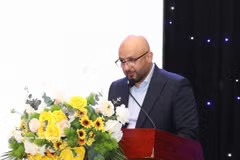
According to Do Huong, an expert at the Ho Chi Minh National Academy of Politics, the rapid development of AI-generated content makes "digital intelligence" an essential skill for every Internet user. She defines digital intelligence as the ability to critically analyse, verify and evaluate information before accepting or sharing it.
Young people, who are among the most active Internet users, should be equipped with the skills to identify AI-generated fake content, verify information sources, protect personal data and comply with the law when engaging online, she said, adding that such competencies will enable individuals to approach religious teachings in an informed, responsible and secure manner.
As Vietnam's digital transformation continues, technology is opening new avenues for religious communities to share their teachings more quickly, more broadly and with more diverse audiences than ever before. Yet these opportunities also bring responsibilities: safeguarding the authenticity of religious teachings, cultivating a healthy and trustworthy digital environment, and equipping religious communities with the digital literacy needed to navigate the online world responsibly./.