Hanoi (VNA) – With proper investment and direction, souvenirs can become highlights introducing Vietnam to the world. By combining the country’s rich cultural resources with contemporary creativity, these small products can convey messages about Vietnam’s land, people and identity to the international community.
The Government recently issued the communications strategy for promoting Vietnam’s image abroad for 2026–2030, with a vision to 2045, which requests spreading “Vietnam stories” through typical models, figures, events and products across various fields.
Souvenirs telling Vietnam’s stories
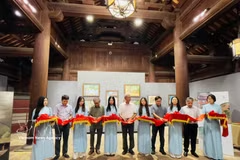
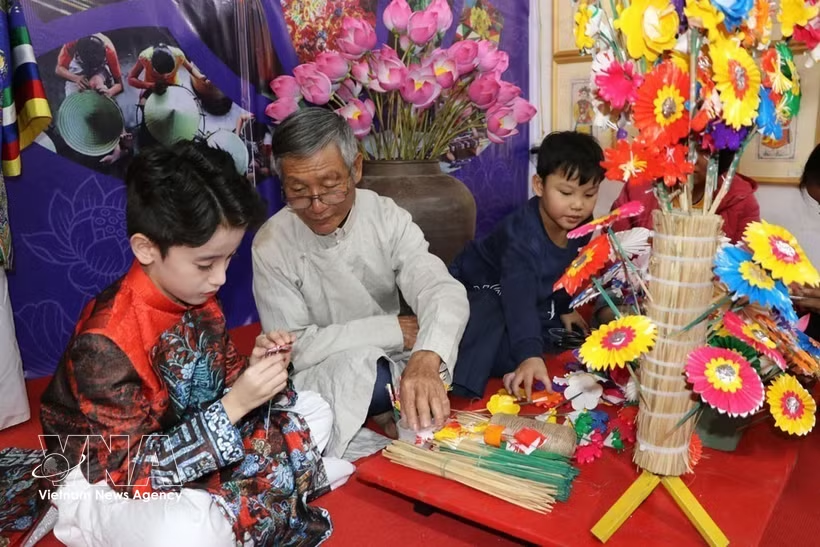
In recent years, the Van Mieu – Quoc Tu Giam centre for scientific and cultural activities has developed various souvenirs based on the heritage values and characteristics of the relic site, focusing on practicality and designs suited to visitors’ preferences.
Duong Ngoc Ha, deputy director of the centre, said souvenirs are not merely items visitors take home, but also tools for conveying cultural knowledge and telling stories about the tradition of learning and examination associated with the heritage site. The centre has developed products through cooperation among researchers, young designers and craft artisans, combining modern design thinking with traditional craftsmanship to create new ways of bringing heritage closer to contemporary audiences.
The concept of souvenirs has also evolved. Vietnam’s image is no longer limited to familiar symbols such as “ao dai” (traditional long dress), conical hats or Cai Rang floating market. Some domestic brands are choosing to tell stories that reflect contemporary life.
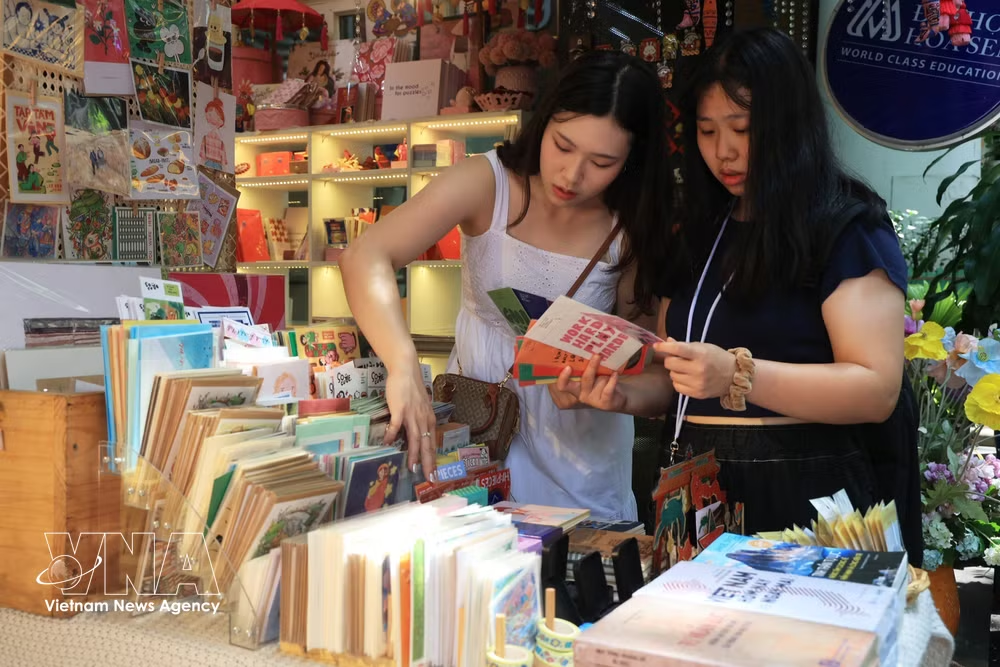
Trinh Ha Mien, founder of Liu Lo Arts & Craft, said souvenirs are a point of connection between visitors and Vietnam. A postcard or small handicraft item can tell emotional stories about the country and its people, becoming an effective channel for cultural communications.
However, the souvenir market has yet to fully tap into Vietnam’s rich cultural resources, traditional craft villages and skilled artisans. Many products remain limited in design, lack distinct identities and fail to reflect the heritage and craftsmanship of local communities. Some localities with renowned heritage sites have not developed signature souvenir products, reducing their ability to convey Vietnam’s cultural messages.
Experts said that with market-oriented development, improved functionality, stronger storytelling and greater involvement from designers, businesses and market-connecting organisations, souvenirs could become a bridge linking Vietnam with the world while contributing to the growth of cultural industries and the creative economy.
Developing comprehensive ecosystem
Consumer trends show that domestic and international visitors increasingly seek products with cultural value, environmental friendliness and links to local communities.
Nguyen Nhu Quynh, founder of Hanoi Nghe Nghe Art Fair, said souvenirs preserve memories of destinations and personal emotions. Visitors now look for gifts associated with local identities, contemporary cultural life and the stories behind artisans and communities. The value of souvenirs lies not only in their use but also in their ability to tell stories, create emotional connections and inspire appreciation for destinations.
Meanwhile, souvenirs need to balance tradition and modernity and meet market demand while preserving core cultural values.
Dr Lu Thi Thanh Le, lecturer at the Faculty of Cultural Industries and Heritage under the School of Interdisciplinary Sciences and Arts at the Vietnam National University, Hanoi, said some craft communities and artists continue producing familiar items due to stable demand. However, producers need to anticipate market trends, invest in new product development, nurture creative communities and work with artisans to create products that better meet consumer needs.
Experts stressed that Vietnam needs long-term strategies and a comprehensive support ecosystem to develop a souvenir industry capable of promoting cultural values and the national image.
With dedicated artisans, young creative talent and abundant heritage resources, stronger cooperation among researchers, product developers, artists and local communities will help the industry utilise indigenous knowledge, enhance commercial value and expand markets.
The country should also improve policies supporting souvenir development, establish clear standards on product origins, quality and safety, strengthen artisans’ capacity and build suitable supply chains. These efforts should preserve traditional products with market potential while encouraging new designs that combine local materials with contemporary trends, experts added./.