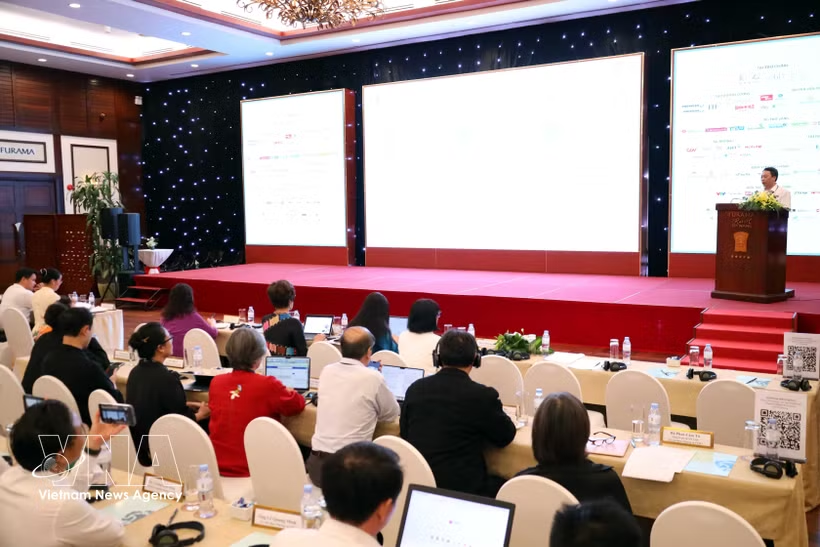
Da Nang (VNA) – Experts, regulators, and domestic and international businesses underscored the need for Vietnam's film industry to accelerate digital transformation, strengthen intellectual property protection, and develop a comprehensive digital ecosystem to boost its competitiveness in the AI era, at a seminar in Da Nang city on June 30.
Addressing the event, which formed part of the fourth Da Nang Asian Film Festival (DANAFF IV), Dr. Ngo Phuong Lan, Chairwoman of the Vietnam Cinema Promotion and Development Association and Director of DANAFF IV, said the Politburo's Resolution No. 57-NQ/TW on breakthroughs in science, technology, innovation, and national digital transformation, and Resolution No. 80-NQ/TW on the development of Vietnamese culture have created a solid foundation for advancing cultural industries and a creative economic sector, and strengthening IP protection, opening up new opportunities for Vietnam's film sector.
She noted that AI and digital transformation also require fundamental changes in production, management, content distribution and IP protection.
Learning from international experience, adopting advanced technologies and developing a professional digital ecosystem will be essential to enhancing competitiveness and promoting Vietnam's cultural soft power, she added.
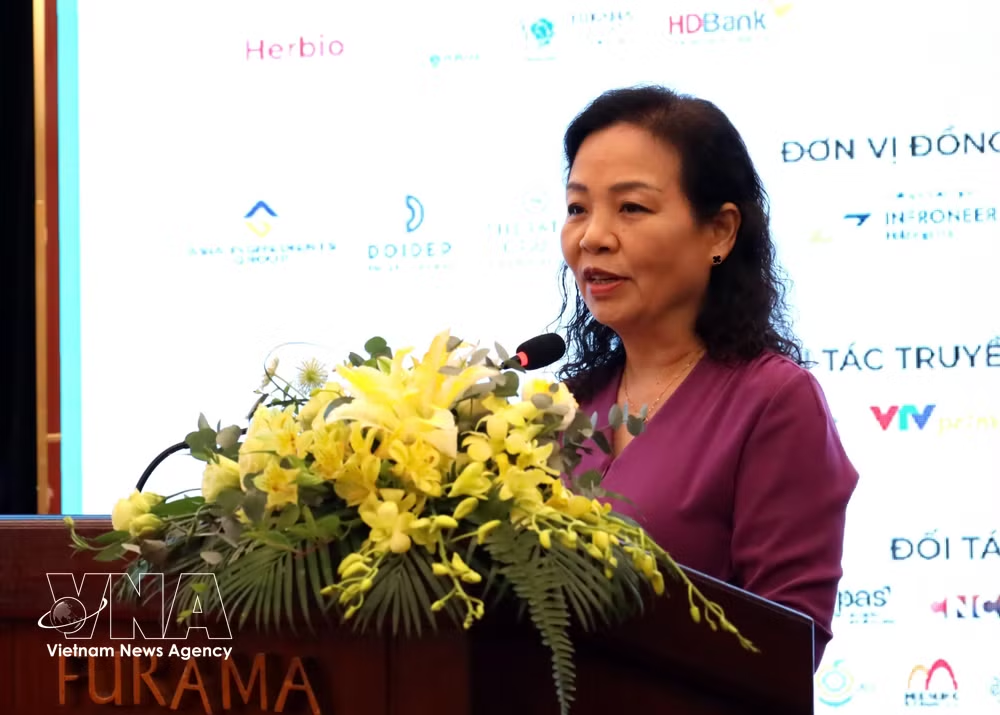
Dr. Ngo Phuong Lan, Chairwoman of the Vietnam Cinema Promotion and Development Association and Director of the fourth Da Nang Asian Film Festival (DANAFF IV), speaks at the event. (Photo: VNA)
Deputy Minister of Culture, Sports and Tourism Nguyen Huy Dung said Vietnam aims for its cultural industries to contribute around 7% of GDP by 2030 under the national cultural industry development strategy. Together with the National Target Programme on Cultural Development for 2025–2035, the strategy reflects the country's view of culture as a driver of economic development. Within this vision, cinema plays a unique role by fostering creativity while promoting Vietnam's culture and people to the world.
He called on managers, producers and businesses to build an integrated national database for the film industry, incorporate IP protection from the earliest stages of film production, and shift anti-piracy efforts from short-term campaigns to sustained copyright governance and enforcement.
Participants agreed that AI is transforming the entire film value chain, from scriptwriting and visual design to production, post-production, marketing and distribution. For emerging film industries such as Vietnam's, AI offers opportunities to narrow technological gaps, reduce production costs and expand international market access.
Prof. Nikey Kim, Vice President of the Korean Academic Society for Public Relations (KAPR) and Director of the Korea Character Business Association(KOCA), shared the Republic of Korea's experience in developing its film industry, highlighting AI as a key driver in building a sustainable creative ecosystem. He said these lessons could provide useful references for Vietnam as it advances its own digital transformation.
Representatives from TV360 pointed out that AI raises concerns over the originality of creative works, data rights, and creators' rights. They called on digital platforms to take a more active role in fostering a copyright-compliant content ecosystem.
Participants also highlighted emerging challenges to copyright and IP as AI becomes increasingly involved in the creative process. Experts said the rapid development of AI has raised pressing questions over the ownership of AI-assisted works, legal liability and mechanisms to better protect creators' rights in the digital environment./.