Hanoi's traditional martial arts: From heritage to driver of cultural industries

As Hanoi accelerates efforts to develop its cultural industries and strengthen its position as a UNESCO Creative City, experts believe traditional martial arts could become a valuable cultural asset with significant economic potential.

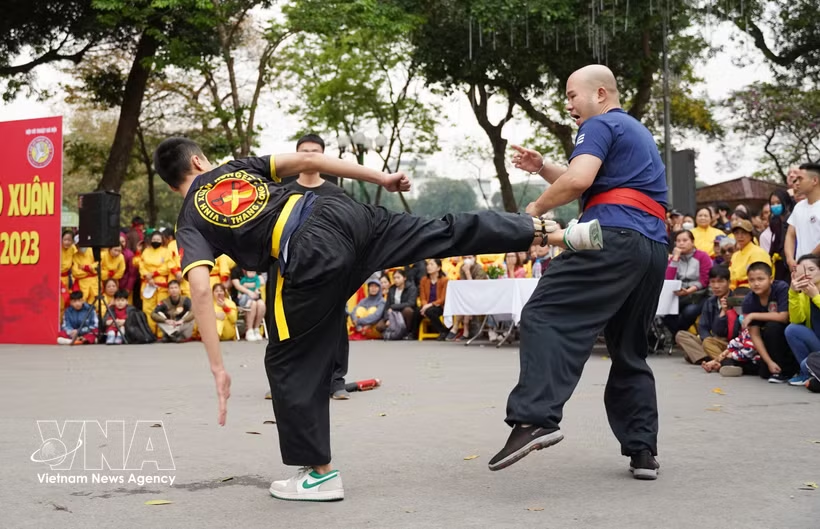
A traditional martial arts performance at a spring martial arts festival in Hanoi. (Photo: VNA)

Hanoi (VNA) – Deep within Hanoi’s rich cultural heritage lies a tradition that extends far beyond combat techniques and physical training. Traditional Vietnamese martial arts embody centuries of history, discipline, respect for teachers, and community values passed down through generations.

As Hanoi accelerates efforts to develop its cultural industries and strengthen its position as a UNESCO Creative City, experts believe traditional martial arts could become a valuable cultural asset with significant economic potential.

The roots of Hanoi’s martial arts tradition stretch back to the Red River Delta - the cradle of Vietnam’s wet-rice civilisation where village communities relied on martial training to defend their settlements and prepare forces in times of war. When Thang Long, now Hanoi, became Vietnam’s capital, skilled generals and martial arts masters from across the country gathered there, helping create a vibrant centre of martial learning.

Unlike many regions known for a single martial arts school, Hanoi is home to a diverse range of traditions. Historic schools such as Mai Dong, La Khe, Han Bai Duong and Cu Ton have contributed to a distinctive martial arts culture that reflects both local identity and influences from elsewhere that have been adapted to Vietnamese traditions.
vnanet-potal-van-hoa-soi-duong-le-hoi-vat-truyen-thong-lang-mai-dong-net-dep-trong-le-hoi-dan-gian-viet-nam-7223973.jpg
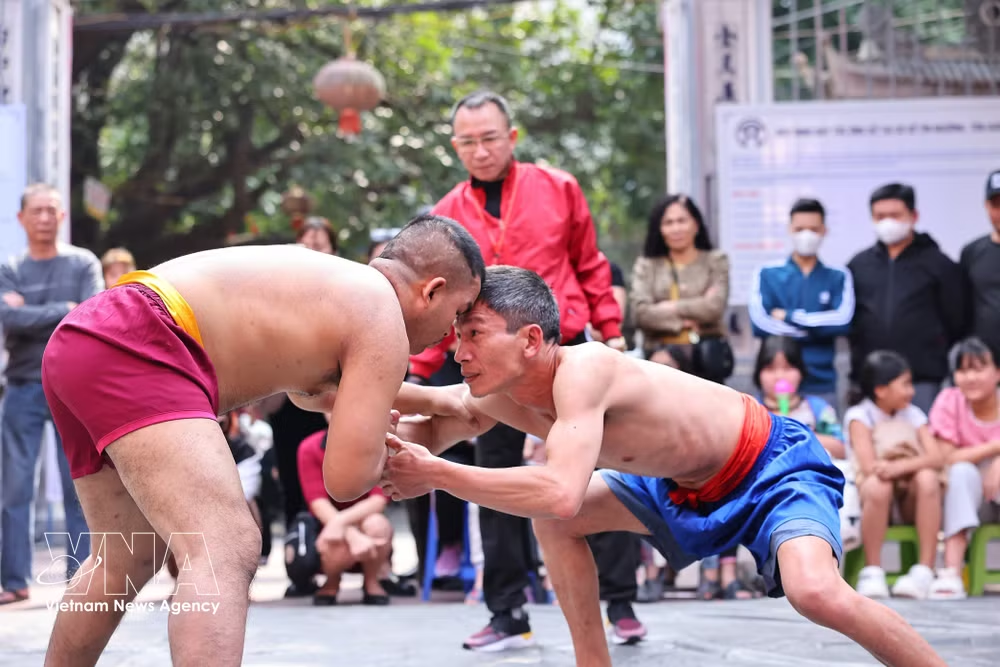
The Mai Dong Village Wrestling Festival is an annual event held from the 4th to the 7th of the Lunar New Year at Mai Dong village in Hanoi. (Photo: VNA)

The value of these martial arts extends beyond fighting skills. They promote resilience, honour, community spirit and the close bond between masters and students. Even during periods when martial arts activities were restricted, many traditions survived through families, local festivals and private training halls.

Today, hundreds of clubs and martial arts schools operate across Hanoi, attracting tens of thousands of practitioners. Traditional martial arts are also featured at festivals, cultural exchanges and public events throughout the capital.

Experts say martial arts possess many qualities of an unique cultural product: historical depth, visual appeal, storytelling potential and interactive experiences that can attract both domestic and international audiences.
vnanet-potal-ha-noi-thuc-day-phat-trien-vo-thuat-huong-toi-festival-vo-thuat-quoc-te-ha-noi-2026-8781269.jpg
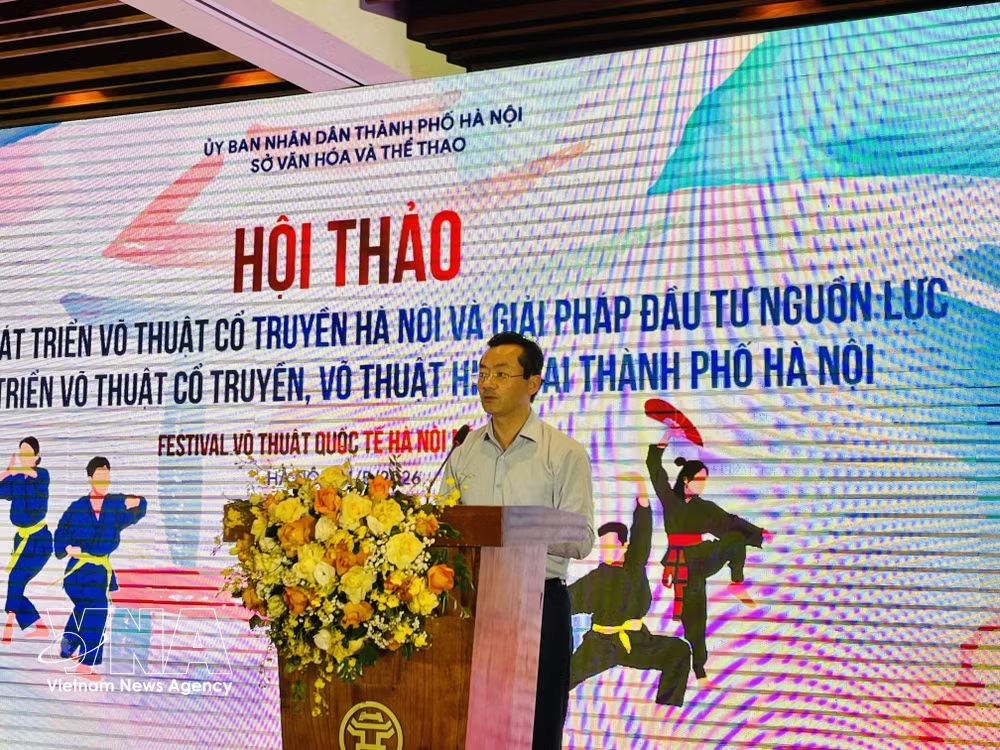
Deputy Director of the Hanoi Department of Culture and Sports, Pham Xuan Tai, speaks at the workshop on the history of Hanoi's traditional martial arts and resources for traditional and modern martial arts development. (Photo: VNA)

This potential is increasingly evident in tourism. Martial arts performances around Hoan Kiem Lake, at cultural festivals and in traditional training halls have drawn growing interest from visitors.

Through demonstrations of hand-to-hand techniques and traditional weapons, performers bring Vietnam’s history and cultural identity to life.

According to Associate Professor. Dr. and martial arts master Dinh Cong Tuan, acting rector of the Hanoi University of Culture, the capital could develop “Thang Long Martial Arts Culture” programmes that combine performances, historical storytelling, heritage education and festival experiences.

Beyond tourism, traditional martial arts could contribute to a wide range of cultural industries, including film, performing arts, digital media, gaming, publishing and creative content production.

However, challenges remain. Many traditional techniques, rituals and historical records are still passed down orally and risk being lost if not properly documented and digitised. Experts also point to limited cooperation among martial arts schools, a lack of professional business models and insufficient use of digital platforms for promotion.

As Vietnam seeks to transform culture into a driver of sustainable development, Hanoi’s traditional martial arts stand at an important crossroads. With better preservation, innovation, and integration into the creative economy, this centuries-old heritage could become a powerful resource for the capital’s future while continuing to preserve the spirit of Thang Long for generations to come./.

VNA

See more

An art performance at the opening of the Hanoi Lotus Festival 2026 (Photo: VNA)

Hanoi festival celebrates cultural heritage of lotus

The festival is part of Hanoi's strategy to boost its cultural industries by transforming cultural heritage into a driver of socio-economic development while preserving and promoting the city's traditional cultural values.

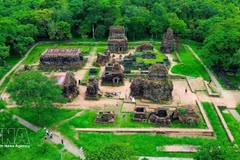
Digital technology revives original values of My Son World Cultural Heritage Site

Digital technology revives original values of My Son World Cultural Heritage Site

Digital technology is showcasing the World Cultural Heritage site of My Son Sanctuary, enabling visitors to experience its historical and cultural significance while supporting long-term conservation. The site's authenticity is being preserved through scientific restoration and digital transformation, enhancing the visitor experience, and promoting sustainable tourism.

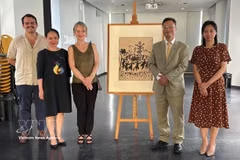
Vietnamese Ambassador to France Trinh Duc Hai stands next to the original version of “Vive la Paix” (Long Live Peace), a painting created by Spanish artist Pablo Picasso to celebrate the signing of the 1954 Geneva Accords that ended hostilities in Indochina. (Photo: VNA)

Picasso’s painting on Vietnam peace highlighted in France

“Vive la Paix” (Long Live Peace) painting was created by Spanish artist Pablo Picasso in 1954 following the signing of the Geneva Accords and was published on the front page of the French newspaper L’Humanité. While Picasso’s famous peace dove appears prominently in the painting, he also added images of people wearing Vietnamese conical hats alongside landscapes reminiscent of Vietnam.

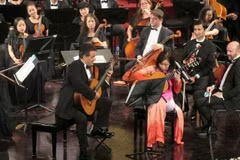
Artists perform in a concert at the Young Artists Friendship Festival and Competition (Photo: Mun Art Academy)

Young Southeast Asian musicians to compete in Da Nang

Artistic director and international classical solo musician Hang Nguyen from the Da Nang-based Mun Art Academy said the competition will open at the Muong Thanh Luxury hotel, with a gala concert From Heritage to Harmony, a Journey across Cultures starting at 7.30pm on June 26.

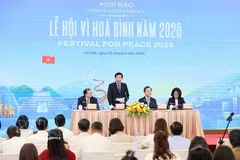
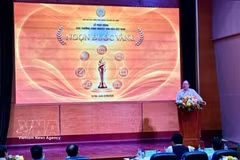
People’s Artist Vuong Duy Bien, Chairman of Vietnam Cultural Industry Development Association, speaks at the launch ceremony of the 2026 Golden Torch Awards for Cultural Industries in Hanoi on June 22, 2026. (Photo: VNA)

Vietnam launches first national awards for cultural industries

Vietnam’s cultural industries currently comprise around 70,000 active enterprises, generating employment for more than 3 million workers and contributing an estimated 2.5–3% of GDP. Several localities have also developed creative ecosystems, innovation hubs, and effective cultural economy models.

Lorient Mayor Fabrice Loher poses for a photo with participants in the fourth Vietnam Festival in Lorient. (Photo: VNA)

Festival brings Vietnamese culture to northwestern France

Lorient Mayor Fabrice Loher said the festival offers an opportunity for the public to discover the richness of Vietnamese culture while fostering dialogue, mutual understanding and stronger community ties through art and cultural activities.