Hanoi festival celebrates cultural heritage of lotus

The festival is part of Hanoi's strategy to boost its cultural industries by transforming cultural heritage into a driver of socio-economic development while preserving and promoting the city's traditional cultural values.

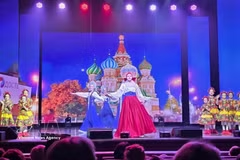
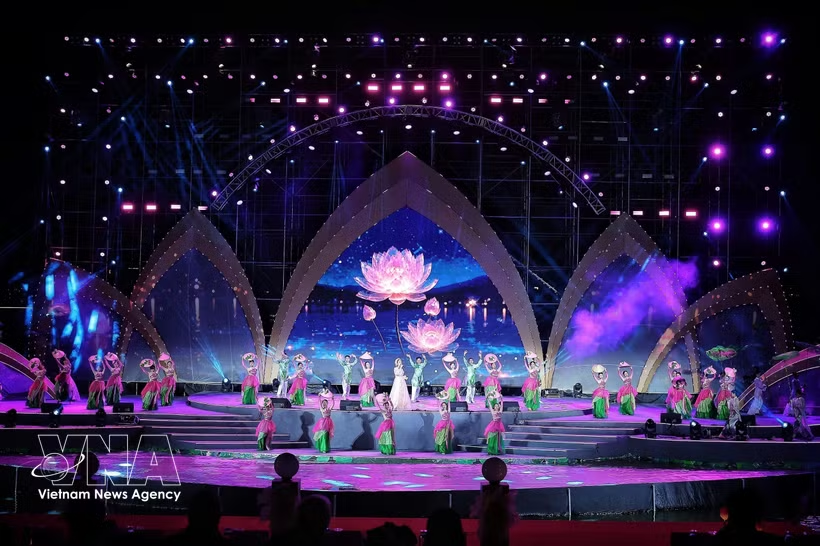
An art performance at the opening of the Hanoi Lotus Festival 2026 (Photo: VNA)

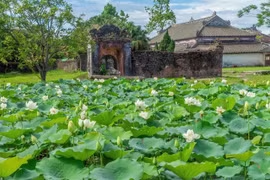
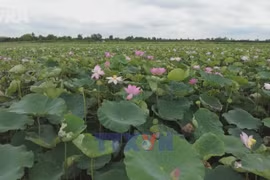
Hanoi (VNA) - The Hanoi Lotus Festival 2026 opened at Ly Tu Trong Flower Garden in Tay Ho ward on the evening of June 26, featuring a wide range of cultural and artistic activities celebrating the lotus as a symbol of Vietnamese culture and promoting Hanoi’s tourism.

The festival is part of Hanoi's strategy to boost its cultural industries by transforming cultural heritage into a driver of socio-economic development while preserving and promoting the city's traditional cultural values.

Speaking at the opening ceremony, Dang Huong Giang, Director of the Hanoi Department of Tourism, said the event reflects the city's commitment to positioning Hanoi as a safe, attractive and professional destination. It also serves to showcase the capital to domestic and international visitors and highlight Hanoi's determination to develop distinctive cultural and historical tourism products.

She noted that government agencies, local authorities, businesses, artists, artisans and the wider community are working together to make Hanoi a city worth visiting, living in and experiencing.

Giang said the lotus has long been a cherished symbol embodying the character, resilience and spirit of the Vietnamese people. For Hanoi, the flower is not only a gift of nature but also an enduring cultural icon deeply woven into the city's spiritual, artistic and cultural life.

Running from June 26 to 28, the festival takes place at three venues in Tay Ho ward – Ly Tu Trong Flower Garden, Tay Ho Creative Cultural Space and Lac Long Quan Flower Garden – as well as in 16 communes and wards known for lotus cultivation across the city.

Following the opening ceremony, visitors can enjoy a variety of exhibitions and interactive experiences.

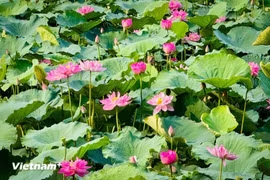
At the "Lotus – Essence and Life" space, more than 30 lotus varieties from Hanoi and other localities are on display, alongside handicrafts, OCOP products, fashion collections and creative artworks inspired by the lotus. Visitors can also explore lotus silk weaving, savour traditional lotus tea and sample lotus-based cuisine.

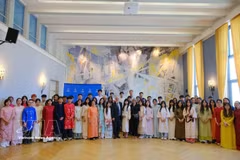
The "Lotus – Art and Creativity" space features calligraphy and artworks centred on the lotus, as well as the "West Lake Lotus Moments" painting event involving around 500 children, including nearly 100 international participants. The activities aim to promote Vietnamese cultural values to international friends while nurturing young people's appreciation of the nation's heritage.

Another highlight is the "Lotus – Performance and Community" space, which will feature folk performances, street art and a parade celebrating both the beauty of the lotus and Vietnam's traditional ao dai.

Additional activities include the "Fragrance and Beauty of West Lake Lotus" photography exchange, a lotus tea cultural space and various artistic performances.

According to Giang, the enthusiastic participation of residents and visitors is expected to make the 2026 festival a memorable event that fosters greater pride in and appreciation of Hanoi's rich cultural heritage.

vnanet-sen1.jpg
Deputy Minister of Culture, Sports and Tourism Nguyen Huy Dung presents the Decision recognising "West Lake and surrounding areas as a tourist area," contributing to creating a highlight in the development of the capital city (Photo: VNA)

At the opening ceremony, organisers announced the inscription of Quang An lotus tea scenting on the National Intangible Cultural Heritage List and the recognition of West Lake as a tourist area. The recognition marks an important milestone, reinforcing West Lake's status while creating fresh momentum for the capital's green, civilised and sustainable tourism development.

The festival will conclude on the evening of June 28. With its diverse programme, it is expected to become one of Hanoi's signature annual cultural and tourism events, helping promote the capital's image, preserve traditional cultural values and enrich tourism offerings for domestic and international visitors./.
VNA

See more

A performance of Cheo Tau folk singing, a distinctive cultural tradition of O Dien commune in Hanoi. (Photo: VNA)

Beyond preservation: Unlocking the value of Vietnam's heritage

Dr. Nguyen Thu Hanh, Director of the Centre for Research and Development of Vietnam Cultural Industry (SDCI), said Vietnam has traditionally focused on preserving heritage rather than creating new value from it. The key obstacle, she noted, is the weak connection between heritage and science, technology, education, design, communications and the marketplace, limiting its economic, educational and social impact despite the country's abundant cultural resources.

Vietnamese Ambassador to Laos Nguyen Minh Tam speaks at the event. (Photo: VNA)

Film screening in Vientiane highlights Vietnam-Laos strategic cohesion

A screening of the special Vietnamese feature film Mua Do (Red Rain) was held in Vientiane on July 16 to mark the 49th anniversary of the signing of the Vietnam-Laos Treaty of Amity and Cooperation (July 18, 1977–2026), reaffirming the two countries' strategic cohesion through cultural exchange.

Artists from the Vietnam National Puppetry Theatre deliver emotionally compelling performances that recreate the rich historical legacy of Thang Long–Hanoi. (Photo: VNA)

Top leader's directives chart new course for culture-led development: experts

Artists and cultural experts shared the view that the top leader's guidance at the second meeting of the Central Steering Committee for the Development of Vietnamese Culture not only reviewed the initial implementation of the Politburo's Resolution No. 80-NQ/TW but also identified four major gaps requiring urgent action and three strategic shifts to unlock the full potential of culture.

Digital transformation in heritage should adopt people-centred approach: UNESCO

Digital transformation in heritage should adopt people-centred approach: UNESCO

Digital transformation in the heritage sector should adopt a people-centred approach, ensuring the meaningful participation of communities at every stage-from documentation and preservation to the management, use and dissemination of cultural data. Jonathan Baker, Representative of the United Nations Educational, Scientific and Cultural Organization (UNESCO) told the Vietnam News Agency during an interview on July 8.

After covering more than 4,000 km across Europe, the Pho Cultural Roadshow Europe 2026 makes its final stop at Viet Pho Restaurant in Berlin. (Photo: VNA)

Pho roadshow ends European journey with Berlin finale

The initiative brought together eight leading Vietnamese chefs and culinary experts, who introduced pho and other traditional dishes at eight destinations – Prague, Warsaw, Trnava, Bratislava, Vienna, Budapest, Bochum and Berlin. Each stop celebrated a different facet of Vietnam's culinary heritage while fostering professional exchanges and discussions on the future of Vietnamese cuisine.

The Vietnamese Consulate General's booth at the Hong Kong Book Fair (Photo: VNA)

Vietnamese cultural heritage promoted at Hong Kong Book Fair

The booth of the Vietnamese Consulate General in Hong Kong has attracted considerable attention with a vibrant display featuring traditional conical hats painted with Vietnamese landscapes, red lanterns and large images of popular destinations such as Ha Long Bay, Sa Pa, Hue and Da Nang.

Martial arts practitioners demonstrate techniques using a flute. (Photo: VNA)

First int’l martial arts festival to debut in Hanoi

Hanoi will host its inaugural International Martial Arts Festival from August 7–9 at the Thang Long Imperial Citadel and other venues across the capital, bringing together thousands of martial arts practitioners from Vietnam and overseas.

Members of the Mong ethnic group in Cao Bang province say that embracing Protestantism and participating in local congregations has brought positive changes to their lives, fostering closer bonds and a strong sense of solidarity among followers. (Photo: VNA)

Digital transformation in religion: When religious teachings spread with a single tap

As Vietnam's digital transformation continues, technology is opening new avenues for religious communities to share their teachings more quickly, more broadly and with more diverse audiences than ever before. Yet these opportunities also bring responsibilities: safeguarding the authenticity of religious teachings, cultivating a healthy and trustworthy digital environment, and equipping religious communities with the digital literacy needed to navigate the online world responsibly.

A performance of classic "cai luong" excerpts at a 2026 competition to look for talents. (Photo: VNA)

Vietnamese culture expected to undergo sharp transformation

Drawing on Party General Secretary and State President To Lam's detailed and practical guidance, artists and researchers voiced confidence that Vietnamese culture will undergo a sharp transformation and truly become both a spiritual foundation and a key driver of sustainable development in the new era.

A working session between Deputy Minister of Culture, Sports and Tourism Ta Quang Dong (centre, right) and UNESCO representative to Vietnam Jonathan Wallace Baker (Photo: baovanhoa.vn)

UNESCO, culture ministry discuss Photography City proposal

Jonathan Wallace Baker, UNESCO representative to Vietnam, confirmed that UNESCO stands ready to work alongside the culture ministry throughout the planning and implementation of the Photography City project, helping identify effective solutions to ensure its success.

The Duong Long tower complex is a special national relic built by the Cham people in the late 12th and early 13th centuries. (Photo: nhandan.vn)

Restoration breathes new life into Southeast Asia's tallest Cham tower

After more than 800 years, the towers have suffered damage from weather, time and plant growth. In late 2025, the provincial Department of Culture, Sports and Tourism launched a restoration project worth more than 90 billion VND (3.4 million USD). Scheduled to last 10 months, the project now sees 40% of its workload completed.

A space for performing traditional Vietnamese music at the Temple of Literature. (Photo: VNA)

Art breathes new life into Vietnam's heritage spaces

In Hanoi, many historical and cultural landmarks have successfully enhanced their value through creative artistic activities. The Thang Long Imperial Citadel regularly hosts historical re-enactments, exhibitions and cultural experiences, while popular night tours at Hoa Lo Prison relic site demonstrate the effectiveness of storytelling through the combination of sound, light and performance.