Young generation helps Vietnam’s Xam singing reach the world

Xam singing, a folk art form with a history of more than 700 years, is not only a distinctive form of performance but also a living archive of Vietnamese cultural memory, reflecting everyday life, emotions, and aspirations across generations.

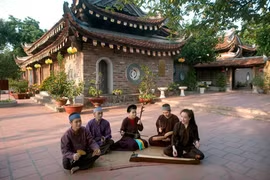
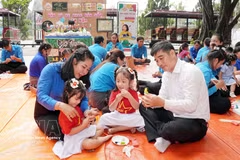
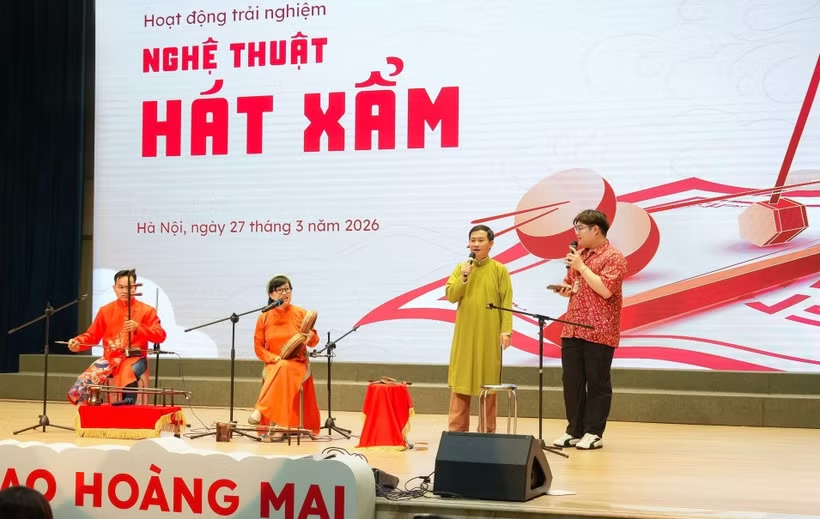
Members of the Xam Ha Thanh group lead an experiential Xam singing workshop for students at the Ngoi Sao Hoang Mai Education System in Hanoi. (Photo courtesy of Ngoi Sao Hoang Mai Education System)

Hanoi (VNA) - The active engagement of young people, combined with interactive education models in schools, is opening new pathways for Hat Xam (Xam singing), transforming local cultural values into a “passport” that helps define and project Vietnamese identity on the global stage.

Finding a “common frequency” in schools

In an effort to preserve intangible cultural heritage, bringing traditional arts closer to younger generations is a key solution to long-term vitality. A recent Xam performance experience at the Hoang Mai Star Education System in Hanoi illustrates this approach.

Xam singing, a folk art form with a history of more than 700 years, is not only a distinctive form of performance but also a living archive of Vietnamese cultural memory, reflecting everyday life, emotions, and aspirations across generations.

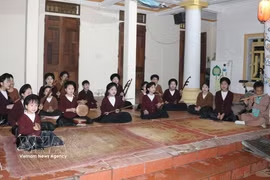
At the programme, guided by composer and researcher Nguyen Quang Long and artists from the Xam Ha Thanh group, students from primary through high school were introduced to Xam through vivid, interactive performances. The school environment was transformed into an open stage, where lessons on history, morality, patriotism, and resilience were conveyed through traditional melodies.

A highlight of the programme was the introduction and solo performance of the dan nhi (Vietnamese two-stringed fiddle), considered the “soul” of Xam singing. Its expressive sound helped students better understand the depth of this traditional art form. Many students actively engaged with performers, demonstrating the appeal of Xam when presented in an accessible and relatable way.

Beyond being an extracurricular activity, the program served as a bridge between past and present, fostering cultural appreciation and a stronger sense of heritage preservation among young people.

When Xam resonates with global rhythms

In recent years, Xam has increasingly attracted the attention of international visitors at creative cultural spaces, pedestrian streets, and community performances.

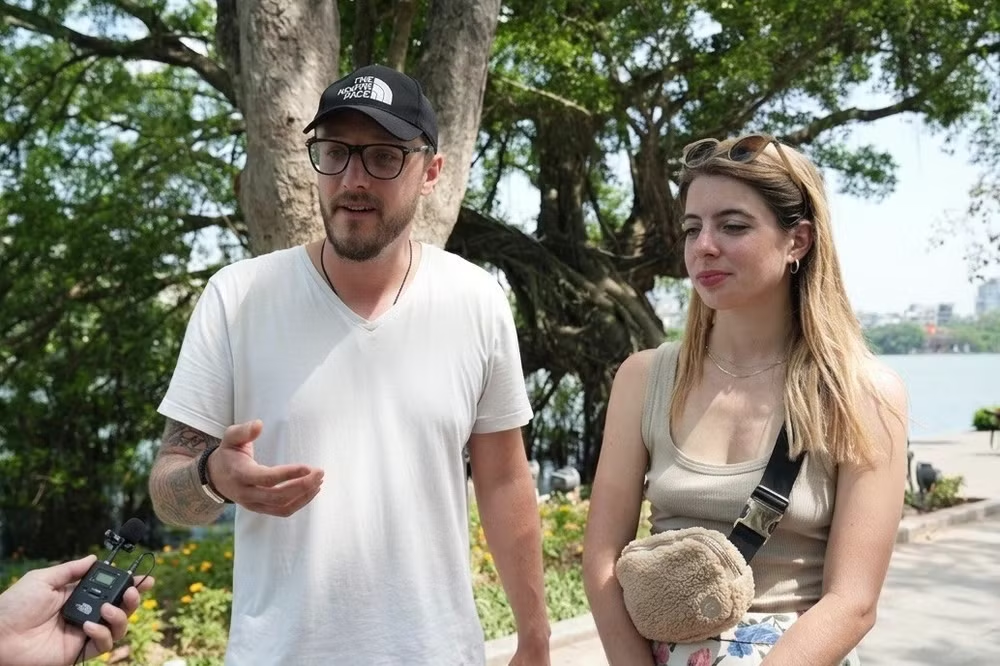
While visiting Hanoi’s Old Quarter, British tourists Dan and Elle said they were deeply impressed by the expressive performance and the sound of the dan nhi. Although they did not understand the lyrics, they noted that Xam reminded them of Western blues music due to its storytelling nature and emotional depth.

This comparison is not coincidental. Both Xam and blues originate from working-class communities and carry strong humanistic values. This shared foundation creates a cultural bridge, enabling international audiences to connect more easily with Vietnamese traditional music.

Amid growing global demand for authentic, locally rooted, and historically rich cultural experiences, Xam holds strong potential as a distinctive form of cultural diplomacy. International audiences today seek not only entertainment but also authentic and differentiated cultural narratives.

Composer and researcher Nguyen Quang Long argues that the vitality of Xam lies in its adaptability. If preserved in a “frozen” state, it risks losing relevance in contemporary life. Historically, Xam has always been responsive and improvisational, reflecting the social realities of its time.

He said that by preserving its core artistic values while expanding its thematic content to reflect modern life and incorporating new musical trends, Xam can reach broader audiences without losing its identity. This is why it is increasingly viewed as an “open heritage” form, an art that evolves, adapts, and continues to develop in the context of globalisation.
543-202606022134481.jpg
Dan and Elle, visitors from the United Kingdom, share their impressions after experiencing the traditional art of Xam singing. (Photo: hanoimoi.vn)

Bringing Xam to the global stage

While researchers like Nguyen Quang Long play a key role in preserving the essence of Xam, younger generations are expanding its presence in the digital age.

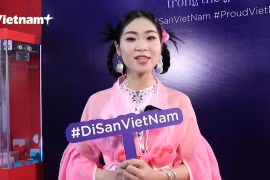
Nguyen Khanh Linh, a Gen Z content creator who has studied Xam since childhood, is a notable example. According to her, bringing Xam to global audiences requires innovation through co-creation. Its original values in melody, technique, and narrative spirit should be preserved, but can be combined with rap, jazz, EDM, and other contemporary art forms to broaden its appeal.

At the same time, digital platforms such as TikTok, Spotify, and YouTube are creating opportunities to bring Xam closer to global audiences through experiential videos, street interviews, and creative remixes.

Technology is opening new spaces for traditional arts, allowing heritage to reach far wider audiences. However, for Xam to become a competitive cultural product internationally, a long-term strategy is needed, one that balances the preservation of authenticity with the development of a comprehensive ecosystem for promotion, distribution, and branding across global digital platforms./.
VNA

See more

The poster of the Vietnam Circus Federation's special performance dedicated to soldiers who devoted and sacrificed their lives in safeguarding the nation's borders. (Photo: Vietnam Circus Federation)

Wide range of artistic programmes to commemorate war invalids and martyrs day

Alongside tribute activities nationwide to mark the 79th anniversary of War Invalids and Martyrs Day (July 27, 1947–2026), arts organisations and local authorities are staging special performances honouring fallen heroes, war invalids, sick veterans and people who rendered meritorious service to the revolution, while promoting the tradition of gratitude, patriotism and national pride.

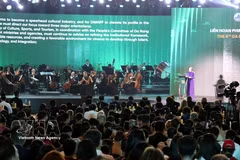
At the opening of the first-ever Cultures of the World Festival in Hanoi. (Photo: VNA)

Vietnam charts course for regional culture, creativity hub status by 2045

The blueprint seeks to deepen international cultural integration, export Vietnamese values and absorb the essence of world cultures. The end goal is an advanced culture steeped in national identity, deployed as a soft power to fuel rapid, sustainable growth, lift Vietnam’s global standing, and add a distinct thread to the tapestry of human civilisation.

Deputy Minister of Foreign Affairs Ngo Le Van, Chairman of the Vietnam National Commission for UNESCO, speaks at plenary session of the 48th session of the UNESCO World Heritage Committee in Busan on July 20, 2026. (Photo: VNA)

Vietnam proposes priorities to strengthen international cooperation on world heritage conservation

On behalf of Vietnam, the deputy minister proposed three priorities of strengthening international cooperation and capacity-building for member states, particularly developing countries; promoting science-based conservation that strikes a balance between preservation and development while placing local communities at the centre; and enhancing coordination among relevant conventions and programmes, alongside the responsible application of digital technologies and artificial intelligence in heritage conservation.

Claudia Roth, a member of the German Bundestag, visits the Vietnamese booth at the festival. (Photo: VNA)

Vietnam attends multicultural festival in Germany as guest of honour

The Vietnamese booth attracted a large number of visitors with traditional dishes such as "nem cuon" (fresh spring rolls) and "bun cha" (grilled pork with vermicelli), along with displays of ao dai (traditional long dress), conical hats and cultural performances imbued with Vietnamese identity. These activities helped spread Vietnamese culture and foster understanding and closer ties between the Vietnamese community, German residents and international friends.

Representatives of countries and territories participating in the Asian Pencak Silat Championship. Photo: VNA)

10th Asian Pencak Silat Championship opens in Dong Nai

Speaking at the opening ceremony, Director of the municipal Department of Culture, Sports and Tourism Le Thi Ngoc Loan said the championship offers athletes an opportunity to compete in a spirit of fairness and sportsmanship while promoting exchanges, mutual understanding and friendship among participating countries.

A special art performance at the Khanh Hoa Sea Festival 2026 (Photo: VNA)

Khanh Hoa Sea Festival 2026 opens, promoting sustainable marine development

Having been held 10 times, the Khanh Hoa Sea Festival has evolved beyond a local celebration into an event of national significance in culture, economy and external relations. This year's edition continues to honour Vietnam's maritime cultural heritage while promoting tourism, the marine economy and international integration.

The golf course at NovaWorld Phan Thiet will host international tournaments during Sports Festival 2026. (Photo: VNA)

Around 7,000 athletes to compete at Sports Festival 2026

This year's festival will feature 12 sports, introducing several new events such as national youth triathlon and beach tennis championship, while expanding its international scope by bringing together clubs, athletes, and police forces from ASEAN countries for events such as the ASEAN Police Open Golf Tournament 2026.

A performance of Cheo Tau folk singing, a distinctive cultural tradition of O Dien commune in Hanoi. (Photo: VNA)

Beyond preservation: Unlocking the value of Vietnam's heritage

Dr. Nguyen Thu Hanh, Director of the Centre for Research and Development of Vietnam Cultural Industry (SDCI), said Vietnam has traditionally focused on preserving heritage rather than creating new value from it. The key obstacle, she noted, is the weak connection between heritage and science, technology, education, design, communications and the marketplace, limiting its economic, educational and social impact despite the country's abundant cultural resources.

Vietnamese Ambassador to Laos Nguyen Minh Tam speaks at the event. (Photo: VNA)

Film screening in Vientiane highlights Vietnam-Laos strategic cohesion

A screening of the special Vietnamese feature film Mua Do (Red Rain) was held in Vientiane on July 16 to mark the 49th anniversary of the signing of the Vietnam-Laos Treaty of Amity and Cooperation (July 18, 1977–2026), reaffirming the two countries' strategic cohesion through cultural exchange.

Artists from the Vietnam National Puppetry Theatre deliver emotionally compelling performances that recreate the rich historical legacy of Thang Long–Hanoi. (Photo: VNA)

Top leader's directives chart new course for culture-led development: experts

Artists and cultural experts shared the view that the top leader's guidance at the second meeting of the Central Steering Committee for the Development of Vietnamese Culture not only reviewed the initial implementation of the Politburo's Resolution No. 80-NQ/TW but also identified four major gaps requiring urgent action and three strategic shifts to unlock the full potential of culture.