Hanoi (VNA) - The Politburo's Resolution 80-NQ/TW identifies culture as both the spiritual backbone of society and a key driver of Vietnam’s rapid and sustainable development. Turning that vision into reality means protecting copyright, upholding heritage values and unlocking cultural resources so they actually power the economy.
Copyright – bedrock of cultural industries
Across Vietnam, a spotlight has landed on music copyright rules that require cafés, restaurants, hotels, karaoke parlors and supermarkets to pay royalties when they play protected songs for business. While many cheer stronger protections for artists, some business owners, though, are pushing back, questioning the rates, how fees are collected and whether the policy is fair.
Officials remind everyone that royalty payments aren’t new. They’re already embedded in Vietnam’s Intellectual Property Law and its enforcement guidelines. The current flare-up stems from Decree 134/2026, which overhauls how royalties are calculated and distributed, and ties fees to a higher base salary starting on July 1, 2026. The rates vary by business type, size, location and venue, avoiding a blunt one-size-fits-all price tag.
From both State governance and cultural angles, copyright enforcement is seen as critical to protecting creators’ legitimate rights and interests. Artists and experts argued that paying for commercial music use is a global standard practice, no different from paying for other essential business services. Royalties carry economic value, but they also validate creative labour and incentivise artists to keep producing.
Vietnam has made real progress in collecting music royalties. Still, delay and evasion persist in parts of the business community. Experts recommend pairing inspections and fines with better public education, clearer legal communication, and total transparency around how fees are collected, where the money goes, and how collective management groups operate, all to build wider trust.
Protecting copyright is widely seen as the basic building block for a healthy creative scene, faster-growing cultural industries, and Vietnamese content that can compete globally. Ministries are pushing media outlets to step up public outreach so that firms and citizens actually understand the rules.
Cultural heritage - enduring source of sustainable development
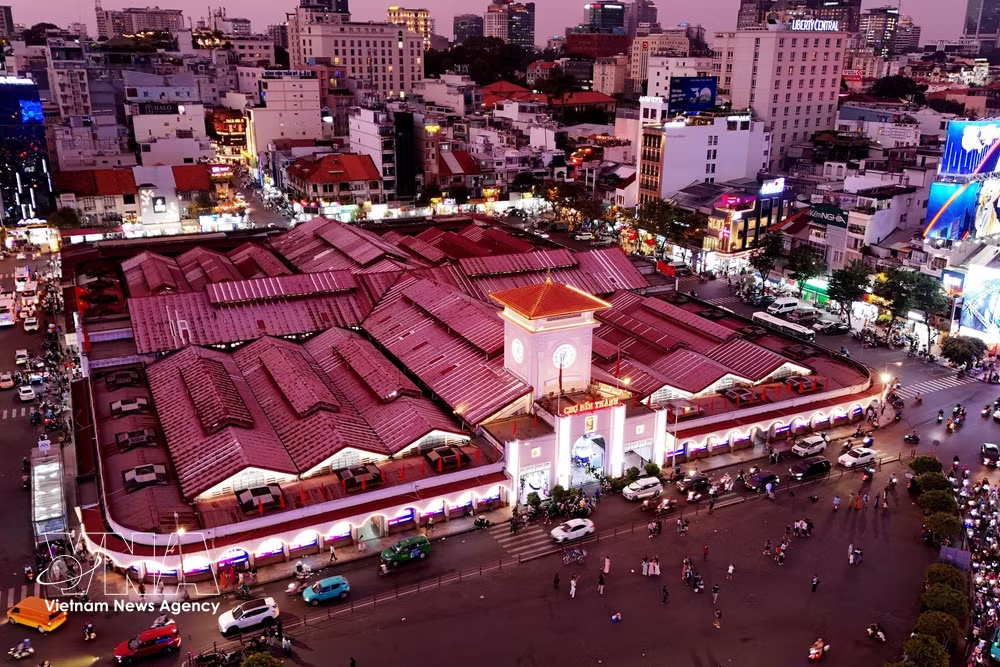
If copyright fuels today’s creativity, cultural heritage is an equally potent source of long-term development, linking the past to the present and laying a foundation for future growth. Ho Chi Minh City, Vietnam’s economic powerhouse, sits on a deep well of heritage built across generations. Historic sites, museums, festivals and urban memory shape an one-of-a-kind identity and double as development fuel in the modern age.
As globalisation and digital transformation accelerate, heritage is increasingly treated as a distinct class of cultural capital. History, art, architecture and social value sharpen the city’s appeal, its competitive edge and the rise of creative industries. Using those assets well means the city can keep its identity while generating new economic growth.
But rapid urbanisation is putting the squeeze on heritage, especially the intangible kind. Traditional performing arts, community cultural spaces and pieces of the city’s historical memory are at real risk of vanishing. To fight back, the city is weaving stronger cultural protections into the draft Law on Special Urban Areas, including mechanisms to safeguard cultural and social capital. A world-class city isn’t measured only by GDP and shiny infrastructure, but by whether it preserves its identity, honours its history and puts people at the centre of urban life.
The city now holds 321 nationally and locally recognised historical and cultural relics, including four special national sites, 99 national ones and 218 at the city level. It hosts 25 museums that safeguard 23 national treasures, three UNESCO-recognised intangible cultural heritage elements and 15 nationally recognised intangible heritages.
Experts are pushing to tighten legal and policy frameworks for heritage protection, a faster digital makeover across the cultural sector; and a bigger push into cultural tourism, cultural industries and the creative economy; step up international cooperation and raise public awareness. They also want detailed regulations written into the forthcoming Law on Special Urban Areas to protect cultural capital, urban memory and intangible heritage values while maintaining a viable balance between conservation and development as Ho Chi Minh City scales into a global megacity.
UNESCO heritage corridors unlock new boom
Beyond local conservation, Vietnam is increasingly pursuing regional development strategies built around UNESCO-recognised heritage sites, opening new lanes for sustainable economic growth across localities.
UNESCO’s inscription of the Ha Long Bay–Cat Ba Archipelago and the Yen Tu–Vinh Nghiem–Con Son, Kiep Bac complex has created a clear opening for a heritage-based economy in northeastern Vietnam. The global recognition not only lifts the region’s tourism standing but also pushes localities toward integrated development models that link culture, tourism and quality services.
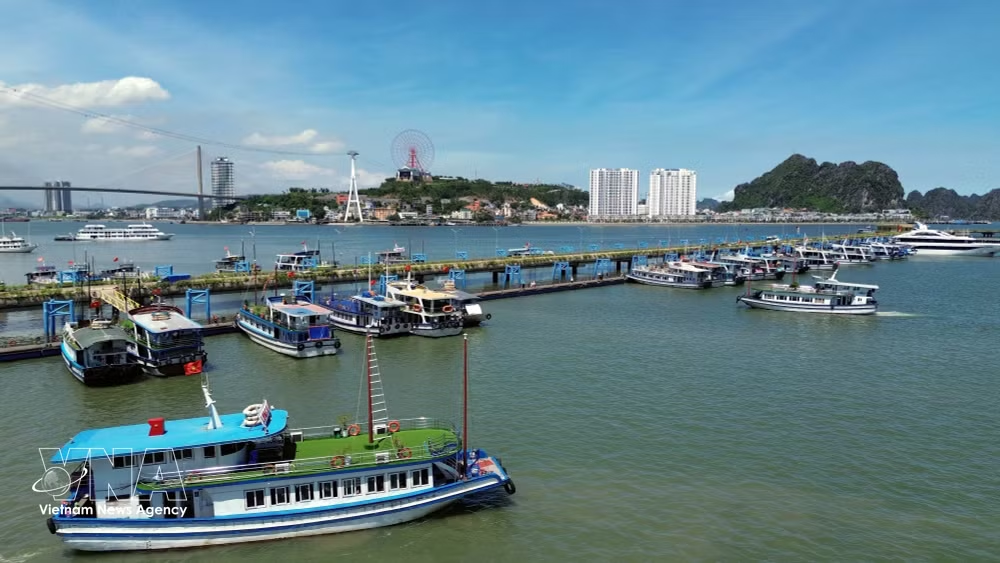
Initial results show the heritage economy is taking hold. Visitor numbers have jumped following UNESCO recognition, while demand for cultural, spiritual and immersive experiences keeps rising. New tourism routes connecting Ha Long Bay in Quang Ninh province and Lan Ha Bay in Hai Phong city are stitching the region together, making visitors stay longer and spend more.
What makes this model stand out is regional teamwork. Instead of going it alone, neighbouring localities are breaking down administrative barriers, setting up joint management mechanisms, pooling resources and marketing a unified destination brand. As a result, the heritage economy is moving beyond tourism into a bigger play around integrated governance, green growth and long-term sustainability. It’s a practical way to turn cultural, historical and natural assets into real economic engines, and a step toward Vietnam’s larger cultural development goals.
The UNESCO listing has also revved up the Hai Phong–Quang Ninh growth corridor, reaffirming the outstanding universal value of the northeast’s cultural, historical and natural landscapes. Beyond preserving and showcasing the nation’s legacy, these heritage assets are becoming tangible drivers of tourism and local economic expansion.
Taken together, the simultaneous push on copyright enforcement, heritage protection and heritage economy shows that Vietnam is delivering on the Resolution 80-NQ/TW’s core goals. By unlocking cultural soft power, policymakers aim to make culture a strategic engine of rapid, sustainable and identity-rich national development in a new era./.