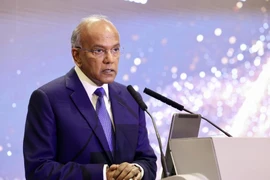
Hanoi (VNA) – Singapore continues to face a high risk of terrorism despite no specific intelligence indicating any imminent attack, according to a terrorism threat assessment report released on July 29 by the country’s Ministry of Home Affairs (MHA).
The report highlights that the protracted conflict between Israel and Palestine, along with the continued traction of radical narratives, is fuelling the risk of local self-radicalisation. The ministry warned that the self-proclaimed Islamic State (IS) group uses propaganda to exploit the war in Gaza and local grievances to reinforce its narrative of armed violence.
Since the outbreak of conflict in Gaza in October 2023, at least six Singaporean citizens have been found to support or were making preparations to take part in armed violence because of the conflict. The MHA noted that Singapore may be viewed as a potential target by extremist elements due to its ties with Western countries and Israel, as well as its status as a multicultural nation.
The report places particular emphasis on the threat of online self-radicalisation, with youths identified as the most vulnerable demographic. Since 2015, 17 individuals under the age of 20 have been dealt with under Singapore’s Internal Security Act (ISA). Most recently, two teenagers were subject to action under the ISA, one for planning attacks on mosques and the other for planning to join the IS.
The Internal Security Act permits detention without trial or the imposition of restriction orders, including limitations on movement and internet access, for individuals deemed a threat to national security.
Additionally, the report noted that extremist groups are leveraging artificial intelligence (AI) to support terrorism-related activities. These include generating and translating propaganda, producing convincing synthetic multimedia, creating personalised recruitment messages at scale, and planning and developing attacks./.
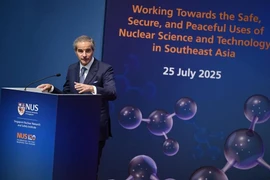
Singapore strengthens practical and concrete cooperation with IAEA
The Third Country Training Programme was inked between Singapore and IAEA in 2000 and then renewed in 2015. Accordingly, more than 140 participants from 27 countries were trained through 17 fellowships and seven capacity-building programmes.