Da Nang drives innovation in urban digital transformation, digital economy development

With the launching of its two-tier local administration model, the city is incorporating technologies such as artificial intelligence (AI) and blockchain to enhance service delivery for citizens and businesses, aligning with the Politburo’s Resolution 57-NQ/TW on breakthroughs in science, technology, innovation, and national digital transformation.

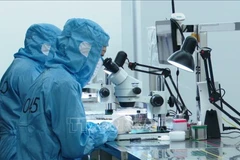
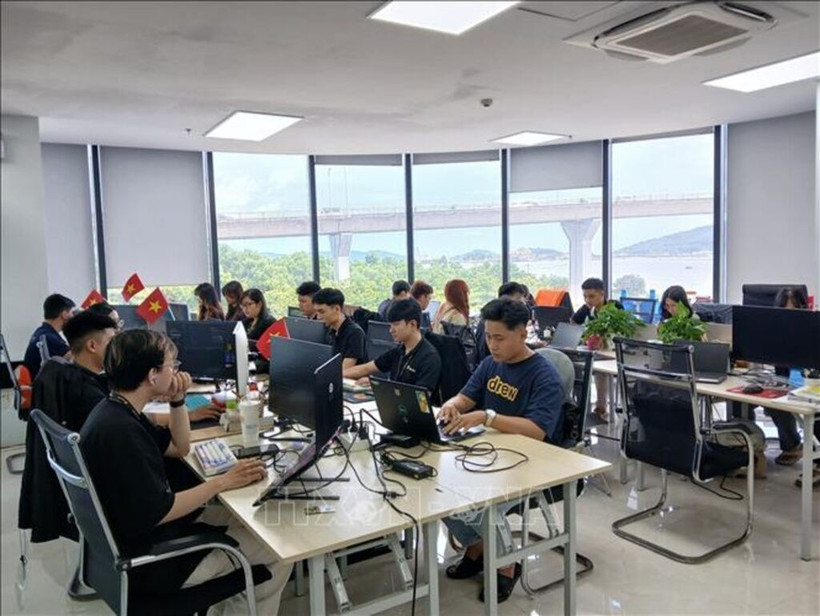
Semiconductor and AI startups are supported with workspace at the concentrated information technology park in Da Nang Software Park No. 2. (Photo: VNA)

Da Nang (VNA) – Based on its e-administration infrastructure, the central city of Da Nang is fast-tracking the integration of advanced technologies in public administration and digital economy development.

With the launching of its two-tier local administration model, the city is incorporating technologies such as artificial intelligence (AI) and blockchain to enhance service delivery for citizens and businesses, aligning with the Politburo’s Resolution 57-NQ/TW on breakthroughs in science, technology, innovation, and national digital transformation.

From testing ground to digital governance pioneer

Da Nang has become a leader in applying technology to public administrative management. AI and blockchain, once viewed as futuristic, are now central to reshaping administrative systems - streamlining processes, reducing paperwork, improving services, and enhancing transparency through real-time, data-driven decisions.

In support of this, the Prime Minister approved Decision No. 1236/QD-TTg for a national blockchain strategy through 2025, with a 2030 vision. This framework enables cities like Da Nang to build blockchain ecosystems, particularly for digital assets and land management.

According to Nguyen Hoai Tuong, Director of the Big Data and AI Centre, blockchain strengthens data security and transparency while opening new avenues for managing public services. Pilot models, especially sandbox testing, are the key to realising this potential, he held.

The city increasingly uses data dashboards and alert systems to guide governance, tracking key indicators like pending administrative procedures, public feedback, and weather data, boosting responsiveness at ward and commune levels.

Da Nang’s public service hotline 1022 now includes an AI-powered chatbot, available round the clock across Facebook Messenger, Zalo, and the hotline website. The city’s Intelligent Operations Centre (IOC) further decentralises data access, supporting real-time decisions. IOC Director Nguyen Van Quoc noted that the centre issues deadline alerts and notifies relevant ward-level leaders, ensuring timely service delivery and improving citizen satisfaction.

Da Nang has built one of Vietnam’s most integrated digital infrastructures. This foundation enables widespread AI and blockchain applications in urban management, infrastructure, land use, and public services.

Le Son Phong, Deputy Director of the municipal Department of Science and Technology, stated that digital transformation is not only a trend but also a driver of economic growth, government modernisation, and quality of life.

Online administrative services now make up nearly 60% of total procedures, with nearly 50% of adults holding digital citizen IDs. The IOC is central to delivering data-driven governance.

Digital economy, e-commerce development in line with regional connectivity


Information and communication technology is one of Da Nang’s five key economic sectors. In 2024, the city’s ICT industry earned 39.88 trillion VND (1.52 billion USD). With 2,556 digital enterprises - 2.35 per 1,000 residents, nearly triple the national average, and a tech workforce of 57,000 (7.7% of the labour force vs. the national average of 2.7%), Da Nang is well ahead.

Vice Chairman of the municipal People’s Committee Ho Quang Buu reported the digital economy contributed 20.96% to Da Nang’s GRDP in 2023 (national average is 16.5%) and is expected to reach 22% in 2024 (national average is 18.3%). The city aims for 35–40% by 2030, surpassing Resolution 57’s 30% target, he said.

Digital integration across sectors is driving growth and shifting Da Nang toward a digital-first economy. Local tech companies are becoming more self-reliant, creating “Made in Da Nang” platforms and applications.

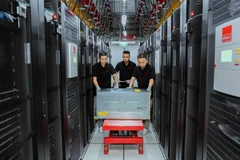
Tran Quoc Chinh, CEO of CMC Cyber Security, highlighted the city’s strengths in chip manufacturing and data application. He said that the firm aims to establish a data centre in Da Nang to support digital economic growth.

With its central location, modern logistics, and e-administration base, Da Nang attracts e-commerce and digital businesses. From 2023–2025, regional e-commerce integration has advanced through training, platform development, and partnerships, creating a vibrant digital commerce ecosystem.

Le Hoang Oanh, Director of the Ministry of Industry and Trade’s Department of E-commerce and Digital Economy, praised Da Nang as a regional pioneer. The city’s proactive transformation has built a strong foundation for a connected, sustainable digital economy, the official commented.

From 2026–2030, the ministry plans to enhance regional e-commerce links by improving infrastructure, policies, skills, and collaboration across local administrations, businesses, and service providers, with Da Nang expected to remain a key hub.

Under Resolution 57, Da Nang has defined 51 development goals. By 2050, it aims for the digital economy to contribute at least 60% of GRDP, higher than the target of 50% set by the resolution, and to foster at least three global-level digital enterprises. The city also targets attracting one top-tier international tech corporation to invest in local R&D and production.

This roadmap positions science, technology, and digital transformation as growth pillars. Fully digitised administration operations and services will cement Da Nang’s place as a leading innovation and tech hub in Vietnam and Southeast Asia./.

VNA
See more

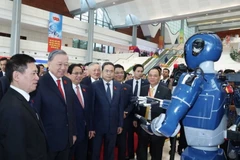
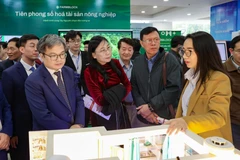
Party General Secretary To Lam ( second, from left) visits an exhibition showcasing the government's achievements in science, technology, innovation, and digital transformation. (Photo: VNA)

Fund mechanisms positioned to unlock greater resources for innovation

Resolution No. 57-NQ/TW of the Politburo defines fund-based mechanisms as the core financial tool for advancing science, technology and innovation. Under the resolution, State budget funding for research and development is prioritised for allocation through funds, alongside reforms in financial management, expanded autonomy, streamlined procedures, and acceptance of the risks and time lags inherent in research activities. It also calls for the establishment of venture capital funds and science and technology development funds to steer, mobilise and unlock social resources for innovation.

UAV Cup PV GAS 2025 looks for solutions to boost the low-altitude economy (Photo: qdnd.vn)

Digital economy helps power breakthrough growth

The application of digital technologies, big data, artificial intelligence, e-commerce and digital platforms is creating new opportunities for businesses and citizens across production, business activities and social governance. Sectors such as e-commerce, digital finance, smart logistics and digital platform-based services are generating significant added value, while online public services, cashless payments, digital education and digital healthcare are increasingly improving quality of life and the transparency and efficiency of state management.

Camera manufacturing at Sunny Opotech Vietnam Co., Ltd. in Yen Binh Industrial Park in Thai Nguyen province. (Photo: VNA)

Resolution No. 57: Vietnam moves to create favourable legal framework for technology transfer

The Ministry of Science and Technology has sought feedback on a draft decree amending the Government's Decree No. 76/2018/ND-CP, aiming to strengthen the legal framework for technology appraisal and transfer, improve support policies for participating entities, and enhance risk management to ensure sustainable development, environmental protection and public health.

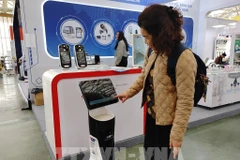
A visitor experience the robot receptionist at the Spring Fair 2026. (Photo: VNA)

Glorious Spring Fair 2026: technology underpins product quality

With the Politburo's rollout of Resolution No. 57-NQ/TW on breakthroughs in science, technology, innovation, and national digital transformation, along with Resolution No. 68-NQ/TW on developing the private economic sector, a key focus is on applying scientific and technological advances to produce essential consumer goods.

A large volume of goods of unclear origin is found in An Giang province (Photo: VNA)

PM orders tougher IP enforcement under new decree

The move aims to promptly combat, curb, and minimise IP violations; safeguard the legitimate rights and interests of citizens and businesses; build a transparent and healthy business environment; spread the nation’s image and prestige to advance rapid and sustainable development.

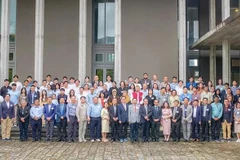
An overview of the seminar (Photo: VNA)

Vietnamese intellectuals in France join hands to advance science, technology at home

Held amid the nationwide efforts to implement the Resolution of the 14th National Party Congress and the Politburo’s Resolution No. 57-NQ/TW on breakthroughs in science, technology, innovation, and national digital transformation, the seminar served not only as an academic forum but also as a platform reflecting the sense of responsibility, intellectual engagement and aspiration to contribute among overseas Vietnamese intellectuals in the nation’s new development era.

The robotics team from Cau Giay Secondary School, Hanoi, performs at the event (Photo: VNA)

STEM Innovation Petrovietnam helps cultivate knowledge in technological era

The programme connected three sites in Hanoi, Nguyen Hue High School in Lao Cai, and Chau Thanh High School in Ho Chi Minh City, bringing together educators, students, representatives of businesses, and industry–energy engineers, and those directly supporting schools in implementing STEM (science, technology, engineering, and mathematics) education in practice.

Top 10 start-ups from Vietnamese universities receive innovation support from Singapore. (Photo: VNA)

Top 10 university start-ups in Vietnam secure innovation backing

The selected projects share a strong technology-driven orientation, particularly in artificial intelligence (AI), digital solutions and advanced materials. Their innovations address large-scale, real-world issues across sectors including healthcare, education, legal services, agriculture, energy, environmental protection and public governance.

Khanh Hoa province is accelerating digital transformation in tandem with building a smart city. (Photo: VNA)

Breakthroughs under Resolution No. 57 affirm leadership in digital era

After one year of implementing the Politburo’s Resolution No. 57-NQ/TW on breakthroughs in science, technology, innovation, and national digital transformation, numerous digital models and knowledge-based initiatives have been rolled out, bringing digital transformation to communities and contributing to the fulfilment of socio-economic development targets.

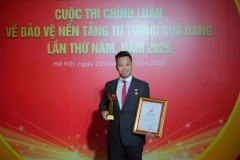
Assoc. Prof. Dr. Tran Le Hung, lecturer at the ESIEE Paris - an engineering school of University Gustave Eiffel. wins the promising award in the 5th national writing contest on safeguarding Party's ideological foundations in 2025 (Photo: VNA)

Science - technology paves way for “second wave of Doi moi”: expert

Assoc. Prof. Dr. Tran Le Hung, lecturer at the ESIEE Paris - an engineering school of University Gustave Eiffel, said future “Make in Vietnam” science and technology products will not only directly serve domestic demands, improve the people’s livelihoods, and boost labour productivity, but also have the potential to compete in international markets.

Hoang Nguyen Dinh, Vice Chairman of the People’s Committee of Ho Chi Minh City, speaks at the event (Photo: VNA)

Vietnam promotes On-chain financial infrastructure cooperation at Davos 2026

Jointly organised by the municipal People’s Committee, the Centre for the Fourth Industrial Revolution (C4IR) in the city (HCMC C4IR) and the Vietnam International Financial Centre in Ho Chi Minh City (VIFC-HCMC), the event was part of a series of activities showcasing the vision for building VIFC-HCMC, while expanding cooperation with global partners in finance, technology and innovation.