Vietnam – China people-to-people exchanges: A call for deeper, broader engagement

True friendship among nations must rest on a foundation of mutual respect, genuine understanding, and accurate perceptions. To this end, public information and outreach efforts must be broad-based and coordinated across various ministries, sectors, and organisations in both countries, an expert has said.

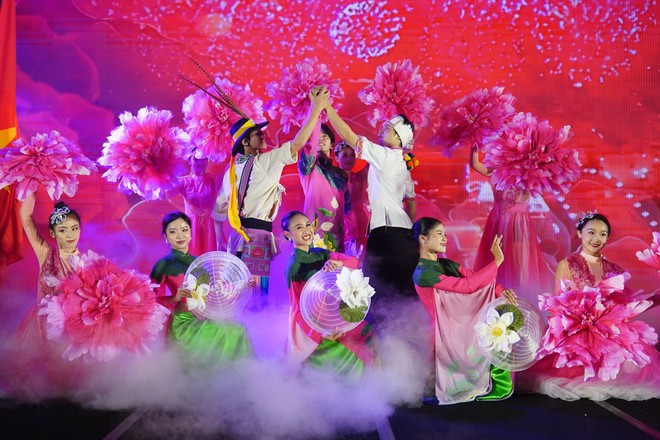
A dancing performance at the border Spring celebration and the Vietnam - China Border People's Festival 2025. (Photo: VNA)

Hanoi (VNA) – People-to-people exchanges have emerged as one of the six key pillars underpinning efforts by Vietnam and China to strengthen bilateral relations, particularly as both countries enter a new phase of development, and the year 2025 has been officially designated as the Year of Vietnam – China Humanistic Exchange – a move warmly welcomed by scholars, experts, and youth in both nations.

In a recent interview with the Vietnam News Agency, Nguyen Thi Phuong Hoa, former Deputy Director of the Institute for Chinese Studies and Deputy Editor-in-Chief of the China Studies Journal, offered a series of thoughtful proposals aimed at deepening and expanding people-to-people engagement in ways that contribute meaningfully to the enduring friendship between the two countries.

According to Hoa, efforts to strengthen these ties must proceed on two mutually reinforcing levels – high and grassroots. At the high level, clearly articulated policies and frameworks are essential. At the grassroots level, tangible and practical initiatives must be pursued to foster direct human connection. Together, these dimensions cultivate trust, enhance mutual understanding, and build resilient bonds between the peoples of both countries.
chi-hoa-01.jpg
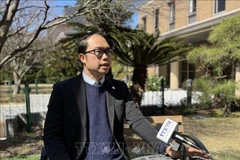
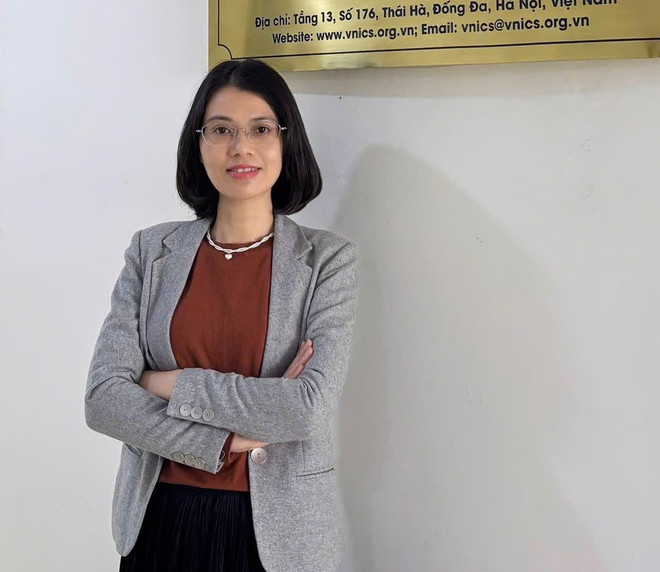
Nguyen Thi Phuong Hoa, former Deputy Director of the Institute for Chinese Studies and Deputy Editor-in-Chief of the China Studies Journal (Photo courtesy of Hoa)

True friendship among nations, Hoa emphasised, must rest on a foundation of mutual respect, genuine understanding, and accurate perceptions. To this end, public information and outreach efforts must be broad-based and coordinated across various ministries, sectors, and organisations in both countries. Crucially, these initiatives should not be limited to government efforts alone. Civil society actors – academics, artists, entrepreneurs, and community – must also play an active role.

Traditionally, people-to-people exchanges have focused on culture, education, and health care. Moving forward, however, these foundations should be expanded to include fields such as economy, science, technology, and environmental sustainability. Among these, economic cooperation stands out as particularly vital, serving as a concrete channel for deepening connections between the two populations.

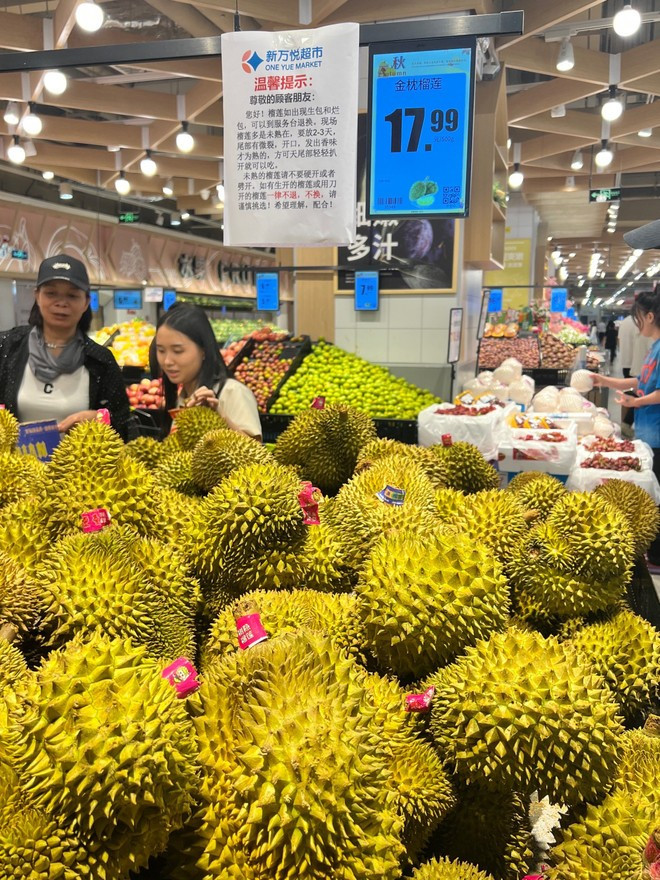
When Vietnamese consumers gain access to high-quality Chinese goods, it not only satisfies market demands but also enhances China’s image in Vietnam. Conversely, the growing appreciation of Vietnamese agricultural products and exports among Chinese consumers fosters goodwill and reinforces trust, she went on.
sau-rieng.jpg
Vietnamese durian is increasingly popular among Chinese consumers. (Photo: Internet)

Investment also plays an important role. If Chinese enterprises operating in Vietnam commit themselves to sustainable and socially responsible practices—creating jobs, protecting the environment, and contributing to local development—they can significantly improve public perceptions of China in Vietnam. Thus, investment should be seen not only in economic terms, but also as a powerful means of cultivating bilateral friendship, according to the expert.

Looking to the future, Hoa underscored the need for more targeted sectoral cooperation to enrich people-to-people ties. Agriculture, for instance, offers immense potential. Given the strong agricultural trade between the two countries, exchanges between Vietnamese and Chinese farmers should be held and cover cultivation techniques, post-harvest processing, and innovative production models. Such exchanges would generate valuable community-level connections and bolster the social fabric of the bilateral relationship.

Tourism presents another practical avenue. Making travel to China more accessible for Vietnamese citizens would be a forward-looking step. While China currently offers visa exemptions to nationals of 47 countries, Vietnam could encourage Beijing to consider visa-free or low-fee entry for Vietnamese travellers to further facilitate tourism, educational exchange, and cultural understanding.

Hoa added Vietnam has already made strides in advancing people-to-people diplomacy. The Vietnam – China People’s Forum is one notable example. Modest in scale, the forum still gathers dedicated scholars, professionals, and long-standing advocates of bilateral cooperation. These gatherings serve as platforms for candid and constructive dialogue on the challenges and opportunities facing the relationship, and offer concrete and sector-specific recommendations.
du-khach.png
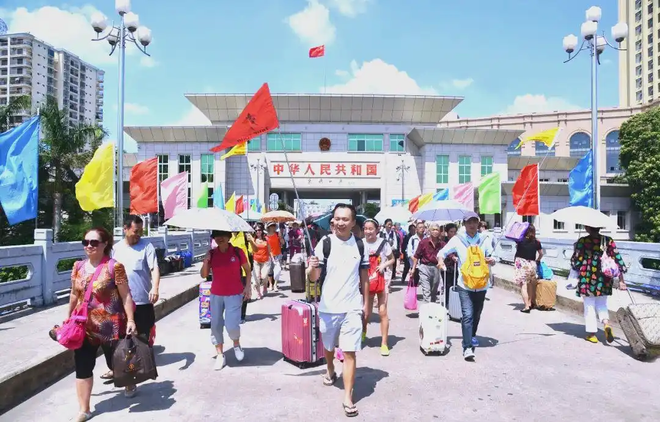
China continues to be the largest source of foreign tourists to Vietnam. (Photo: VNA)

To broaden the impact of such initiatives, it is also important to leverage the voices of influential public figures, media personalities, and social media influencers to engage the public, especially younger generations. At the same time, communications must be extended to traditionally less-involved groups such as farmers, industrial workers, and other labour sectors. Accessible communication strategies should be employed to help these communities better understand China and the evolving dynamics of bilateral cooperation. By diversifying target audiences, people-to-people exchange mechanisms can become more inclusive and resilient.

As the People’s Daily of China has noted the foundation of the China – Vietnam relationship lies in the people. The close interaction between citizens of both nations forms a vital current in the river of friendship—one that contributes to a community of shared future that carries strategic significance. The Year of Humanistic Exchange 2025 presents a timely and valuable opportunity to deepen mutual understanding, enhance public awareness of the traditional friendship, and further solidify the societal foundation of bilateral ties in a new period, she remarked./.
VNA

See more

Overseas Vietnamese attending the 11th National Patriotic Emulation Congress pose for a commemorative photo. (Photo: VNA)

Overseas Vietnamese spread pride, aspirations for contributions to homeland

Representing more than 6.5 million overseas Vietnamese (OV) worldwide returning home to attend the 11th National Patriotic Emulation Congress, many overseas delegates expressed their joy and pride in being part of the great national unity bloc, along with a strong aspiration to contribute and join hands in building an increasingly prosperous country.

Hanoi's sex ratio at birth stands at around 110 boys per 100 girls in 2025. (Photo: VNA)

Hanoi strengthens efforts to curb sex imbalance at birth

Alongside changing mindsets, the capital has implemented a wide range of coordinated solutions to address sex imbalance at birth. Communication campaigns have been intensified at the grassroots level, targeting residential communities, youth, couples preparing for marriage and women of reproductive age.

Nguyen Duy Anh, Honorary Chairman of the Vietnamese Association in Fukuoka. (Photo: VNA)

OVs enjoy diverse channels to contribute expertise to national development

He said OVs are ready to share professional expertise in education, science and technology, and business governance, and facilitate investment connections and trade promotion. They also help preserve Vietnamese culture and language, promote the country’s image abroad, and support social welfare activities at home.

Delegates pose for a commemorative photo at the Bo Y International Border Gate. (Photo: doanthanhnien.vn)

Youths from Vietnam, Cambodia and Laos gather for 2025 festival

Sam expressed his hope that the experiences gained at the festival, together with positive impressions of the heroic and beautiful land of Quang Ngai, will become valuable assets, enabling young people to act as strong bridges for the great friendship among the three countries.

Prime Minister Pham Minh Chinh (central) and students who win prizes at international competitions in 2025. (Photo: VNA)

Prime Minister commends Vietnamese students winning international prizes

According to the Ministry of Education and Training (MoET), over the past decade, Vietnamese student teams competing in international academic contests have won a total of 434 prizes, including 132 gold, 169 silver and 133 bronze medals, along with certificates of merit. Many students achieved consecutive gold medals over two years, while some secured gold medals when they were 10th graders.

Nguyen Hong Son, President of the Union of Vietnamese Associations in Japan, grants an interview to the Vietnam News Agency's reporter. (Photo: VNA)

OV community a vital bridge in Vietnam’s international integration, development

The UVAJ President also praised the Party and State’s consistent and comprehensive policies towards overseas Vietnamese, ranging from citizen protection and integration support to encouraging their contributions to national development. In particular, creating conditions for overseas Vietnamese to engage in political, economic and cultural activities at home reflects the spirit of great national unity.

Illustrative image (Photo: VNA)

Breakthrough mechanisms, policies for education, training approved

Regarding recruitment, employment and management of human resources in the education sector, the Resolution stipulates that the directors of provincial Departments of Education and Training are authorised to recruit and receive teachers, school managers and staff for public kindergartens, general education institutions, continuing education centres, specialised schools and public vocational high schools in their provinces.

Delegates at the opening of the exhibition (Photo: VNA)

Exhibition highlights vitality of Vietnamese cultural heritage

The exhibition features nearly 200 images showcasing Vietnam’s cultural heritage and efforts to preserve and promote its values in recent years. It is structured around four themes: the legal and policy framework for heritage protection; Vietnamese heritage recognised by UNESCO; the diversity and uniqueness of Vietnamese cultural heritage; and cultural heritage for sustainable development.

During the 2026 New Year holiday, civil servants and public employees will enjoy a continuous four-day break from Thursday, January 1, to Sunday, January 4, 2026. (Photo: VNA)

Civil servants, public employees to have four-day New Year break

Under Official Dispatch No. 12729/VPCP-KGVX dated December 25, civil servants and public employees will have a four-day break from Thursday (January 1) to Sunday (January 4, 2026). To offset this, the working day on Friday (January 2, 2026) will be shifted to Saturday of the following week (January 10, 2026).

The campaign aims to mobilise social resources to support 1.5 million people in need during the upcoming Tet (Lunar New Year) holiday. (Photo courtesy of the VNRC)

Vietnam Red Cross Society launches Tet gift campaign

The campaign aims to mobilise social resources to support 1.5 million disadvantaged individuals, including people with disabilities, the elderly, orphaned children and those affected by natural disasters, for the upcoming Tet (Lunar New Year) holiday.

Illustrative image (Photo: VNA)

Incentives in Population Law expected to reverse birth rate decline

Vietnam’s population has already topped 100 million, but the 2025 population report reveals trends accelerating well beyond earlier forecasts. Fertility has nosedived to all-time lows: the total fertility rate slipped from 2.01 children per woman in 2022 to 1.96 in 2023, then plunged to a record 1.91 in 2024.

Hanoi plans fireworks displays at five locations to welcome New Year 2026. (Photo: qdnd.vn)

VGCL supports proposal for four-day New Year break

Under the plan, civil servants and public employees will take the statutory holiday on January 1, be off work on January 2, and make up the working day on the next Saturday, which falls on January 10, 2026. This would create an uninterrupted four-day break from Thursday (January 1) to Sunday, (January 4, 2026).