Hanoi (VNA) – The US news site ainvest.com on August 5 ran an article highlighting Vietnam’s impressive resilience in the face of global headwinds, noting that the country’s GDP growth in the second quarter of 2025 expanded by 7.96% year-on-year.
According to the article, Vietnam's economy has long been a paradox of contrasts: a manufacturing powerhouse with a youthful population, a rapidly digitising consumer base, and a government determined to balance growth with stability. In the second quarter, this duality crystallised in the form of rising inflation and record-breaking GDP expansion.
The consumer price index (CPI) of Vietnam in the first half of the year averaged 3.27%, with core inflation at 3.16%, driven by surging housing and utility costs, food prices, and healthcare expenses, it said, noting that this modest inflationary pressure coexists with a GDP growth rate of 7.96% year-on-year in Q2, a figure that underscores Vietnam's remarkable resilience in the face of global headwinds.
Vietnam's inflation rate in the second quarter, while higher than its Q1 level of 3.01%, remains within the government's 4.5% target range, the article said.
The Vietnamese Government's cautious monetary policy, which prioritises maintaining consumer purchasing power, has prevented inflation from spilling into a crisis, it said, adding that for investors, this means the Southeast Asian nation’s inflationary environment is manageable, offering a stable backdrop for capital deployment.
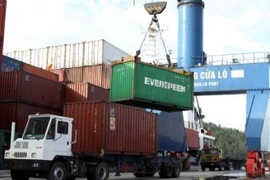
Vietnam's Q2 GDP growth of 7.96% was propelled by a 10.3% surge in industrial production and an 8.14% expansion in services. Foreign direct investment (FDI) commitments in the first half reached 21.5 billion USD, a 32.6% jump from the previous year, signaling sustained confidence in Vietnam's industrial ecosystem.
Meanwhile, the consumer sector is undergoing a quiet revolution. Retail sales rose 9.3% in the first half, fueled by a rebound in tourism and rising disposable incomes. The Government's push for digital services and ESG-aligned consumption further enhances the sector's appeal.
The article noted that despite the outlook is bullish, risks persist as global demand volatility, particularly in the US and China, could temper export growth. Additionally, inflationary pressures, though controlled, may intensify if geopolitical tensions escalate. However, these risks are manageable.
According to the article, Vietnam's government has demonstrated agility in addressing challenges, from administrative reforms to accelerate project approvals to proactive fiscal policies that support infrastructure development. The recent reduction in the number of provinces from 63 to 34 is a testament to this efficiency, streamlining governance and reducing bureaucratic delays.
Vietnam's economic resilience in Q2 - marked by controlled inflation, robust GDP growth, and strong FDI inflows, validates the country’s position as a strategic investment destination, it said, stressing that for long-term investors, the country's demographic dividend, digital acceleration, and industrial modernisation present a unique confluence of opportunities.
As global supply chains continue to shift and sustainability becomes a non-negotiable, Vietnam's ability to adapt and innovate positions it not just as a beneficiary of growth, but as a driver of it, the article added./.
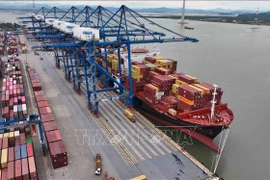
AMRO raises 2025 economic growth forecast for Vietnam to 7%
The bumping up of the country’s growth is really a reflection of the much better outturn in the first half of the year, as it notched a multi-year high GDP growth of 7.52% in the first half of 2025.