Vietnam improves visa policy to boost tourism competitiveness

With a view to fostering rapid and sustainable tourism growth, Vietnam is professionalising its promotion strategy, focusing on digital technology and market diversification. Consistent communication campaigns, launched both domestically and internationally, will promote the new slogan “Vietnam – Travel to love,” highlighting the country as a safe, hospitable, high-quality, and experience-rich destination.

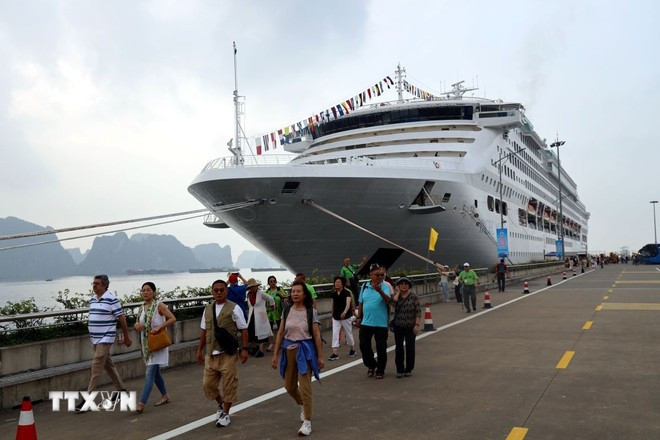
Quang Ninh welcomes Pacific World cruise ship carrying 1,700 foreign tourists on April 30. (Photo: VNA)

Hanoi (VNA) – Vietnam’s visa policy has become increasingly open, yet its competitiveness remains modest as compared to other countries in the region. Therefore, improving visa policies is deemed essential to enhance Vietnam’s tourism appeal and contribute to the country’s growth target of at least 8%.

According to Pham Van Thuy, Deputy Director General of the Vietnam National Authority of Tourism under the Ministry of Culture, Sports and Tourism, Vietnam currently offers bilateral visa exemption to citizens of 15 countries and unilaterally waives visas for those from12 others. Government Resolution No. 44/NQ-CP dated March 7, 2025 extends the visa exemption until March 14, 2028, allowing a maximum stay of 45 days regardless of passport type or entry purpose.

A significant step forward is the approval of the law amending and supplementing several articles of the Law on Exit and Entry of Vietnamese Citizens, effective from August 15, 2023. Under this law, the validity of e-visas has been extended from 30 to 90 days, allowing single or multiple entries, and now applies to all countries and territories. These changes have made it easier for international tourists to visit Vietnam and have enhanced the country’s tourism attractiveness.

In addition, a specific visa exemption policy is applied to Phu Quoc Island off the coast of Kien Giang province in the Mekong Delta, allowing foreign tourists to stay for up to 30 days without a visa, provided they remain on the island throughout their stay.

As part of the 2025 national tourism stimulus programme, the government adopted Resolution No. 11/NQ-CP to grant conditional visa exemptions to nationals of Poland, the Czech Republic, and Switzerland. These visitors will benefit from a visa-free stay of up to 45 days if they travel under programmes launched by authorised Vietnamese travel agencies. The policy is effective from March 1 to December 31, 2025.

The Ministry of Culture, Sports and Tourism has issued an action plan to implement the programme (Decision No. 444/QD-BVHTTDL) and is actively working with the Ministries of Public Security and Foreign Affairs to propose new visa incentives targeting high-net-worth individuals and strategic markets.

Strengthening image of a “safe, friendly, and attractive” destination

With a view to fostering rapid and sustainable tourism growth, Vietnam is professionalising its promotion strategy, focusing on digital technology and market diversification. Consistent communication campaigns, launched both domestically and internationally, will promote the new slogan “Vietnam – Travel to love,” highlighting the country as a safe, hospitable, high-quality, and experience-rich destination.

xe-truot-nui.jpg
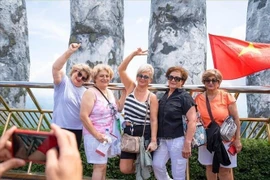
International tourists experience the Alpine Coaster, about 2,400m long. (Photo: VNA)

Promotional efforts will be intensified in key markets in Northeast Asia (China, the Republic of Korea), Western Europe, the United States, and Australia, as well as emerging markets such as India. Vietnam will also target niche segments such as golf tourism, wellness tourism, MICE, and river tourism.

The tourism sector is also proposing the establishment of tourism promotion offices in priority markets to strengthen direct engagement with foreign partners.

Efforts will focus on digital transformation in promotional activities, including the application of AI, big data, and outreach through global digital platforms such as Google, Facebook, TikTok, OTAs, and international influencers (KOLs).

Regional and international cooperation will be enhanced, with priority given to Mekong sub-regional and ASEAN initiatives. The tourism sector will also collaborate closely with airlines, media, and private enterprises on joint communication campaigns.

Numerous major events are planned, including National Tourism Year 2025, international trade fairs such as ITB Berlin and WTM London, and roadshows in target markets including Europe, Northeast Asia, Australia, India, and North America. /.

VNA

See more

Delegates and students pose for a commemorative photo. (Photo: baocantho.com.vn)

Four more Can Tho schools earn French education accreditation

The recognition of six schools under the Label FrancEducation programme is expected to create momentum for expanding education cooperation between French and Can Tho institutions, contributing to human resources development and friendship between the two countries.

A seminar at the programme (Photo: VNA)

Event promotes inclusion, empowerment for youth with disabilities

A key feature of the programme will be the dialogue “The Inspirers – Family Support on the Journey of Resilience”, where exemplary families and inspirational figures will share stories of overcoming adversity and spread messages of compassion, understanding and community responsibility in building an inclusive and humane society.

UN Resident Coordinator in Vietnam Pauline Tamesis (Photo: VNA)

South–South cooperation promotes rights, justice for women and girls

UN Resident Coordinator in Vietnam Pauline Tamesis commended Vietnam’s sustained commitment to gender equality, noting advances in budgeting, land use, social insurance and domestic violence prevention under the recent review of the Convention on the Elimination of All Forms of Discrimination against Women (CEDAW).

Party General Secretary To Lam presents Nhan Dan newspaper with the first-class Labour Order on March 11. (Photo: VNA)

Nhan Dan newspaper must act as ideological vanguard, shield, information sensor: Party chief

In a keynote address at a ceremony in Hanoi marking the 75th anniversary of the newspaper’s first issue on March 11, General Secretary Lam highlighted its more than seven decades of evolution while maintaining its role as the Party’s sharp ideological weapon, an effective information and communication channel for Party committees and authorities at all levels, and a trusted platform for Party members and people.

A poster celebrating the Election Day (Photo: VNA)

Final preparations underway for Election Day

In Hanoi, local authorities have increased the dissemination of election-related information through community loudspeaker systems, information boards, official websites and verified social media pages, helping officials, Party members and residents better understand their rights and responsibilities as voters.

NA Chairman Tran Thanh Man inspects a constituency in Dong Nai province. (Photo: VNA)

Dong Nai works to ensure workers cast vote on Election Day

With the utmost regard for citizens’ electoral rights and responsibilities, and in a spirit of creating optimal conditions for workers, especially those employed in industrial parks and non-state enterprises, the provincial leader has requested that no overtime be scheduled during voting hours.

Zambia's Minister of Agriculture Reuben Mtolo Phiri (first, left), learns about the OM19 rice variety grown at Tien Thuan cooperative in Thanh Quoi commune,, Can Tho city (Photo: VNA)

Can Tho shares agricultural transformation experience with Zambia

Rice production remains Can Tho’s key industry. Alongside maintaining production, Can Tho has encouraged value chain linkages among farmers, cooperatives and businesses, while accelerating the application of science and technology, mechanisation and digital transformation in farming.

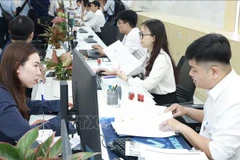
Staff members of the Hanoi Public Administrative Service Centre handle administrative procedures for local residents. (Photo: VNA)

Hanoi: 95% of administrative procedures to be handled from home

The plan targets that at least 80% of administrative procedures under the city’s authority will be provided as fully online public services, while more than 95% of applications will be received and processed entirely online. By June 30, 2026, about 80% of administrative procedures are expected to be restructured based on integrated data systems, with the figure rising to 95% by the end of the year.