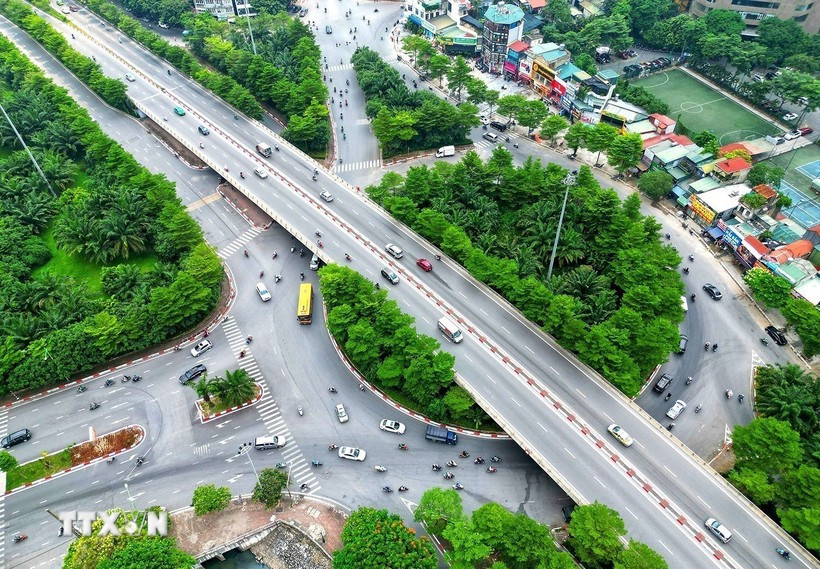
Hanoi (VNA) – As Vietnam pursues its 2050 net-zero emissions target and advances its commitments under the Political Declaration on Establishing the Just Energy Transition Partnership (JETP), experts and scientists have emphasised the need to phase out projects with high pollution risks while accelerating the development of sustainable green initiatives in the fields of energy, transport and construction.
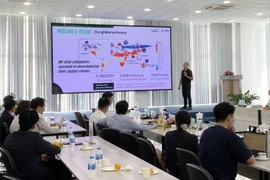
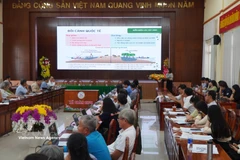
This view was highlighted at a technical roundtable on climate-compatible growth and the introduction of an integrated climate, land, energy and water model held in Hanoi on November 18.
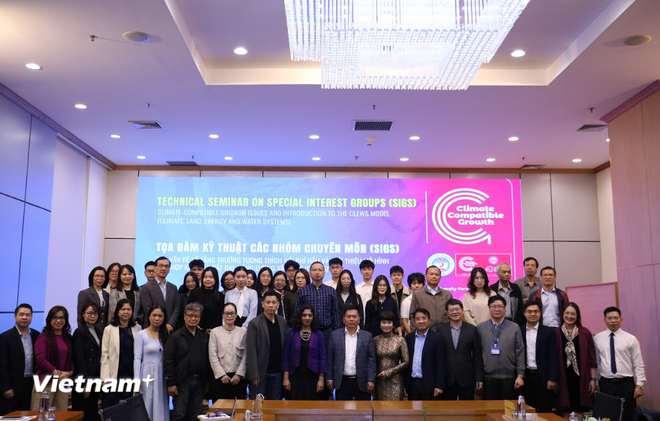
Prof. Dr. Nguyen Thanh Hieu, Deputy Director of the National Economics University, said the event provided an opportunity for specialists to discuss strategies that could help Vietnam move faster toward the net-zero goal.
He noted that the core of the plan is to provide scientific evidence to guide decision-making and support policymaking processes, thereby speeding up the transition to a low-carbon economy. Essential priority areas include energy transition, green transition in transport and construction, the development of a circular economy and the expansion of green finance.
At the forum, two research projects funded by the Frontier Research Fund (FRF) and the Specialist Professional Facility (SPF), implemented by the Academy of Construction Strategy and Cadres Training, were presented in detail. The projects focus on transport and construction, both considered sectors with high potential for emissions reduction.
The FRF project on “financial modeling for urban electric buses in Vietnam” aims to support a roadmap towards 100% electric, green-energy-powered urban buses by 2050. The research team examined Vietnam’s regulatory framework, reviewed relevant international experience and conducted cost-benefit assessments of existing financial models.
According to project representative La Tra Linh, the study is being piloted in Hanoi and Ho Chi Minh City. Its ultimate objective is to propose feasible policy options and financial mechanisms to accelerate the electrification of public bus fleets, thereby helping Vietnam fulfill its Nationally Determined Contribution (NDC) commitments.
The SPF project, also presented at the event, looks at options for enhancing energy efficiency and reducing emissions in the construction sector. Using scenario modeling tools from the integrated climate–land–energy–water framework, researchers evaluated the potential impact of low-carbon building materials, energy-saving design standards and improved construction management practices. These measures could significantly reduce sector-wide emissions if supported by targeted incentives and strengthened regulations.
Delegates at the roundtable noted that Vietnam’s path toward net-zero will require a comprehensive approach that aligns scientific research, policy formulation and practical implementation. Experts emphasised that the country should gradually eliminate projects posing high environmental risks, particularly those dependent on fossil fuels or outdated technologies, and redirect resources into renewable energy development, clean transport systems, energy-efficient buildings and technologies that support the circular economy.
Participants also underlined the importance of mobilising green finance and expanding access to new financing instruments. They said Vietnam could benefit from exploring blended finance models, public–private partnerships and climate-related investment funds to scale up the implementation of green projects. Improved capacity in data management, emissions monitoring and long-term scenario analysis are also deemed essential for effective performance of policies.
Several speakers pointed out that Vietnam’s commitment to achieving net-zero by 2050 is a major step forward, but the pace of implementation remains critical. They called for closer collaboration between ministries, research institutions and local authorities to ensure that regulations, incentives and technical standards are aligned with national climate goals. At the same time, public awareness and behavior change were identified as important factors in building a sustainable low-carbon society.
The roundtable concluded that Vietnam holds significant potential to accelerate green development across multiple sectors if backed by consistent policies and scientific evidence. Prioritised investment in renewable energy, low-emission transport and energy-efficient construction, combined with strengthened green finance mechanisms, will play a decisive role in guiding the country’s transition toward a climate-resilient, carbon-neutral future./.