Vietnam targets at least five internationally recognised cities by 2045

Vietnam’s urbanisation rate is targeted to reach at least 45% by 2025 and exceed 50% by 2030. The proportion of urban construction land is expected to stand at around 1.5–1.9% of total natural land area by 2025 and 1.9–2.3% by 2030.

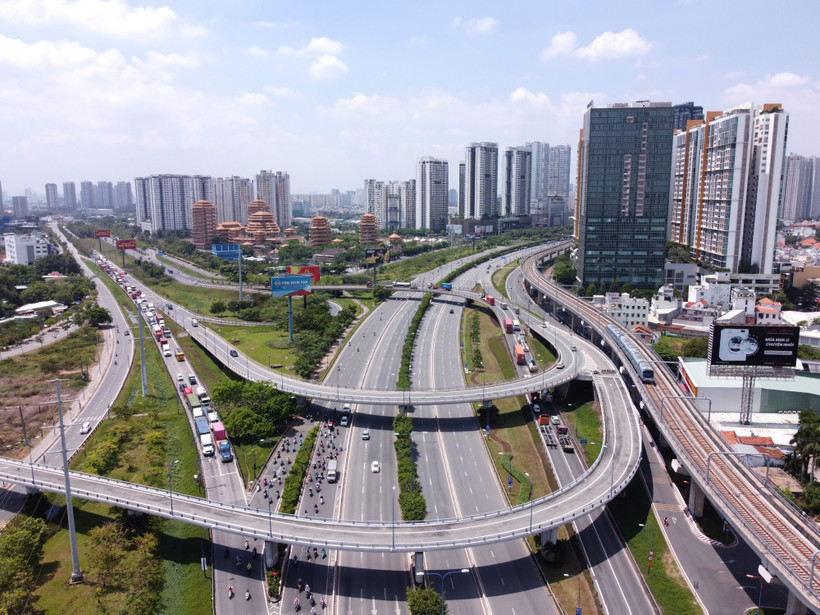
A corner of Ho Chi Minh City. (Photo: VNA)

Hanoi (VNA) – Vietnam aims to develop at least five cities of international standing by 2045 under a Government action programme on sustainable urban planning and development.

The action programme on the implementation of the Party Central Committee’s Resolution No. 06-NQ/TW on urban planning, construction, management and sustainable development through 2030, with a vision to 2045, is amended and supplemented under Resolution No. 80/NQ-CP dated April 2, 2026.

It is designed to ensure unified direction across ministries, sectors and localities, while enhancing awareness and accountability in urban planning and development, contributing to the country’s industrialisation and modernisation goals.

Urbanisation to exceed 50% by 2030

Vietnam’s urbanisation rate is targeted to reach at least 45% by 2025 and exceed 50% by 2030. The proportion of urban construction land is expected to stand at around 1.5–1.9% of total natural land area by 2025 and 1.9–2.3% by 2030.

The number of urban areas nationwide is projected at 950–1,000 by 2025 and 1,000–1,200 by 2030. By 2025, all cities and towns are required to have comprehensive master plans and urban redevelopment programmes in place.

Infrastructure development will be a key focus. By 2030, Vietnam aims to establish several national and regional urban centres with healthcare, education and cultural standards comparable to the average of the top four ASEAN countries.

Transport land is expected to account for 16–26% of urban construction land by 2030, while urban green space per capita is projected to reach 8–10 sq.m. Average housing floor area per capita in urban areas is targeted at a minimum of 32 sq.m.

Digital infrastructure will also be strengthened. By 2025, fibre-optic broadband is set to cover over 80% of urban households, alongside widespread 4G and 5G services. By 2030, universal access to fibre broadband and 5G mobile services is envisaged, with all urban adults using electronic payment accounts.

Urban economies are expected to contribute around 75% of national GDP by 2025 and 85% by 2030. The digital economy would account for 35–40% of gross regional domestic product (GRDP) in centrally governed cities by 2030.

Vietnam also plans to build a network of smart cities at national and regional levels, with three to five cities gaining regional and international recognition by 2030.

By 2045, Vietnam’s urbanisation rate is expected to rank among the upper-middle level in ASEAN and Asia. The urban system will form a synchronised and balanced network across regions, capable of adapting to climate change and responding to natural disasters and epidemics.

To achieve these goals, authorities will prioritise improving planning quality and management, developing integrated and climate-resilient infrastructure, and promoting sustainable urban development programmes.

Comprehensive planning for the national urban and rural system for 2021–2030, with a vision to 2050, will be finalised, alongside adjustments to master plans and architectural management regulations.

The Government will also focus on upgrading existing urban areas and investing in at least 100 model cities that are smart, low-emission, resilient and rich in cultural identity./.

VNA

See more

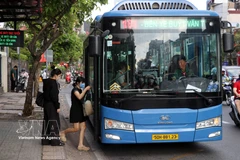
Ho Chi Minh City proposes free bus rides on 135 routes from May (Photo: VNA)

HCM City proposes free bus rides on 135 routes

According to the Department of Construction, the measure aims to ease travel costs for residents amid rising fuel prices while encouraging greater use of public transport, reducing reliance on private vehicles, and contributing to lower traffic accidents and environmental pollution.

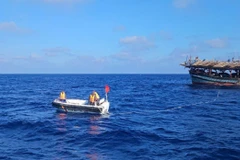
Fisheries surveillance vessel KN475 assists distressed Quang Ngai fishing boat carrying 36 fishermen at sea. (Photo published by VNA)

36 fishermen safely rescued after boat breaks down near Truong Sa

At 8:00 the same day, KN475 began towing the disabled fishing boat toward Da Tay A island. The towing operation was carried out safely, and by 18:30 both the vessel and its crew had arrived at the island without incident, where repairs and additional support procedures were arranged.

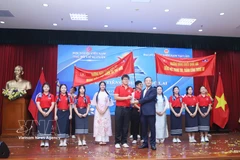
Ambassador Nguyen Minh Tam presents the first prize to the team from the National University of Laos' School of Gifted and Ethnic Students at the contest. (Photo: VNA)

Vietnamese language contest in Laos strengthens youth ties, bilateral friendship

Held in response to the launch of the Vietnamese Language Day among overseas Vietnamese communities, the event aimed to enhance the quality of Vietnamese language teaching and learning in Laos while contributing to the great friendship, special solidarity, comprehensive cooperation and strategic cohesion between the two countries.

The vibrant nighttime in Phu Quoc has contributed to pushing room occupancy above 90% in early 2026. (Photo: Sun Group)

Phu Quoc surpasses Bali, Phuket in occupancy race

According to the latest report by STR, a global hospitality data and analytics provider under CoStar Group, room occupancy in Phu Quoc reached over 90% in January–February. This makes it the fastest-recovering destination among regional resort markets, compared to just 50% in the same period of 2024. Notably, Phu Quoc’s occupancy rate has surpassed that of established resort hubs such as Bali (60%) and Phuket (over 80%).

Over 60 overseas Vietnamese from 24 nations and territories visit Truong Sa and DK1 platform (Illustrative image: VNA)

Vietnam launches programme to attract foreign, overseas Vietnamese scholars

The programme aims to develop and effectively implement breakthrough mechanisms and policies to recruit, utilise and retain high-caliber international and OV talent. It is expected to strengthen the country’s science and technology capacity, foster a high-quality workforce, enhance innovation capabilities and promote international integration in education and research. The initiative also contributes to Vietnam’s goal of bringing its education system to an advanced regional and global level by 2035.

Medical staff offer health advice and checkups to foreign tourists in Ha Long Bay (Photo: VNA)

Quang Ninh launches round-the-clock medical service on Ha Long Bay

On the first day of deployment, the Quang Ninh Emergency Transport Centre stationed a medical team on Ti Top Island, one of the bay’s key tourist stops. The team is equipped with specialised equipment suitable for maritime and island conditions, including portable ventilators, patient monitoring devices, floating stretchers, and essential medicines.

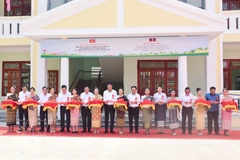
Representatives from both countries cut the ribbon to inaugurate the Friendship Primary and Secondary School in Salavan province of Laos (Photo: VNA)

Da Nang-funded school project strengthens Vietnam–Laos education ties

Funded by Da Nang city, the project includes a two-storey building with five classrooms, two offices and supporting facilities, at a total cost of nearly 6 billion VND (about 228,000 USD). Once operational, it is expected to improve educational infrastructure in Khongsedone district and Salavan province in general.

Students share their understanding and impressions of Vietnamese history during the class. (Photo: VNA)

Vietnam’s history, culture resonate in Singapore classroom

Courses such as Introducing Vietnam, therefore, not only provide knowledge but also create spaces for dialogue and cultural connection, strengthening the foundation of understanding and cooperation between Vietnam and Singapore, as well as with other countries in an increasingly integrated world.