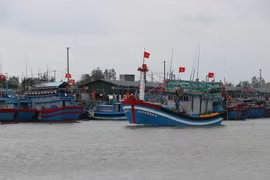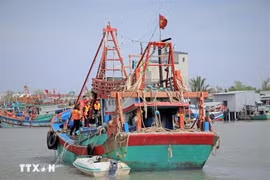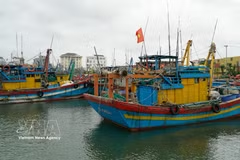
Quang Ngai (VNA) – Data reconciliation is being rigorously enforced by border guard control forces and fishing port authorities at designated ports in the central province of Quang Ngai, in a concerted effort to standardise data and eliminate gaps in fishing vessel management, as part of Vietnam’s push to combat illegal, unreported and unregulated (IUU) fishing.
At designated fishing ports across the province, data cross-checking has been stepped up not merely as a routine administrative task but as a critical link to ensure transparency in seafood traceability and the consistent implementation of anti-IUU measures.
Quang Ngai currently has five designated ports eligible to receive offshore fishing vessels for catch certification. However, managing a vast maritime area with a large fleet has exposed persistent data inconsistencies.
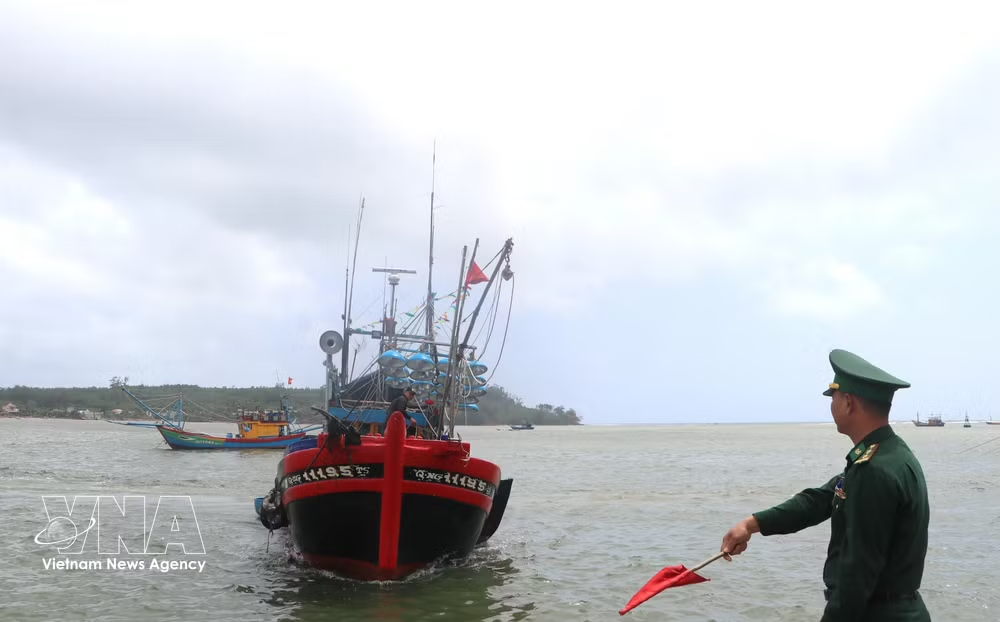
At the Sa Ky estuary, the distance between the border guard control station and fishing ports has allowed some vessels, after completing entry procedures with border guards, to bypass designated ports and offload catches at private docks. Conversely, some vessels complete port departure procedures but delay actual exit at border control stations while taking on fuel and supplies. Such discrepancies have previously led to mismatched data between agencies, complicating efforts to monitor actual fishing output.
To address the issue, the Sa Ky Port Border Guard Post has coordinated with Tinh Hoa and Tinh Ky designated fishing ports to establish daily joint reconciliation teams overseeing vessel arrivals and departures, aiming to closely monitor vessel movements and the origin of catches through electronic data systems, ensuring data remain accurate, complete, clean and live in line with the European Commission’s inspection requirements.
Le Nguyen Quoc Bao, a staff member at Tinh Ky fishing port in Tinh Khe commune, noted that past data inconsistencies largely stemmed from long-standing habits among fishermen. However, the rollout of the electronic catch documentation and traceability system (eCDT), combined with round-the-clock cross-checking, is gradually closing these gaps and ensuring all vessel movements are under strict supervision.
Fishermen themselves are also showing growing awareness. Huynh Tan Hung, owner of vessel QNg 11195TS, said he now understands that catches not verified at designated ports may be deemed illegal and barred from export.
To strengthen state management, the provincial Border Guard Command has rolled out a range of measures, including the application of eCDT, vessel monitoring systems, and the VNeID platform. Authorities have also labelled vessels deemed unfit for operation and publicly listed them at docking areas to encourage community supervision.
Colonel Le Quoc Viet, Commander of the Quang Ngai Border Guard Command, stressed that strict enforcement and data standardisation are key to changing fishing practices and achieving the goal of having the EC’s “yellow card” warning against Vietnamese seafood exports lifted in 2026./.