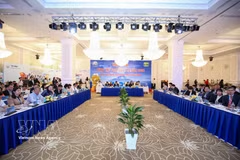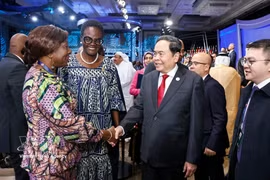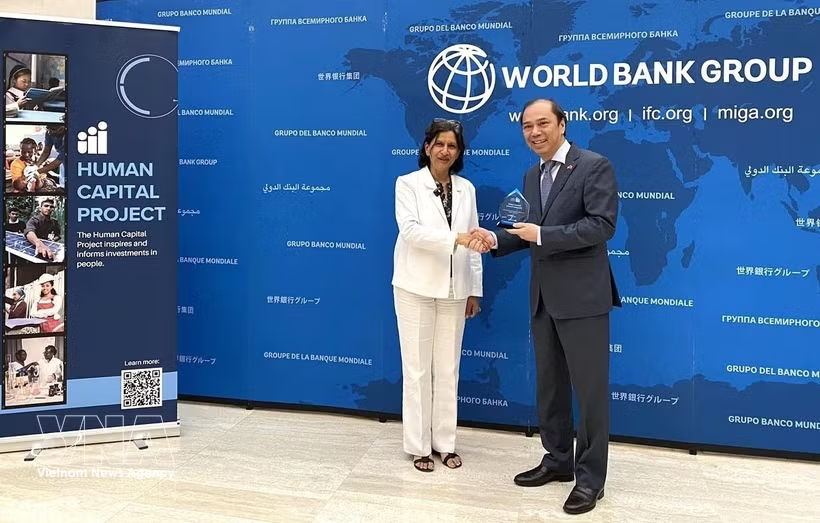
Washington (VNA) – Vietnam was among countries with outstanding achievements in human capital development under the Human Capital Index Plus (HCI+) 2026 honoured at a ceremony held at World Bank Group headquarters on April 16, within the framework of the Spring Meetings of the WB and the International Monetary Fund (IMF).
Addressing the ceremony, Vietnamese Ambassador to the US Nguyen Quoc Dung, on behalf of Vietnam, received the recognition as one of the top-performing countries in the HCI+ among peers at similar income levels, alongside Jamaica, Kenya, Kyrgyzstan and Rwanda.
The HCI+ is an expanded version of the Human Capital Index developed by the WB, designed to provide a more comprehensive reflection of countries’ investment in and effective utilisation of human capital. Unlike traditional indicators, the HCI+ not only measures human potential built through education and health care, but also assesses how effectively that potential is translated into tangible economic outcomes, particularly in terms of employment and income.
Specifically, the index evaluates key aspects, including the quality of education and learning outcomes; health and life expectancy; labour market participation and the extent to which skills are utilised in the economy; as well as losses in human capital when skills are underused.
According to the WB’s assessment, Vietnam continues to demonstrate strong performance in both investing in and utilising human capital, particularly among countries with comparable income levels. The country stands out for its solid education outcomes, notable improvements in employment, and effective use of human capital.
Vietnam’s HCl+ score is 216 out of a maximum of 325, reflecting its investments in health, education and employment, according to the human capital country brief for April.
A 10-point increase in the index would translate into approximately 10% higher future income, it noted, adding that closing the current gaps in these areas relative to high-performing countries with similar GDP per capita would boost future income by 27%.
Regarding education, Vietnam has maintained high performance in international student assessments, reflecting sustainable and consistent improvements in basic education quality. In terms of employment, the HCI+ report notes a significant rise in wage employment, indicating a positive shift from informal labour to more productive formal-sector jobs.
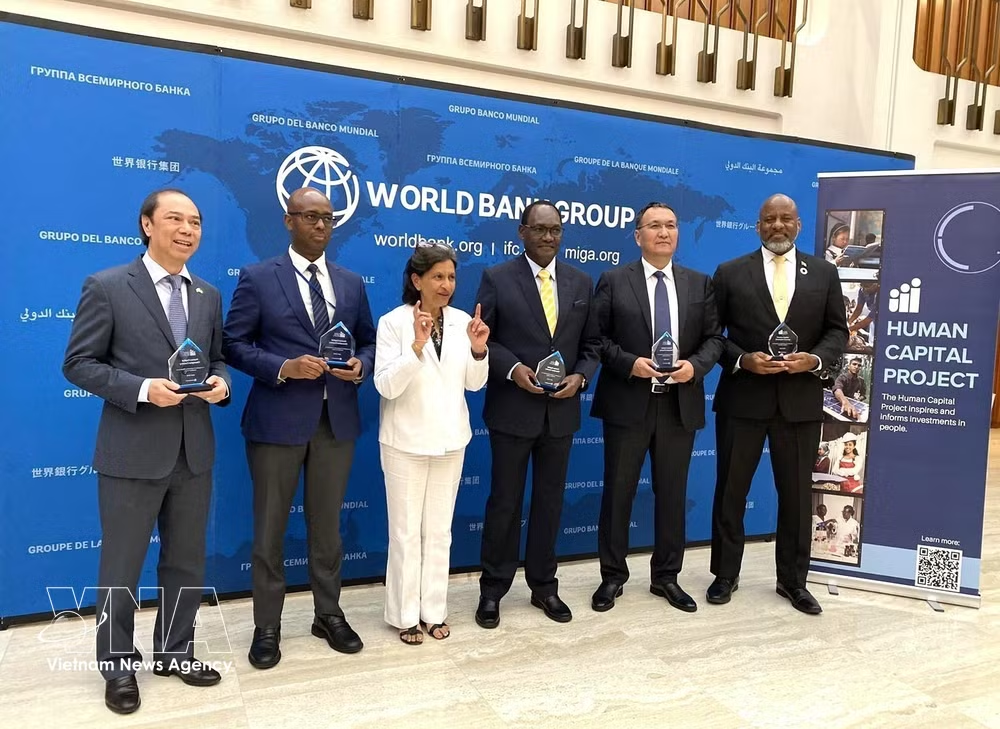
On human capital utilisation, Vietnam is considered one of the countries that has been more successful than the average of its income group in translating investments in education and health care into real economic growth. .
Compared to peers at similar income levels, Vietnam achieves higher efficiency in converting skills into jobs and income, while maintaining consistent education quality. In Southeast Asia, it is regarded as among the economies with competitive human resources, particularly amid a transition towards a growth model driven by skills and innovation.
The recognition under HCI+ 2026 affirms Vietnam’s efforts to place people at the centre of its development strategy, improve education and healthcare quality, strengthen links between training and the labour market, and promote inclusive and sustainable growth.
The accolade not only acknowledges the country’s achievements but also serves as a motivation for Vietnam to continue strong reforms to further enhance human resource quality in the new development phase. It also provides clear evidence of the effectiveness of investing in people as a key driver of long-term growth and national competitiveness in the new era./.