Hanoi (VNA) - Millions of passengers carried, a fleet scaling to 32 aircraft by year-end, a route network stretching from Phu Quoc to Vietnam's major tourism and economic hubs, a presence across six international markets, and a billion-dollar deal for 40 Boeing aircraft, all within less than a year of commercial operations. The numbers alone tell the story of why Vietnam's youngest airline is quickly becoming one of aviation's most compelling new stories.
The “dark horse” picks up speed
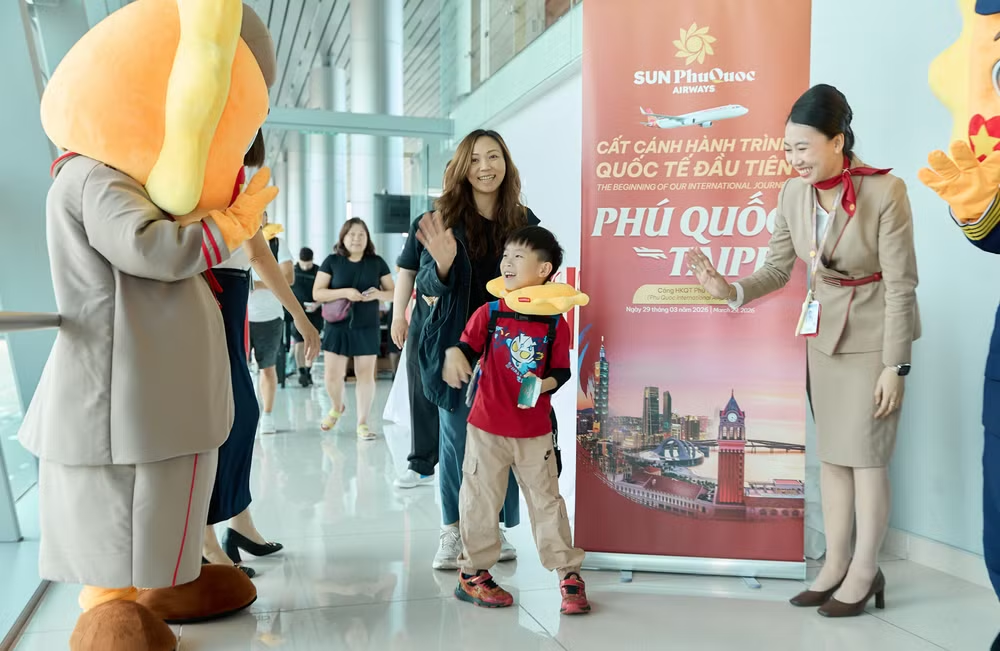
Sun PhuQuoc Airways, the airline of Sun Group, officially launched in October 2025 and began commercial flights the following month, entering a Vietnamese aviation market riding a wave of post-pandemic recovery, but also grappling with rising costs, fleet constraints, talent shortages, infrastructure pressure, and intensifying service competition. Less than a year in, this newcomer has already made its presence felt.
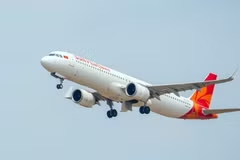
From receiving its first aircraft in August 2025, the airline is on track to operate 32 aircraft by end of 2026. Wide-body Airbus A330s are set to enter service in September 2026, extending the airline's long-haul capability, while a billion-dollar order for 40 Boeing aircraft scheduled for delivery from 2031, signals the scale of ambition ahead.
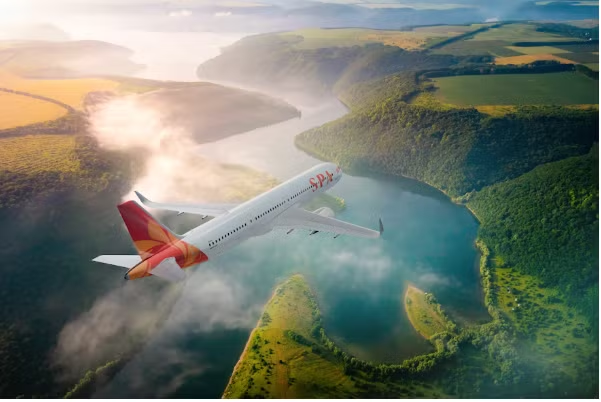
As part of its regional and global push, the airline recently unveiled a refreshed visual identity featuring the three letters "SPA" on the fuselage, a mark of constant momentum, a spirit of innovation, and a drive to reach further. This identity will become the standard livery across the entire Sun PhuQuoc Airways fleet.
The pace of fleet expansion reflects both the financial strength and operational discipline required to grow at this speed, not just in terms of capital, but in the readiness of people, technical systems, and service infrastructure to keep up.
A route network built around a destination
Anchored in Phu Quoc, Sun PhuQuoc Airways has rapidly extended its spokes to connect the Pearl Island with Vietnam's major domestic centers, Hanoi, Ho Chi Minh City, Da Nang, Nha Trang, and Hai Phong while simultaneously opening international routes to key Asian markets: Taipei and Hong Kong (China), Seoul (the Republic of Korea), Singapore, Bangkok (Thailand), and Chengdu (China). Plans are also advancing to expand into Malaysia, Japan, India, Russia, and Kazakhstan.
1,000 cabin crew and counting
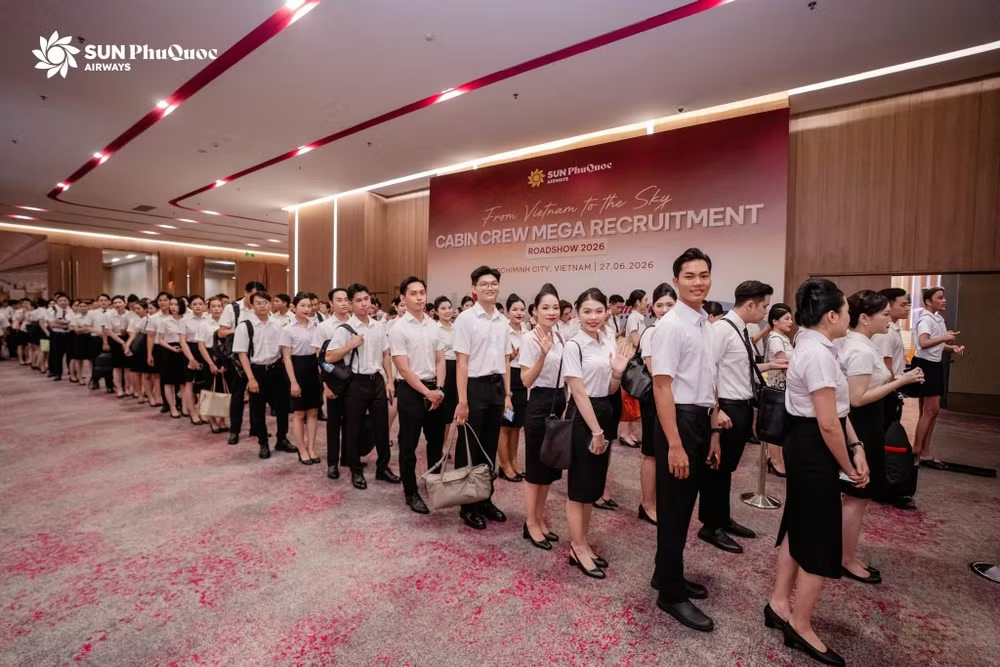
To fuel these ambitions, Sun PhuQuoc Airways is building its workforce at scale. With the conviction that service quality always begins with people, the airline is recruiting 1,000 cabin crew and the program is open to candidates globally.
This is a deliberate move. As SPA enters more international markets, its cabin crew must do more than meet safety and operational standards, they must navigate cultural nuances, connect with diverse passenger groups, and carry forward the image of a modern, professional Vietnamese airline with a genuine spirit of hospitality.
A five-star service proposition in the air
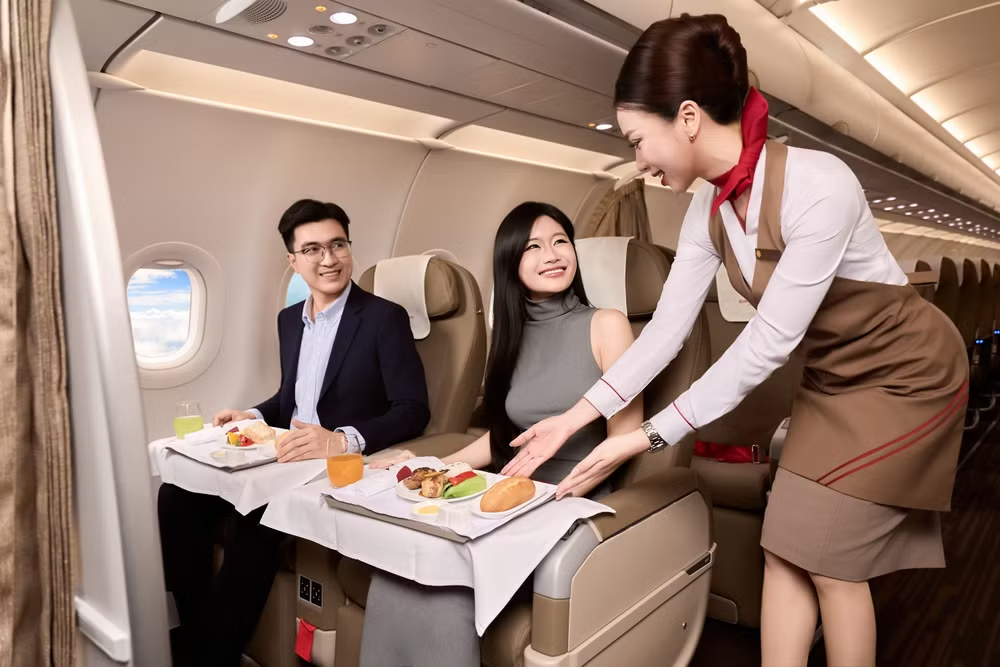
Service quality is being built as a long-term competitive foundation. The airline's "resort airline" positioning is brought to life through hotel check-in services, the Sun Executive Lounge designed like a resort space, with Vietnamese cuisine curated by artisan chefs alongside international culinary brands and a cabin aesthetic rooted in refined Indochinese elegance, right down to the signature La Festa fragrance, premium-material seating, restaurant-style hot meal service, wireless IFE, and the "SPArkle" service culture.
By the end of 2026, the narrow-body fleet will complete a Business Class upgrade aligned with the incoming A330s, delivering a consistent five-star experience across every route and aircraft type.
Aviation as a gateway to the destination
The rise of Sun PhuQuoc Airways is steadily realising a larger vision: turning Phu Quoc into a new regional connectivity hub where high passenger volumes create a rising tide for the entire destination. What sets SPA apart is its role as a core link within the Sun Group ecosystem. Aviation brings the guests; the resort, entertainment, and lifestyle ecosystem keeps them, deepens their experience, and extends the value of every journey.
This model is grounded in real headroom for growth. Between 2015 and 2025, passenger throughput on routes connected to Phu Quoc grew from 1.41 million to 5.81 million, an increase of over 300% in a decade. Yet even at that scale, Phu Quoc handles only around 36% of Phuket's traffic and 29% of Bali's, pointing to a significant runway still ahead.

It is within this space that SPA is pursuing something closer to a "Destination Hub" model, where the island itself is the draw, and passengers choose to stop, stay, explore, and spend. Every new route is a new market corridor, bringing Phu Quoc closer to fresh pools of international travelers and opening new channels for commerce, investment, and economic exchange.
With APEC 2027 set to deliver a major boost to the island's infrastructure and global profile, the role of a Phu Quoc-centered airline becomes even more significant.
From Phu Quoc, Sun PhuQuoc Airways is writing a story that goes beyond simply entering the aviation market. It is using aviation to open up a destination and using that destination to sustain and grow its network. With a young fleet, an expanding route map, a workforce being built for the world, and a service experience that carries a distinctly Vietnamese soul, Vietnam's youngest airline is taking its first confident strides toward international skies./.