Wellness tourism helps Hue shape identity as Asia’s emerging "healing city"

The development of wellness tourism is also aligned with the Politburo's Resolution No. 57-NQ/TW on breakthroughs in science and technology development, innovation and national digital transformation. For Hue, the strategy provides an opportunity to combine modern medicine with traditional healthcare, biotechnology, indigenous medicinal herbs and tourism to create high-value services.

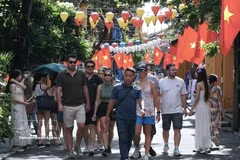
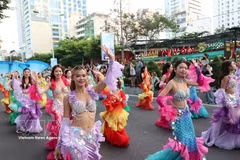
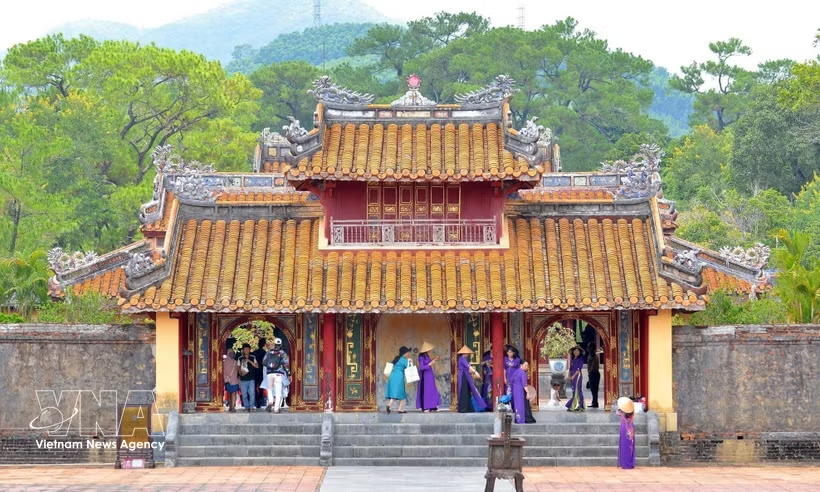
Tourists explore a tourist attraction in Hue city. (Photo: VNA)

Hue (VNA) – Long renowned for its imperial heritage, distinctive cuisine and tranquil beaches, the central city of Hue is increasingly attracting visitors seeking places to restore their physical and mental well-being, which positions wellness tourism as a promising new growth driver for the locality.

The shift reflects a broader global travel trend, with wellness experiences becoming an increasingly important factor in destination choice. Recognising this opportunity, tourism businesses, hotels and resorts in Hue have begun developing products that combine relaxation therapies with local culture, traditional medicine and nature-based experiences.

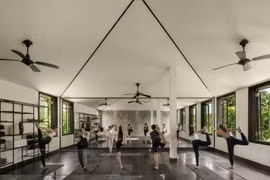
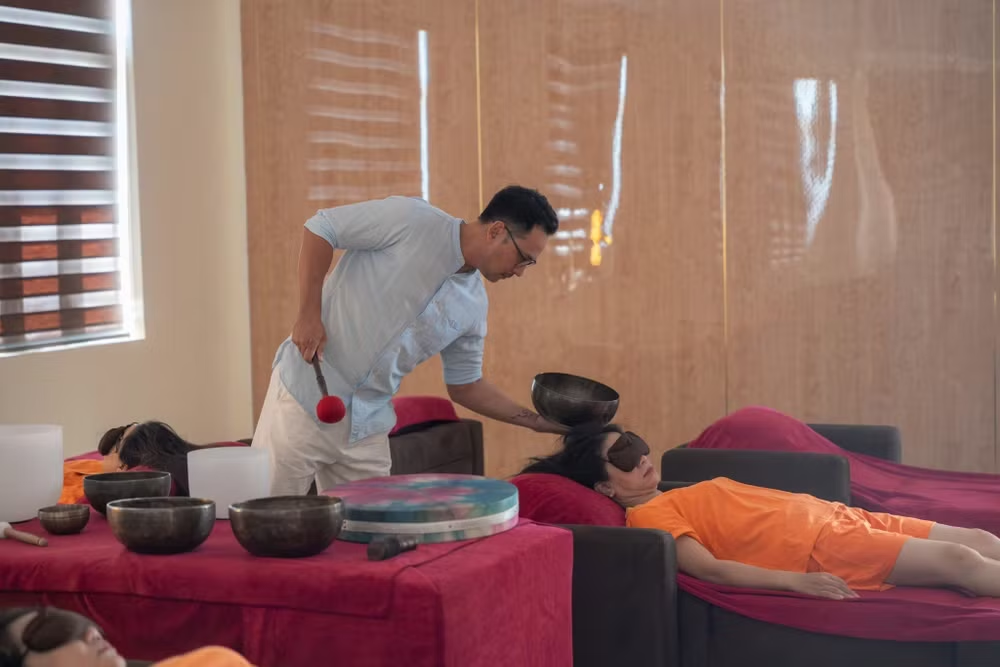
Among the newest products is a wellness programme at Maia Imperial Spa that integrates Hue's traditional herbal therapies with guided breathing exercises and sound meditation. According to the spa's manager, today's visitors are looking not only for physical relaxation but also for relief from the pressures of modern life. Unlike conventional massage treatment therapies, sound meditation uses therapeutic vibrations to help guests achieve deep mental relaxation and inner balance.

The spa has seen rising demand, particularly from women aged between 30 - 50, including business executives and professionals facing high workplace stress. International visitors, especially from the Republic of Korea (RoK), Japan and Europe, are also increasing. Many are already familiar with wellness culture and are willing to pay for authentic healing experiences rooted in local traditions.
spa.jpg
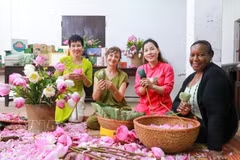
Wellness tourism is gaining momentum across Hue, with an increasing number of businesses developing wellness services. (Photo: Maia Imperial Spa/Facebook)

Tour operators have witnessed similar changes in consumer demand. Pham Tuan Thien of Hue-based MTRAVEL said the company has developed specialised healing tours after observing that travellers increasingly seek journeys focused on well-being rather than conventional sightseeing.

For visitors from the RoK, meditation and yoga in natural surroundings, traditional herbal therapies, tea ceremonies, vegetarian cuisine and Buddhist-inspired experiences, such as attending prayer ceremonies or interacting with monks, have become particularly attractive. As workplace stress and burnout become more common, Korean travellers are increasingly willing to spend 20–40% more on wellness tours, viewing them as investments in health and quality of life.

Hue's wellness ecosystem extends beyond private tourism businesses. The city has also developed healthcare services based on the traditional medicine of the Nguyen Dynasty's imperial medical institute, while Hue Central International Hospital offers medical examinations, treatment and recovery services tailored to international patients and high-end visitors.

Spa treatments, yoga programmes, detox packages and mineral hot spring experiences at local hotels and resorts further enrich the city's wellness products.

The development of wellness tourism is also aligned with the Politburo's Resolution No. 57-NQ/TW on breakthroughs in science and technology development, innovation and national digital transformation. For Hue, the strategy provides an opportunity to combine modern medicine with traditional healthcare, biotechnology, indigenous medicinal herbs and tourism to create high-value services.

According to Prof. Dr. Nguyen Vu Quoc Huy, Acting Director of Hue University and Rector of Hue University of Medicine and Pharmacy, the Politburo's Resolution No. 54-NQ/TW envisions Hue becoming one of Southeast Asia's leading centres for culture, tourism and specialised healthcare.

He said Hue possesses a unique competitive advantage by combining one of Vietnam's strongest specialised healthcare systems with the rich legacy of Nguyen Dynasty traditional medicine, abundant medicinal resources and a well-established medical education and research base. Complementing these strengths are the city's peaceful landscape along the Huong River, ancient pagodas, meditation traditions, leisurely lifestyle and refined and plain cuisine - factors that naturally support physical and mental rejuvenation.

Sharing the same view, Thien believed that these cultural assets distinguish Hue from many destinations where wellness tourism revolves mainly around luxury resorts and spa facilities. Instead, Hue can offer authentic experiences that blend meditation in historic pagodas, traditional herbal therapies, tea appreciation, vegetarian cuisine and heritage exploration.

Nevertheless, experts noted that the city's greatest challenge lies in connecting these strengths into an integrated value chain. Cooperation among hospitals, travel companies, accommodation providers, wellness centres and resorts remains limited, while comprehensive medical and wellness tourism packages are still lacking.

Prof. Huy suggested Hue develop integrated products combining health screening with resort stays, post-treatment rehabilitation linked to hot mineral springs, meditation and traditional medicine, wellness programmes inspired by the imperial medical institute, elderly care services and digital healthcare. He also proposed building the international brand "Hue – Healthcare Destination" to strengthen the city's global profile.

As global demand for wellness tourism continues to expand, Hue's strengths in healthcare, culture and nature offer a unique opportunity to evolve from a renowned heritage destination into a leading wellness destination. Such a transformation will not only enhance the city's tourism industry but also contribute to developing healthcare into a key economic sector and gradually establish Hue as one of Asia's emerging "healing cities."/.
VNA

See more

Foreign tourists explore Hoi An ancient town in Da Nang city. (Photo: VNA)

Tourism sector pivots to quality-led growth in second half of 2026

According to the Vietnam National Authority of Tourism (VNAT), Vietnam welcomed 12.3 million international visitors in the first six months of 2026, up 15% year-on-year. The figure is the highest first-half number in recent years and puts the country close to halfway towards its target of 25 million foreign arrivals this year.

Travel guide Lonely Planet describes Da Nang as an outdoor lover’s paradise. (Photo: VNA)

Da Nang proves Lonely Planet right as Asia’s must visit summer destination

According to Lonely Planet, Da Nang stands out for its harmonious blend of beautiful beaches, an energetic yet relaxed lifestyle, a rich culinary scene and a diverse range of experiences spanning nature, culture, leisure and entertainment. The city is also praised as an ideal gateway to central Vietnam, offering convenient access to Hoi An, Hue and My Son Sanctuary.

Sun PhuQuoc Airways' new aircraft livery (Photo: Sun Group)

Vietnam's newest airline races from Phu Quoc onto the global stage

Sun PhuQuoc Airways, the airline of Sun Group, officially launched in October 2025 and began commercial flights the following month, entering a Vietnamese aviation market riding a wave of post-pandemic recovery, but also grappling with rising costs, fleet constraints, talent shortages, infrastructure pressure, and intensifying service competition. Less than a year in, this newcomer has already made its presence felt.

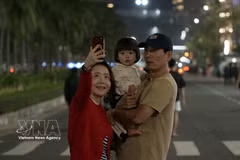
A Korean tourist family poses for a photo in the coastal city of Da Nang. (Photo: VNA)

Vietnam remains second most popular destination for Korean tourists

Japan remained the top destination, attracting about 951,000 Korean visitors, accounting for 40.6% of total outbound tourists. Vietnam ranked second with approximately 278,000 visitors, followed by the US with 100,000, Taiwan (China) with 79,000, Thailand with 64,000, the Philippines with 61,000 and Hong Kong (China) with 59,000.

Keo Hanh Thien Pagoda is recognised as a special national relic in 2016. (Photo: VNA)

Digitalising rural heritage to boost tourism

Authorities in Xuan Hong commune of the northern province of Ninh Binh are leveraging digital technology to preserve cultural heritage and promote rural tourism, with the centuries-old Keo Hanh Thien Pagoda serving as the centrepiece of the initiative.

Discover Moscow offers a comprehensive hub of practical travel information, seasonal itinerary ideas and useful tips for visitors planning a trip to the Russian capital. (Screenshot)

Discover Moscow debuts Vietnamese-language tourism platform

Accessible at https://discover.moscow/vi, the platform provides a one-stop source of travel information, featuring practical guidance, seasonal itineraries and planning tips for visitors. It showcases the city's key attractions, cultural routes, parks, events, restaurants, shopping destinations and family-friendly activities, enabling travellers to organise their trips before arriving in Moscow.

Boat tours in Cam Thanh village, Da Nang city, generate significant income for local residents. (Photo: VNA)

Rural tourism draws strength from indigenous culture

Vietnam currently has more than 600 agricultural and rural tourism models, generating over 25 trillion VND (956 million USD) in annual revenue. The sector has become an important source of income for many rural communities seeking to diversify their livelihoods.

Located about 200 km from Hanoi, Ta Xua in Son La province is widely regarded as one of the most spectacular cloud-hunting destinations in northern Vietnam. (Photo: VNA)

Ta Xua sets sights on sustainable tourism

Ta Xua is rolling out a campaign titled “Bringing Ta Xua to the world” and aims to establish the image of “Ta Xua - a sea of clouds, majestic nature and Mong cultural identity” during the 2028-2030 period.

The fireworks display by the Portuguese team at the final night of the Da Nang International Fireworks Festival (DIFF) 2026 on July 11, 2026. The Portuguese team claims the championship title. (Photo: VNA)

Da Nang greets over 2.72 million visitors during DIFF 2026

On July 11, the day of the DIFF 2026 finale, accommodation establishments in the city served about 131,000 visitors, an increase of 16% from a year earlier. International visitors totalled 52,400, up 27% year-on-year, while domestic visitors reached 78,600, an increase of nearly 10%.

Under the proposal prepared by the VRC, the tourist train will travel approximately 190 km, connecting Hue, Dong Ha, My Trach, Dong Hoi and Tho Loc stations. (Illustrative photo: VNA)

Hue–Phong Nha tourist train to be launched on September 1

The central province of Quang Tri is working with the Vietnam Railways Corporation (VRC) to complete the project, which is expected to create a distinctive railway tourism product linking major heritage sites and scenic destinations across Vietnam's north-central region while strengthening regional tourism connectivity.

At a working session with the Vietnamese Embassy in Moscow (Photo: VNA)

Quang Ninh targets Russian travellers as arrivals surge

Quang Ninh is looking to build partnerships to steer more Russian visitors to Ha Long Bay and other local attractions. Beyond the UNESCO World Heritage Site of Ha Long Bay, the province holds diverse advantages in marine tourism, cultural attractions, luxury resorts and wellness services.