ASEAN members join hands to prevent endangered wildlife trafficking

Regional solidarity and cooperation are the key factor for the effective implementation of wildlife protection regulations. Only through sustainable cooperation, innovative approaches, and collective action can biodiversity be safeguarded for the present and future generations, an Vietnamese official has said.

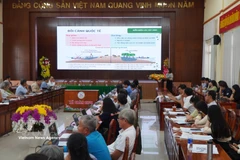
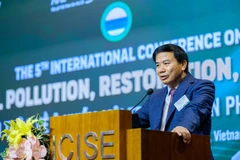
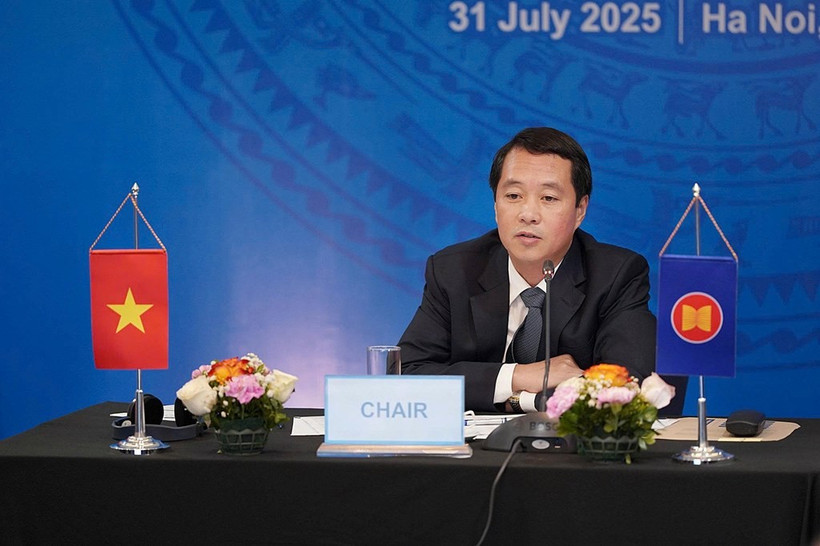
Bui Chinh Nghia, Deputy Director of the Forestry and Forest Protection Department and Director of the CITES Vietnam Management Authority, speaks at the meeting. (Photo: VNA)

Hanoi (VNA) – The ASEAN Working Group on the Convention on International Trade in Endangered Species of Wild Fauna and Flora (CITES) and Wildlife Enforcement (AWG CITES and WE) held the 20th meeting in Hanoi on July 31.

Chairing the meeting, Bui Chinh Nghia, Deputy Director of the Forestry and Forest Protection Department and Director of the CITES Vietnam Management Authority, shared that regional solidarity and cooperation are the key factor for the effective implementation of wildlife protection regulations.

No countries can singlehandedly address this issue. Only through sustainable cooperation, innovative approaches, and collective action can biodiversity be safeguarded for the present and future generations, he remarked.

The meeting of the AWG CITES and WE is held annually on a rotational basis among the 10 ASEAN countries. This year’s event took place online, gathering representatives from the ASEAN Secretariat, the 10 ASEAN member states, and relevant international and non-governmental organisations. Timor-Leste participated as an observer.

It aimed to review and assess the implementation of recommendations, decisions, and CITES enforcement related to ASEAN countries. The event also examined national reports on the enforcement of laws concerning endangered wild flora and fauna, developd ASEAN joint initiatives, and considered, discussed, and agreed on proposals regarding the CITES Appendices and policies to be reviewed at the 20th meeting of the Conference of the Parties to CITES (CITES CoP20).

cites-2.jpg
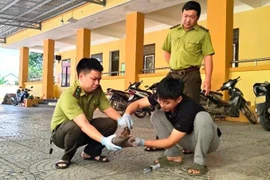
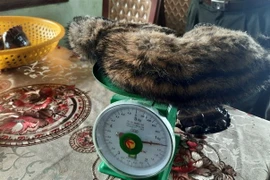
The Javan pangolin found in Quang Tri province is handed over to forest rangers. (Photo: VNA)

Over the past year, ASEAN members have continued to make significant progress in advancing their shared commitment to combatting illegal wildlife trade, despite ongoing challenges related to law enforcement and transnational crimed.

As one of the regions with the highest biodiversity in the world, Southeast Asia is both a focal point for conservation efforts and a hotspot for illegal wildlife trade. Recognising this role, ASEAN has continuously strengthened law enforcement mechanisms, promoted cross-border cooperation, and supported the legal and sustainable trade of wildlife.

Vietnam has made significant progress in enhancing enforcement capacity and inter-sectoral coordination through information sharing, the adoption of digital monitoring tools, and the improvement of its legal framework. At the regional level, it has actively participated in ASEAN-led mechanisms and contributes to the implementation of the ASEAN Cooperation Action Plan under CITES and Wildlife Enforcement for the 2021–2025 period./.
VNA

See more

At a ceremony to donate 100,000 trees to the Naval Region 4 (Photo: HANE)

Tree planting programme spreads green momentum in islands

The Ho Chi Minh City Association for Conservation of Nature and Environment (HANE) on January 11 announced 10 outstanding green programmes and activities carried out in 2025, including a programme to plant 1 million trees in Vietnam’s island areas.

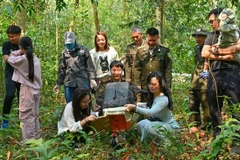
Lam Dong releases hundreds of wild animals into the wild. (Photo: VNA)

Lam Dong releases hundreds of wild animals back into the wild

According to the Ta Dung National Park Management Board, the park has for years served as a trusted destination for authorities and residents to hand over and release wildlife. Such actions not only contribute to biodiversity conservation but also help reduce illegal hunting and captivity of wild animals.

According to the Hanoi Department of Agriculture and Environment, air quality index (AQI) readings have at times reached poor and very poor levels. (Photo: VNA)

Hanoi targets 20% reduction in PM2.5 levels

Hanoi has affirmed its commitment not to trade environmental protection for economic growth. The city is moving to establish low-emission zones (LEZs) as a core measure to control emissions and promote green, sustainable urban development.

A waste collection area. (Photo: VNA)

Ca Mau approves investment policy for waste-to-energy plant

The waste-to-energy plant is planned for construction in Dat Moi commune, covering a total area of about 20 hectares. It will have a waste treatment capacity of approximately 600 tonnes of household waste per day and a power generation capacity of 6MW.

Ice coats the summit of Fansipan in the northern province of Lao Cai in the early morning of December 25. (Photo: Published by VNA)

Peak Fansipan blanketed in ice on Christmas Day

With temperatures hovering between 1 and 3 degrees Celsius, frost and ice covered the summit area, creating an ideal condition for tourists eager to admire icy scenery, clouds and experience a Christmas atmosphere amid a sea of cold mist.

Illustrative image (Photo: nhandan.vn)

20 trailblazing companies in national green ESG rankings honoured

In 2025-2026, the “For a Green National Environment” programme will pivot around six tasks that merge expertise with broad social outreach, including targeted communications, "Journey to Net Zero" conferences and trainings, ESG surveys and announcements, a "National Green Ambassador" contest, a "Green Fashion" design competition, and the rollout of "National Green Station" models focused on zero-waste living.