Community-led conservation thrives in Phong Nha – Ke Bang National Park

In recent years, the local community has been actively involved in forest protection in the Phong Nha – Ke Bang National Park.

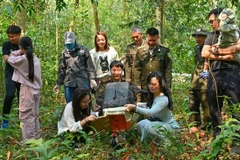
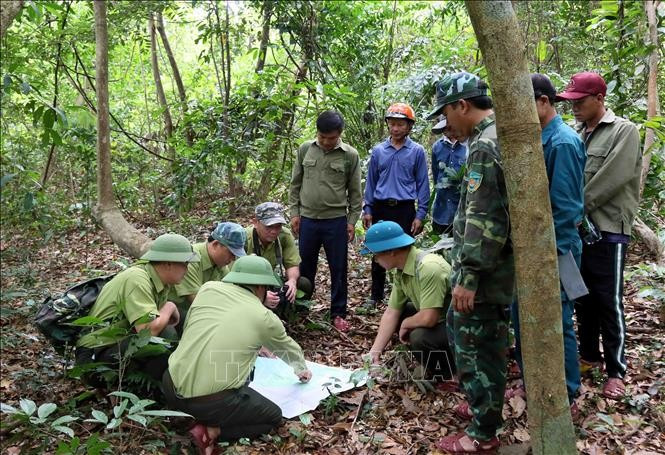
Patrol teams determine directions and mark the places they have visited in the Nha - Ke Bang National Park. (Photo: VNA)

Quang Tri (VNA) - Since being recognised by UNESCO as a World Natural Heritage Site in 2003, the Phong Nha – Ke Bang National Park in Quang Tri province has been protected with the active involvement of local communities, whose lives have become sustainably intertwined with the heritage site.

Changing mindsets

For years, Tran Quoc Hen’s family, residing in Cu Lac 2 village in Phong Nha commune, has relied on the forests of the Phong Nha – Ke Bang National Park for their livelihood by participating in forest protection contracts. Support from forestry development funds and carbon credit sources has helped improve his family’s income and raise public awareness of their responsibility in forest preservation.

Hen said that in the past, when life was tough and forest protection awareness was low, locals relied on timber from the forest to build their homes. But in recent years, thanks to awareness campaigns and forest protection contracts, communities have gained a stronger understanding of the value of forests and have taken greater responsibility in preserving them and protecting Phong Nha – Ke Bang National Park.

Hoang Ha, a resident of Phong Nha commune, said that over 300 households in 35 villages located in the buffer and core zones adjacent to the park are currently contracted to care for and protect the forest.
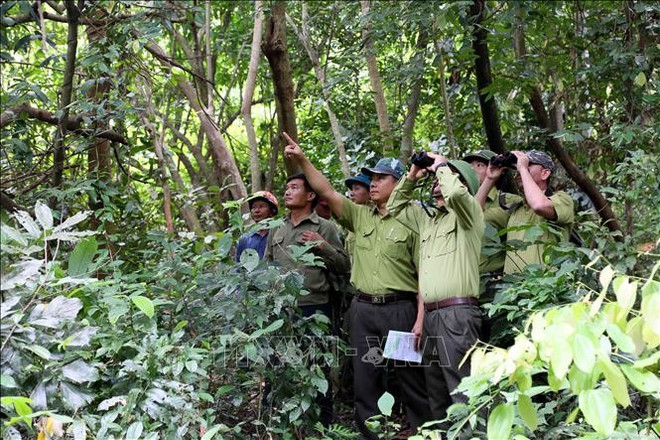
pnkb2.jpg
Checking the current status of forests in Phong Nha - Ke Bang National Park. (Photo: VNA)

In addition to safeguarding the heritage, locals also act as “ambassadors,” promoting its image through services like tourist transport, photography, and souvenir sales. Their efforts help domestic and international visitors better understand the park’s core values and vast tourism potential.

Nguyen Thi Tinh, a boatwoman at the Phong Nha – Ke Bang Tourism Centre, said, “Since the park was recognised as a World Natural Heritage site, we switched to working as boat guides, serving tourists on the Son River”.

"This job not only provides a stable income by serving both domestic and international visitors, but also offers an opportunity to promote the tourism and ecological values of this heritage."

Joint effort in conservation

Covering 123,326 hectares, the park is located in the middle of the Annamite Mountain Range in Quang Binh province, and shares its boundary with the Hin Namno Nature Reserve in Laos to the west. It is divided into three zones - a strictly protected zone (100,296 ha), an ecological restoration zone (19,619 ha), and an administrative-service zone (3,411 ha).

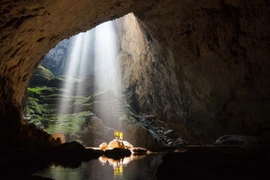
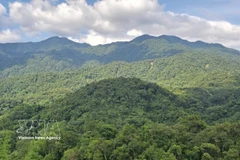
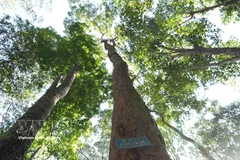
Often described as a vast geological museum, the park features 447 caves with a total length of 246 kilometres. Its vegetation includes 15 major habitat types and 21 important vegetation formations. Evergreen forests cover 93.5% of the area, with over 90% consisting of tropical rainforest ecosystems on limestone mountains - the largest of its kind in Southeast Asia and largely untouched by human activity.

Dinh Huy Tri, Deputy Director of the Management Board of the Phong Nha – Ke Bang National Park, stated that the community plays a role as a key stakeholder in the process of preserving and promoting heritage values.

According to Tri, in recent years, the local community has been actively involved in forest protection. Local authorities have also organised communication campaigns to raise public awareness of forest conservation, environmental protection, biodiversity preservation, and wildfire prevention. They have also worked to improve policy mechanisms and mobilise support from programmes and projects to promote sustainable forest management while creating income and livelihoods for residents.

He affirmed that the local authorities and community have come to realise that participating in heritage preservation brings direct benefits and income to residents. As a result, locals have actively engaged in protecting the heritage, earning recognition and appreciation from international organisations.

From their precarious life dependent on illegal logging and forest exploitation, households living around the Phong Nha – Ke Bang National Park have now given up deforestation. Instead, they grow and protect the forest and engage in tourism services. They are now both guardians and beneficiaries of the natural heritage./.


VNA

See more

Air pollution in Hanoi. (Photo: VNA)

Hanoi to launch 5,000 public electric bicycles

In a move to reduce air pollution and promote green mobility, Hanoi has approved a plan to deploy 5,000 public electric bicycles, alongside restrictions on petrol- and diesel-powered vehicles in the city’s central area.

Official heritage plaque i sinstalled on the 12 recognised Shan Tuyet tea trees in Dong Phuc commune. (Photo: VNA)

Thai Nguyen: 12 ancient Shan Tuyet tea trees win national heritage status

The recognition honours the biological, cultural and historical values of these centuries-old Shan Tuyet tea trees – natural treasures deeply woven into the livelihoods, traditions and identity of local ethnic communities. The title affirms the community’s commitment to preserving and promoting the value of this iconic local tea variety.

Sarus cranes at Tram Chim National Park (Photo: VNA)

Return of sarus cranes: Hope takes wing in Dong Thap wetland

Beneath the wide Mekong Delta sky, Tram Chim National Park is racing against time, pouring heart and science into a decade-long (2022–2032) plan to rescue the Eastern sarus crane – an elegant, scarlet-headed bird listed as endangered on the International Union for the Conservation of Nature (IUCN) Red List and a living emblem of both the park and all of Dong Thap province

French Ambassador Olivier Brochet speaks at the press conference in Hanoi on December 11 to mark the 10th anniversary of the Paris Agreement on climate change and highlighting the COP30 outcomes. (Photo: VNA)

International community ready to support Vietnam in energy transition, climate response

In a video message to the press conference, UN Resident Coordinator in Vietnam Pauline Tamesis said the UN is ready to support Vietnam in building a pipeline of projects capable of absorbing financing mobilised under the Political Declaration on establishing the Just Energy Transition Partnership (JETP), as well as from global climate finance sources, including the Green Climate Fund and the Loss and Damage Fund.

Forest rangers in Son La province apply technological devices and software to forest management, monitoring, and protection. (Photo: nhandan.vn)

Digital technology application enhances forest management, protection

With a total forest area of over 14 million hectares, including more than 10 million hectares of natural forests, forests exist in all 34 provinces and cities across the country. Given the large area and limited workforce, applying digital solutions in forest management and protection has become a top priority for the forestry sector.

Sunda pangolins (Manis javanica), also known as the Javan pangolin, are listed in Group IB – critically endangered and strictly protected from all commercial exploitation (Photo: VNA)

Quang Ngai releases rare pangolin back into nature

Initial verification showed that the animal weighed 3.7kg and measured over 60cm. It was identified as a Sunda pangolin (Manis javanica), also known as the Javan pangolin, listed in Group IB – critically endangered and strictly protected from all commercial exploitation.

Residents of Tuyen Quang province take part in the One Billion Trees Programme. (Photo: VNA)

Tree-planting programme exceeds one-billion-tree goal

The total comprises 573.9 million scattered trees and 865.2 million trees grown in concentrated plantations, equivalent to 429,125 hectares of forest. Provinces posting the strongest results include Phu Tho with 177.9 million trees, Lao Cai with 108.8 million, and An Giang with 98.5 million.

Construction activity is one of the causes of air pollution in Hanoi. (Photo: VNA)

Hanoi takes urgent measures to curb air pollution

The city requires the enhanced application of advanced technologies and remote monitoring systems, including satellite remote sensing, drones, and AI-integrated traffic cameras, to monitor, detect, and strictly address the illegal burning of garbage, straw, and agricultural by-products.