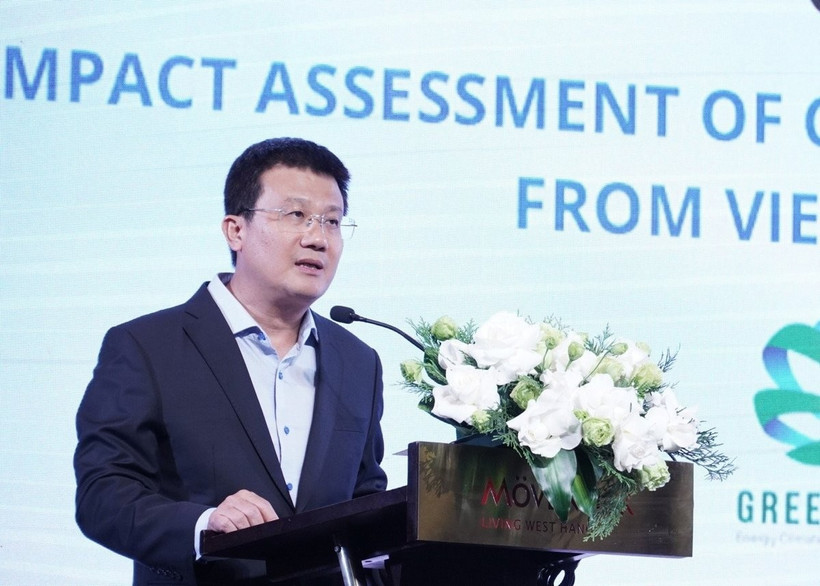
Consultation workshop on assessing impact of carbon credit trading, emission reduction outcomes

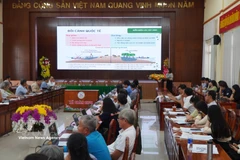
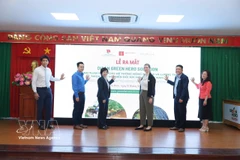
A consultation workshop on the impact of carbon credit trading and Vietnam’s mitigation outcomes in international markets was held in Hanoi on August 20, the Southeast Asia Energy Transition Partnership (ETP) and the Department of Climate Change.

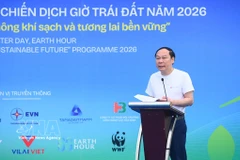
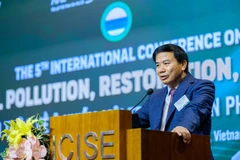
Nguyen Tuan Quang, Deputy General Director of the Department of Climate Change speaks at the event. (Photo: https://nongnghiepmoitruong.vn/)

Hanoi (VNA) - A consultation workshop on assessing the impact of carbon credit trading and mitigation outcomes from Vietnam to international markets was held in Hanoi on August 20 by the Southeast Asia Energy Transition Partnership (ETP), in collaboration with the Department of Climate Change under the Ministry of Agriculture and Environment.

Addressing the event, Nguyen Tuan Quang, Deputy General Director of the Department of Climate Change, said that to achieve global climate goals, carbon pricing tools, particularly the transfer of emission reduction outcomes and carbon credits under Article 6 of the Paris Agreement, are considered vital and effective solutions widely adopted by many countries.

According Quang, Vietnam has pledged to achieve net-zero emissions by 2050 under COP26, with climate action identified as a top priority. Alongside building a domestic carbon market, the country is working with international partners on transferring emission reduction outcomes and carbon credits, seen as key to driving low-carbon technology, meeting national targets at reasonable costs, and boosting competitiveness for green growth.

To fulfil these commitments, Vietnam has built a legal framework, starting with the 2020 Law on Environmental Protection, which first introduced carbon market provisions. Decrees No. 06/2022/ND-CP and No. 119/2025/ND-CP set a specific roadmap for carbon market development with a pilot phase through 2028, full operation from 2029, and a trial exchange within 2025. A master plan approved by the Prime Minister details core tasks to ensure the market develops as scheduled.

On international cooperation, the Ministry of Agriculture and Environment has coordinated with relevant ministries and agencies to draft a government decree on the international exchange of greenhouse gas mitigation outcomes and carbon credits, expected to be issued in 2025.

According to Quang, the UN Office for Project Services (UNOPS), through the ETP, has recently provided technical support to the Department of Climate Change in assessing the impact of an emissions trading and carbon credit system in Vietnam. This serves as crucial input for finalising the upcoming decree on international exchange of greenhouse gas mitigation outcomes and carbon credits.

This technical support aims to analyse, build models, and assess the impacts of different management options for greenhouse gas mitigation outcomes and carbon credits. The findings provide key input for the Department of Climate Change in developing and refining the legal framework for international exchange of greenhouse gas mitigation outcomes and carbon credits.

Nguyen Hong Loan, the project's head and climate policy expert at GreenCIC, noted that the study developed and assessed nine scenarios based on two main factors: the list of eligible activities for international transfer and the percentage of mitigation outcomes retained to meet Vietnam’s Nationally Determined Contribution (NDC) targets.

Experts recommend a phased approach for Vietnam, starting with a cautious trading cap of 50%. As Vietnam strengthens its domestic emission reduction capacity and builds greater confidence in meeting its unconditional targets, the cap could be raised to 70%, enabling the country to fully achieve its conditional NDC goals with international support.

Vietnam should apply a reasonable transaction fee of around 2% to generate state revenue from the carbon market. These funds should be reinvested in hard-to-abate sectors such as agriculture and forestry to ensure fairness and improve overall mitigation efficiency. At the same time, policies are needed to encourage businesses to invest in credit-generating measures in priority sectors, both to maximise contributions to NDC targets and to mitigate market price risks, thereby enhancing the competitiveness of Vietnam’s carbon credits in the international market./.

VNA

See more

Air pollution in Hanoi. (Photo: VNA)

Hanoi to launch 5,000 public electric bicycles

In a move to reduce air pollution and promote green mobility, Hanoi has approved a plan to deploy 5,000 public electric bicycles, alongside restrictions on petrol- and diesel-powered vehicles in the city’s central area.

Official heritage plaque i sinstalled on the 12 recognised Shan Tuyet tea trees in Dong Phuc commune. (Photo: VNA)

Thai Nguyen: 12 ancient Shan Tuyet tea trees win national heritage status

The recognition honours the biological, cultural and historical values of these centuries-old Shan Tuyet tea trees – natural treasures deeply woven into the livelihoods, traditions and identity of local ethnic communities. The title affirms the community’s commitment to preserving and promoting the value of this iconic local tea variety.

Sarus cranes at Tram Chim National Park (Photo: VNA)

Return of sarus cranes: Hope takes wing in Dong Thap wetland

Beneath the wide Mekong Delta sky, Tram Chim National Park is racing against time, pouring heart and science into a decade-long (2022–2032) plan to rescue the Eastern sarus crane – an elegant, scarlet-headed bird listed as endangered on the International Union for the Conservation of Nature (IUCN) Red List and a living emblem of both the park and all of Dong Thap province

French Ambassador Olivier Brochet speaks at the press conference in Hanoi on December 11 to mark the 10th anniversary of the Paris Agreement on climate change and highlighting the COP30 outcomes. (Photo: VNA)

International community ready to support Vietnam in energy transition, climate response

In a video message to the press conference, UN Resident Coordinator in Vietnam Pauline Tamesis said the UN is ready to support Vietnam in building a pipeline of projects capable of absorbing financing mobilised under the Political Declaration on establishing the Just Energy Transition Partnership (JETP), as well as from global climate finance sources, including the Green Climate Fund and the Loss and Damage Fund.

Forest rangers in Son La province apply technological devices and software to forest management, monitoring, and protection. (Photo: nhandan.vn)

Digital technology application enhances forest management, protection

With a total forest area of over 14 million hectares, including more than 10 million hectares of natural forests, forests exist in all 34 provinces and cities across the country. Given the large area and limited workforce, applying digital solutions in forest management and protection has become a top priority for the forestry sector.

Sunda pangolins (Manis javanica), also known as the Javan pangolin, are listed in Group IB – critically endangered and strictly protected from all commercial exploitation (Photo: VNA)

Quang Ngai releases rare pangolin back into nature

Initial verification showed that the animal weighed 3.7kg and measured over 60cm. It was identified as a Sunda pangolin (Manis javanica), also known as the Javan pangolin, listed in Group IB – critically endangered and strictly protected from all commercial exploitation.

Residents of Tuyen Quang province take part in the One Billion Trees Programme. (Photo: VNA)

Tree-planting programme exceeds one-billion-tree goal

The total comprises 573.9 million scattered trees and 865.2 million trees grown in concentrated plantations, equivalent to 429,125 hectares of forest. Provinces posting the strongest results include Phu Tho with 177.9 million trees, Lao Cai with 108.8 million, and An Giang with 98.5 million.

Construction activity is one of the causes of air pollution in Hanoi. (Photo: VNA)

Hanoi takes urgent measures to curb air pollution

The city requires the enhanced application of advanced technologies and remote monitoring systems, including satellite remote sensing, drones, and AI-integrated traffic cameras, to monitor, detect, and strictly address the illegal burning of garbage, straw, and agricultural by-products.