Hanoi (VNA) – The decision by the family of a 19-year-old British tourist to donate her organs after her death in Vietnam has touched hearts across the country, while also drawing attention to the remarkable progress Vietnam has made in organ transplantation and international medical integration.
A gift of life beyond borders
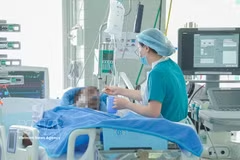
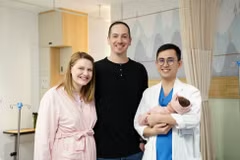
A moving story recently unfolded at the Hanoi-based Viet Duc University Hospital, where the family of British citizen O.S.W. agreed to donate her organs after she was declared deceased following a tragic accident during a trip to Vietnam.
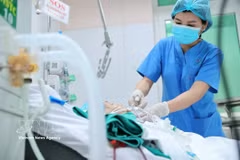
Despite the best efforts of doctors, the young woman could not be saved. Throughout the difficult period, medical staff, transplant specialists, and social workers not only provided professional care but also supported her family as they faced an unimaginable loss.
Her parents described O.S.W. as a bright, intelligent, and adventurous young woman who had just graduated from high school and was preparing to begin university this autumn. The trip to Vietnam was meant to be a celebration of that milestone.
In their darkest moment, they chose to donate her liver and two kidneys to help save the lives of Vietnamese patients suffering from end-stage organ failure.
“Vietnam was a country she loved, so to give back to Vietnam is very important to us,” her parents said.
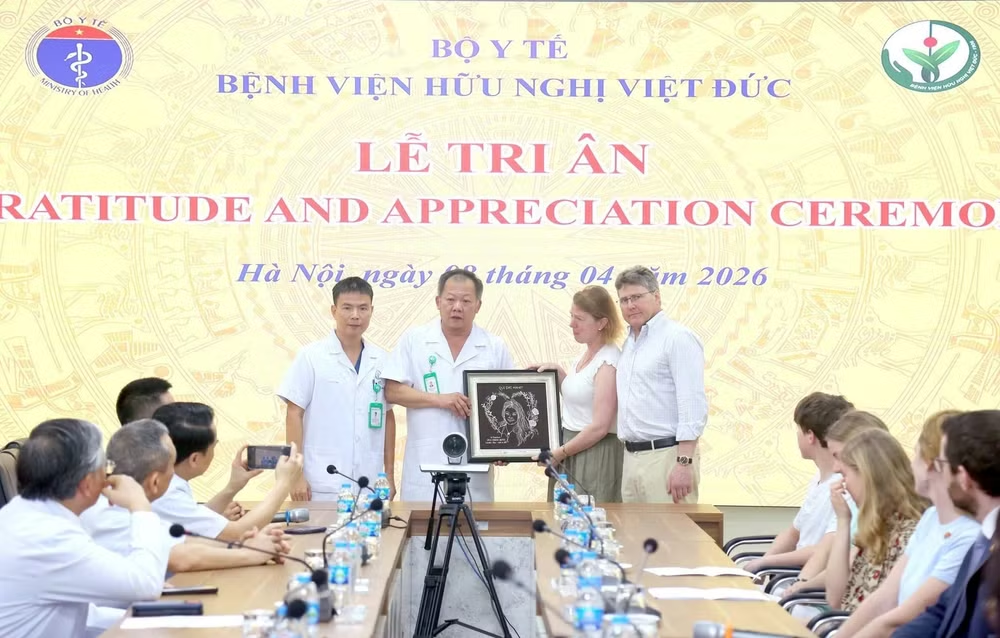
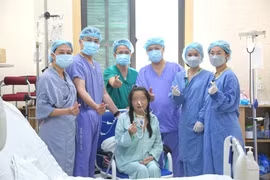
The donation saved three Vietnamese patients. According to Associate Professor Duong Duc Hung, Director of Viet Duc University Hospital, O.S.W.’s liver gave a second chance at life to a 53-year-old man suffering from acute liver failure whose survival was measured in days. Her kidneys were transplanted into a 35-year-old man and a 41-year-old woman, both of whom had spent years dependent on dialysis.
In a heartfelt tribute, hospital staff said the young woman came to Vietnam as a traveller but left as a hero. They expressed gratitude for the trust placed in them by her family and said her legacy would live on through the lives she helped save.
The story also prompted a letter of appreciation from Minister of Health Dao Hong Lan to O.S.W.’s family. On behalf of the Vietnamese health sector, the minister expressed profound condolences and praised the family’s extraordinary act of generosity.
Lan noted that the donation was among the first cases of multi-organ donation by a foreign national in Vietnam. Beyond saving lives, she said, the gesture conveyed a powerful message of compassion, social responsibility, and humanity that transcends national and cultural boundaries, while helping strengthen friendship and mutual understanding between the peoples of Vietnam and the UK.
At a tribute ceremony held at Viet Duc University Hospital on April 8, O.S.W.’s parents said they found comfort in knowing that their daughter would continue to live on in the people she helped save and in the affection of the Vietnamese people.
Vietnam’s rising position in global transplantation medicine
The case also reflects the growing capabilities of Vietnam’s transplant sector, which has achieved significant breakthroughs despite starting nearly half a century later than many developed countries.
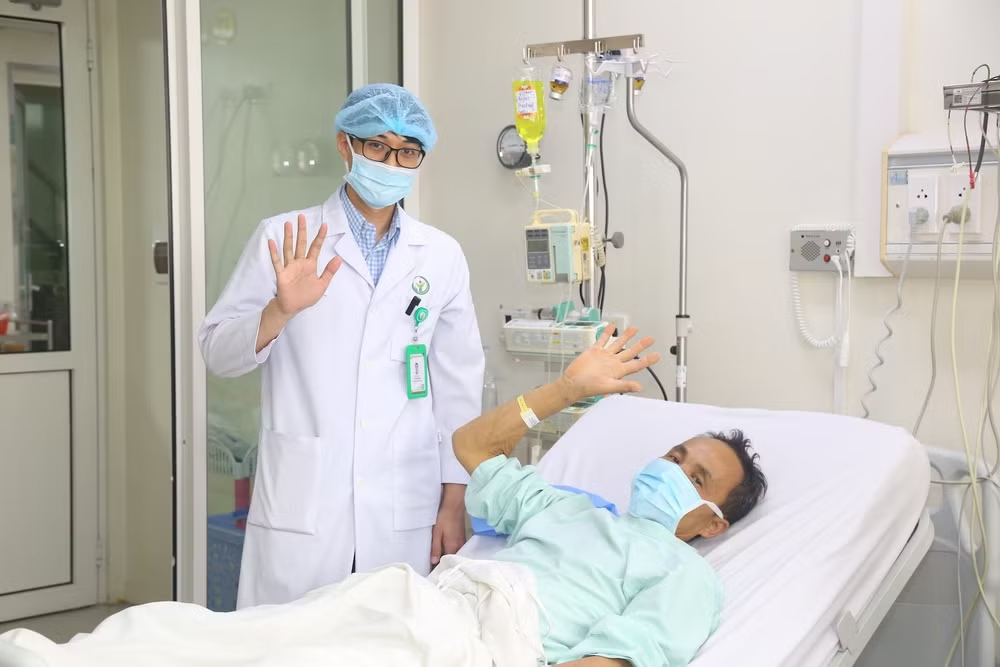
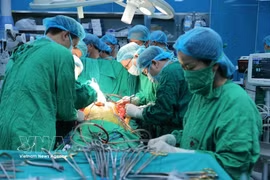
Since the country’s first kidney transplant in 1992, more than 10,600 organ transplants have been performed at 31 hospitals nationwide, making Vietnam the leading country in Southeast Asia in terms of transplant volume. Between 2022 and 2025, the country recorded more than 1,000 transplants annually, with over 1,300 procedures performed in 2025 alone – the highest figure ever recorded.
According to the National Coordination Centre for Human Organ Transplantation, Vietnam first appeared on the global organ donation and transplantation map in 2022. Today, the country has mastered transplantation techniques for all six major organs: kidney, liver, heart, lung, pancreas, and intestine.
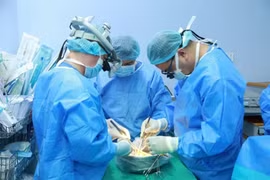
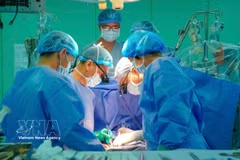
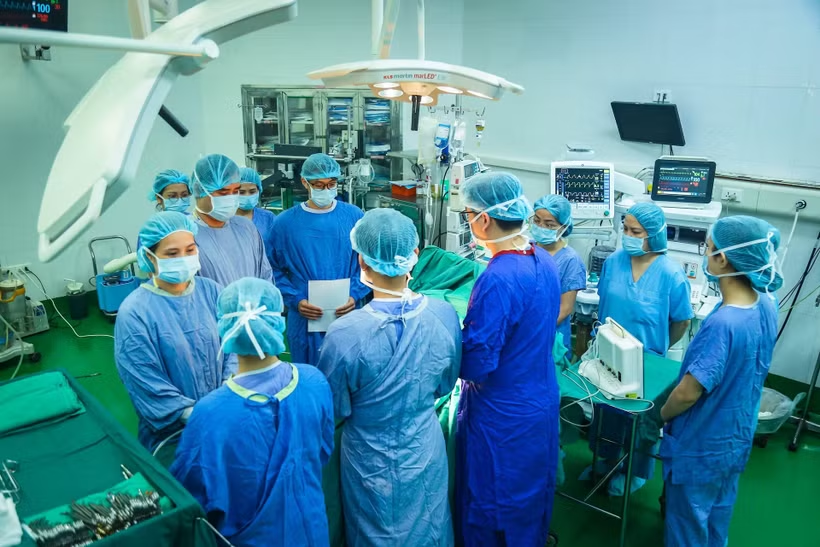
Vietnamese doctors have successfully performed numerous complex procedures, including domino liver transplants, liver transplants across incompatible blood groups, transplants for infants under one-year-old, and, in 2025, the country’s first simultaneous heart-lung transplant.
Survival rates after transplantation are comparable to those achieved by advanced international centres, reaching 90-95% for kidney transplants, 80-90% for liver transplants, and 85-90% for heart transplants. Some transplant recipients have maintained healthy graft function for up to three decades.
Health experts say these achievements demonstrate that Vietnam is no longer merely catching up with international standards but is increasingly approaching the level of leading transplant centres in the region and beyond.
According to Dr. Ha Anh Duc, Director of the Department of Medical Service Administration under the Ministry of Health, Vietnam has gradually mastered many advanced transplantation techniques, including procedures involving complex organ combinations. These successes have enhanced the country’s medical reputation and created new opportunities for patients awaiting life-saving treatment.
The achievements also reflect the implementation of the Politburo’s Resolution No. 59-NQ/TW on international integration in the new context. The resolution calls for deeper international integration, greater access to global resources, and stronger cooperation in science, technology, and innovation.
Medical experts say the adoption of advanced transplantation techniques and growing international cooperation in healthcare are clear evidence of Vietnam’s commitment to integrating with the global medical community and keeping pace with the latest scientific advances.
While challenges remain, particularly the severe shortage of organs from viable, deceased donors, stories such as that of O.S.W. demonstrate both the transformative power of organ donation and the growing capacity of Vietnam’s healthcare system to turn tragedy into hope, regardless of nationality, language, or borders./.