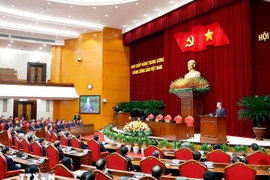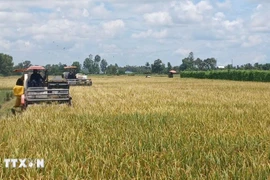
Hanoi (VNA) – The draft documents of the 14th National Party Congress emphasise environmental protection, effective climate change adaptation, and the promotion of a green and circular economy as central tasks alongside socio-economic development, reflecting the Party’s deep commitment to sustainable growth built on the three interlinked pillars of economy, society, and environment.
A key highlight of the draft is the elevation of environmental protection to a central mission alongside economic and social progress, signalling a new and comprehensive understanding of sustainability in the current context.
Harmonising economic growth with environmental protection, or safeguarding the environment to ensure sustainable economic development, is considered the cornerstone of lasting prosperity. From this perspective, the Party affirms that environmental protection is a central and inseparable task closely tied to economic and social development.
Vietnam’s policies and international commitments make clear that the transition toward a green, circular, and low-carbon economy is the pathway to sustainable development. It is essential to abandon short-term, profit-driven approaches that neglect environmental responsibilities and to remain steadfast in the principle of not sacrificing the environment for economic gain.
Commenting on the draft, Dr. Truong Ba kien, Deputy Director of the Centre for Meteorology and Climatology under the Institute of Meteorology, Hydrology and Climate Change at Ministry of Agriculture and Environment, emphasised that the inclusion of environmental protection and climate adaptation is both timely and necessary, aligning with Vietnam’s real-world challenges. He noted that proactive and effective adaptation to climate change is a trend that Vietnam must continue to pursue in the years ahead.
To enhance resilience to extreme weather and climate-related disasters, relevant agencies need to comprehensively upgrade real-time forecasting and early warning systems, integrating meteorological, hydrological, radar, and reservoir data. The use of AI, Big Data, and ensemble modelling will help detect hazardous weather patterns early. Multi-channel public alerts, regular drills, and inter-regional coordination mechanisms should also be strengthened.
In parallel, Vietnam should standardise and expand inter-reservoir operations, improve dam safety monitoring, and promote reforestation. Developing flood and landslide risk maps using satellite data and LiDAR technology will support evidence-based planning. Building green infrastructure such as water-absorbent urban systems, maintaining natural floodways, and ensuring data sharing across regions are also crucial to balancing development with watershed safety.
Localities are urged to integrate climate adaptation into regional and provincial planning, establish AI- and IoT-based early warning systems, and enhance climate risk management capacity for local authorities. Promoting nature-based and green development models and nurturing a culture of preparedness will help build safer, more resilient communities.
According to Dr. Mai Van Khiem, Director of the National Centre for Hydro-Meteorological Forecasting, Vietnam must continue modernising its observation technologies, expanding monitoring networks, and applying artificial intelligence to improve forecasting accuracy, particularly for extreme weather events. He also underlined the need for clear, concise, and accessible communication to ensure early warnings reach vulnerable communities.
Strengthened coordination between meteorological agencies, local governments, disaster response units, and media outlets is vital to translating forecasts into effective action. Public education and training in disaster preparedness should be expanded, with climate and environmental awareness integrated into school curricula.
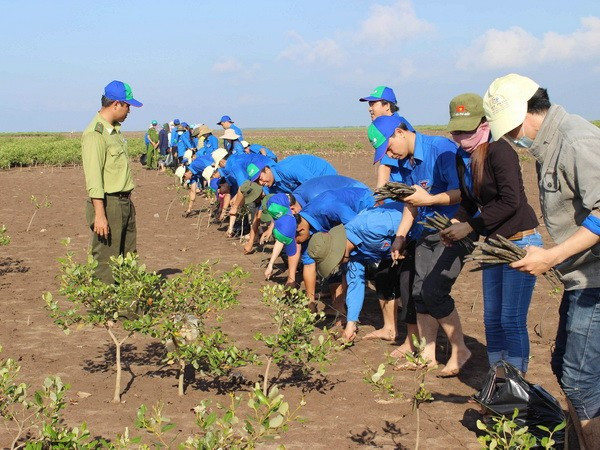
Le Thi Dinh, Secretary of Xuan Non hamlet Party Cell in Hanoi' Thu Lam commune, noted that recognising environmental protection as a core development pillar provides a new benchmark for all socio-economic policies. However, genuine sustainability must start with each individual’s mindset and daily actions, from planting trees and flowers to embracing broader goals such as green transformation and green economy. She also stressed the importance of environmental education at all levels to foster a “green living” consciousness among citizens, laying the groundwork for a sustainable and resilient future./.