Funding, regulatory hurdles challenge Vietnam's developers long term

Property developers in Vietnam face a steep path to long-term growth, with various hurdles awaiting them in the next 12 months, including challenges related to funding access and an evolving regulatory landscape.
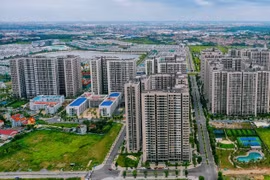
Funding, regulatory hurdles challenge Vietnam's developers long term ảnh 1Apartment complex in HCM City. Over the past five years, Vietnamese developers have pursued aggressive growth through debt financing, leading to higher leverage ratios. (Photo: VNA)
Hanoi (VNA) - Property developers in Vietnam face a steep path tolong-term growth, with various hurdles awaiting them in the next 12 months,including challenges related to funding access and an evolving regulatorylandscape.

A recent survey by S&P Global Ratings sheds light on the heavy reliance ofVietnamese developers on short-term funding. This reliance leaves themsusceptible to liquidity and default risks when access to funding becomesrestricted. For example, Novaland has encountered difficulties in meeting itsdomestic debt payments and is currently seeking to restructure its foreign debtobligations.

As of December 31, 2022, short-term debt for Vietnamese developers exceededtheir cash balance, surpassing 100%.

Over the past five years, Vietnamese developers have pursued aggressive growththrough debt financing, leading to higher leverage ratios. The reporthighlights that they often resort to debt to finance working capital forhigh-rise condominiums and capital expenditures for land acquisitions.

The government's tightening of developers' access to funding, including bankloans and the local bond market since June 2022, has constrained liquidity andled to project construction and handover delays. Buyers' sentiment has alsodecreased as developers can no longer provide sales incentives, and access tomortgage loans has diminished.

However, some early signals of easing appeared in early 2023, as the countrytook steps to reduce financial stress in the property sector. The recent policychanges aim to support the affordable segment of the market while discouragingproperty speculation, ultimately promoting more sustainable growth in the propertymarket, the report said.

Additionally, investor-buyers accounted for approximately 86% of propertypurchases in Vietnam between 2020 and 2022, with overseas buyers contributing45% of the total, according to CBRE Group. The high proportion ofinvestor-buyers in Vietnam leads to greater sales fluctuations due to theirsensitivity to economic cycles and market sentiment.

“In Vietnam, we expect aggregate residential sales to decline by 15 to 20% in2023 after experiencing growth of 25 to 30% in 2022.”

Developers in Vietnam also tend to have higher off-balance sheet liabilities.These include debt-like obligations such as sales incentives. For example, somedevelopers subsidise the mortgage interest expense for customers during theinitial stage of project construction. Additionally, they provide guaranteedrental returns for a certain period after handing over the units (more commonfor hospitality-related projects).

The report said although such incentives are common in the Vietnamese industry,the disclosure of their extent and commitment period is limited underVietnamese Accounting Standards. Consequently, developers' actual liabilitiesand cash flow burdens may be understated.

Additionally, Vietnam’s developers face key-man risk, as they are oftencontrolled by the founding family either directly or indirectly. Somedevelopers have complex corporate structures involving multiple business linesand joint ventures. Debt obligations may be concentrated at the parent company,with debt servicing relying on dividends from operating subsidiaries and jointventures. This complexity makes it challenging to track the flow of funds andassets.

Despite some challenges, the report also pointed out opportunities for Vietnam'sgrowth, driven by rising disposable incomes, increased foreign directinvestments, a young population (over 70% under the age of 45), robust GDPgrowth, and ample room for further urbanisation./.
VNA
See more

Vinh Long Business Association and HKBAV sign a MoU on cooperation (Photo: VNA)

Tay Ninh, Vinh Long court stronger partnerships with China's Hong Kong

Tay Ninh and Vinh Long each have distinct strengths and opportunities, while Hong Kong offers international connectivity, financial capacity, logistics capabilities and professional services. Pairing them would open practical opportunities in trade, investment, food processing, infrastructure and supply chains.

The EVFTA offers major opportunities for Vietnam’s footwear and leather goods industry to expand exports to the EU market. (Photo: VNA)

Vietnam–EU trade expands amid new challenges

The EVFTA reached another milestone in August 2026, its seventh year of implementation, with the EU completing its tariff elimination schedule, making 99% of Vietnamese exports eligible for duty-free access. Vietnam will continue cutting tariffs on EU goods through 2030.

At Dong Dang international railway station in Lang Son province (Photo: VNA)

Lang Son, Pingxiang officials push smart border gate pilot

Vietnam's Lang Son province and China's Pingxiang city focused on solutions to easing export-import bottlenecks, raising goods clearance capacity and speeding up the rollout of smart border gate model - priorities for smoother cross-border trade, transport and people-to-people exchanges.

Remittances to Ho Chi Minh City reaches more than 2.83 billion USD in the third quarter of 2026 (Photo: VNA)

Remittances to Ho Chi Minh City rise nearly 40% in Q3

According to the State Bank of Vietnam (SBV)’s Regional Branch 2, remittances transferred to Ho Chi Minh City through credit institutions and economic organisations totalled 2.835 billion USD in Q3, an increase of more than 802 million USD from Q2.

Vietnam continues to attract strong interest from foreign investors in the first nine months of 2026, with registered FDI reaching 50.36 billion USD, up 76.4% year on year. (Illustrative Photo: VNA)

FDI inflows boost Vietnam’s economic growth

Vietnam continued to attract strong interest from foreign investors in the first nine months of 2026, with registered FDI reaching 50.36 billion USD, up 76.4% year on year. Disbursed capital rose 12.1% to 21.07 billion USD, the highest level in five years.

At the Vietnamese pavilion (Photo: MOIT)

Vietnamese businesses promote agricultural, food products at SIAL Paris 2026

Vietnam’s participation in SIAL Paris 2026 highlights efforts to diversify products, expand processing and strengthen distribution networks. To improve competitiveness and sustain exports to Europe, businesses are advised to maintain strict quality control, ensure food safety, build brands and secure reliable supplies.

Fishing boats anchored at Hon Ro fishing port in Khanh Hoa province. (Photo: VNA)

Coastal localities ordered to tighten fishing fleet control, seafood tracing

Local authorities must review their vessel records and cross-check them against the national fisheries database, known as VNFishbase. Information on vessel registration, technical inspections, fishing licenses, vessel monitoring systems (VMS), and each boat’s operating status must be updated fully, promptly and accurately.

Garment exports (Photo: VNA)

Stronger farmer-business links key to boosting Vietnam’s export value

Achieving double-digit export growth requires Vietnamese firms to promote substantive connections with international buyers and deeper participation in global value chains. They must also improve product quality, ensure stable supplies, strengthen branding and meet market-specific standards to retain customers and increase export value.

Dien Bien province presents investment approval decisions and memoranda of understanding on cooperation between the province and investors. (Photo: VNA)

Dien Bien province promotes cross-border investment with China, Laos

At the conference, investment approval decisions were granted to 20 investors for projects totaling over 7.5 trillion VND in capital. Additionally, memoranda of understanding were exchanged between Dien Bien and six investors, representing nearly 12 trillion VND in registered capital.

Governor of the State Bank of Vietnam (SBV) Pham Duc An speaks at the meeting between the central bank and 46 commercial banks in Hanoi on October 19. (Photo: VNA)

Governor calls for targeted interest rate cuts to support businesses

Governor of the State Bank of Vietnam (SBV) Pham Duc An said the SBV will continue supporting credit institutions in addressing difficulties but not sacrifice system safety. Interest rate management should therefore combine lower funding costs with reduced operating expenses, profit-sharing and measures to curb unhealthy competition for deposits.

The Vietnam pavillion showcases a wide range of traditional products to US businesses at High Point Market 2026. (Photo: VNA)

Vietnam pavilion makes strong impression at US International Furniture Fair

The exhibits feature diverse designs, from modern, minimalist furniture to handcrafted products reflecting Vietnamese identity. Businesses combine natural and engineered wood, rattan, bamboo and other materials while focusing on design, finishing and customisation to meet different market demands.