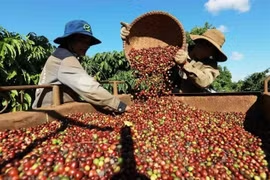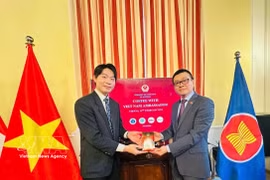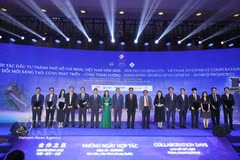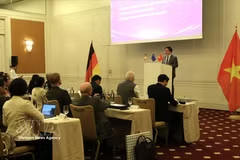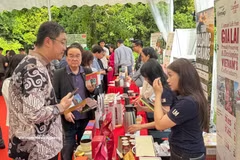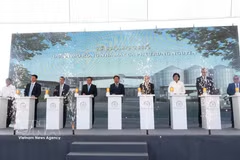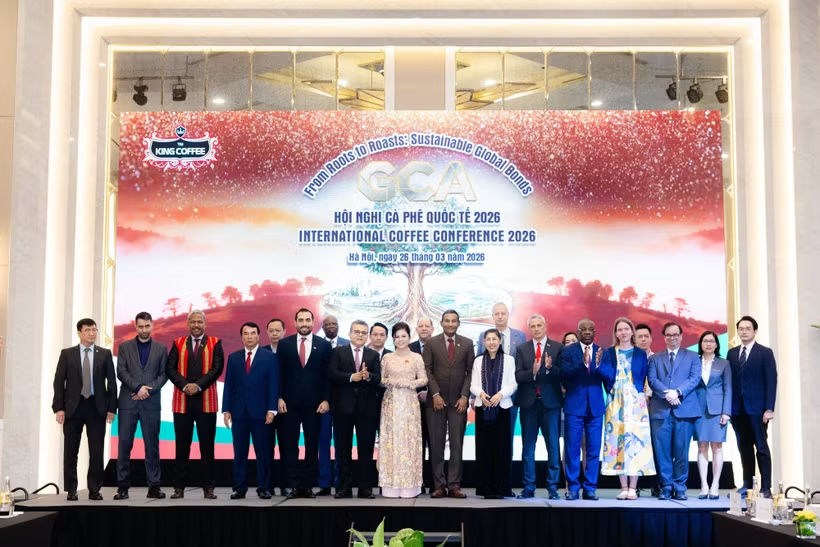
Hanoi (VNA) – The Global Coffee Alliance (GCA) was officially launched in Hanoi on March 26, marking the start of a new initiative to build a sustainable coffee ecosystem that connects people and nature across the global value chain.
Making debut within the framework of the International Coffee Conference in Hanoi, the alliance represents a promising multinational platform to promote sustainable and prosperous development for the coffee industry in Vietnam and worldwide. Initiated and hosted by TNI King Coffee, the launch set a significant milestone, reaffirming the rising profile and appeal of Vietnamese coffee on the global stage.
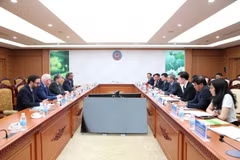
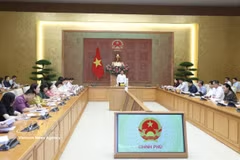
The conference drew representatives from 19 diplomatic missions in Vietnam, along with leading experts, businesses, and policymakers in the sector. More than just a forum for dialogue, it served as a starting point for a new phase of global cooperation to build a more sustainable, transparent, and equitable coffee industry.
Building a global coffee ecosystem
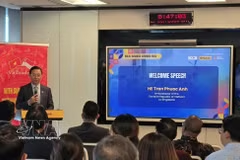
Presenting the strategic vision of the GCA, Le Hoang Diep Thao, Founder and CEO of TNI King Coffee, stressed that solidarity is a prerequisite for the industry to overcome unprecedented challenges, including climate change, market volatility, and increasingly stringent requirements for supply chain transparency.
“In the face of these huge waves, no country or enterprise can stand alone. We can only go far if we go together,” she said.
According to Thao, the conference went beyond dialogue, marking the beginning of a new journey of cooperation where diplomatic connectivity and private-sector execution converge within a pioneering public – private partnership platform.
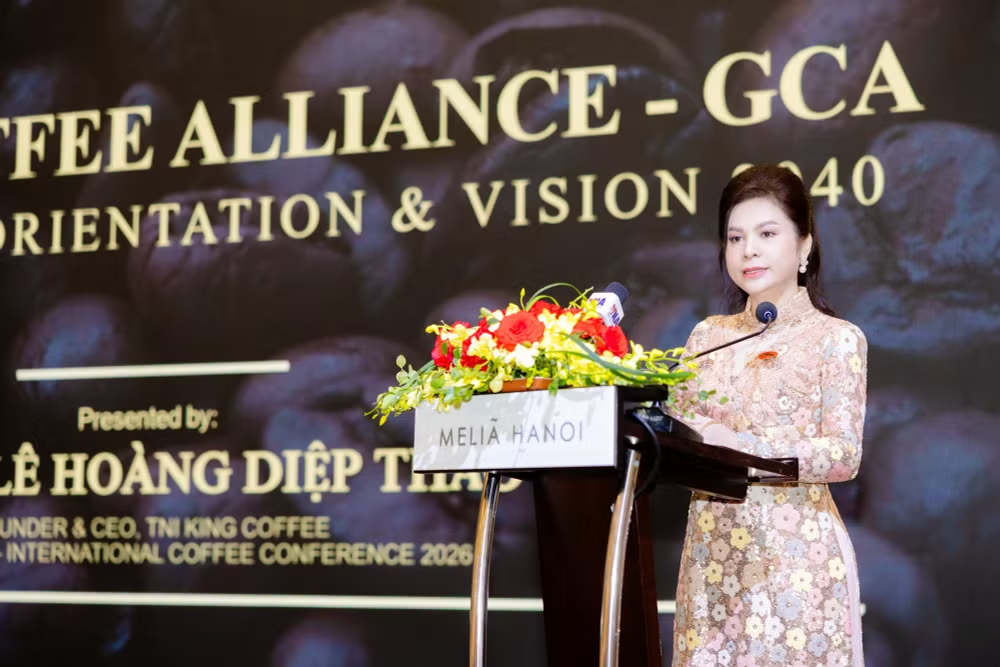
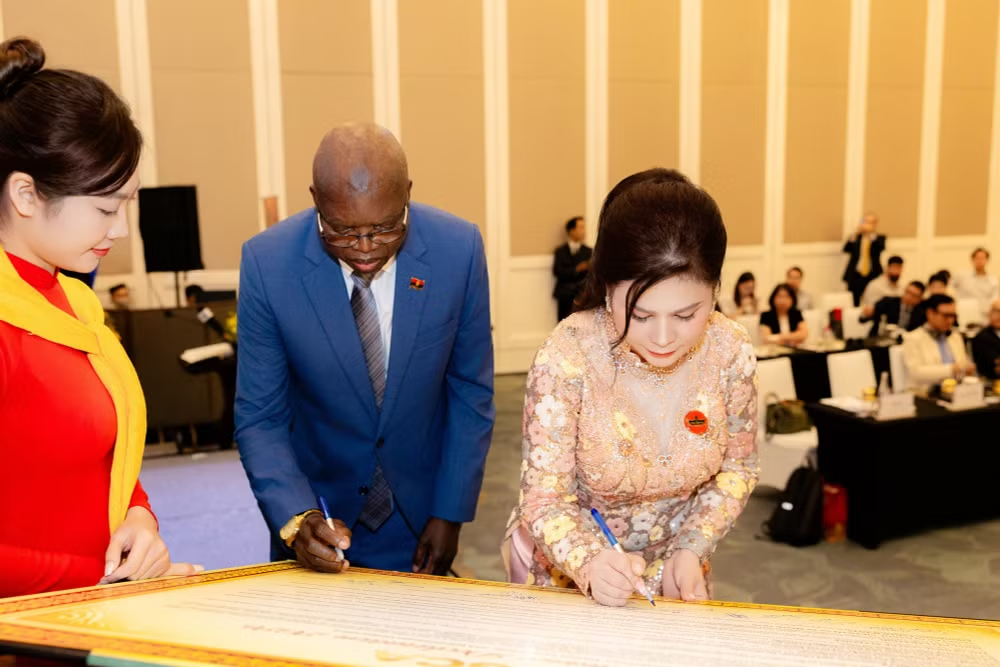
At the event, the GCA 2026 Declaration outlined five core goals – protecting coffee ecosystems and promoting regenerative agriculture, ensuring fair livelihoods for farmers, strengthening diplomacy – business cooperation, fostering innovation and knowledge sharing, and promoting coffee culture as a shared heritage of humanity.
Participants also discussed a GCA strategic vision for 2040 which aims to build a global coffee ecosystem driven by technology while placing people and nature at its core. In this roadmap, achieving net-zero emissions is a long-term aspiration, serving as a “compass” guiding development across three phases.
The launch of the GCA in Vietnam – the world’s second-largest coffee exporter and the leading producer of Robusta – is seen as a strategic turning point for the country, reflecting efforts to build deeper linkages with the global value chain and contribute to shaping the future of the global coffee industry.
Coffee becomes a universal language, a diplomatic bridge
At the conference, representatives from participating countries expressed support for the GCA’s objectives and optimism about new opportunities for the coffee sector through the alliance. They also voiced confidence in Vietnam’s role in leading sustainable growth in the industry.
Saadi Salama, Ambassador of the State of Palestine to Vietnam, described the establishment of the GCA as a timely and strategic initiative amid intertwined global challenges such as climate change, economic volatility, and social inequality.
He emphasised that the GCA serves as a platform that combines diplomacy with the dynamism of the private sector to address issues related to environmental sustainability and human development.
The ambassador held that the appeal of the GCA lies in its “dual approach” – protecting and restoring ecosystems on which coffee production depends, and prioritising the livelihoods of millions of farmers who sustain the global industry.
Coffee is not merely a commodity, but a “universal language” of dialogue, hospitality, and human connection – qualities that underpin its unique diplomatic value, he said.
Meanwhile, João Pereira, Ambassador of Timor-Leste to Vietnam, noted that although his country is a newcomer in the coffee sector, it has developed distinctive Arabica grown at altitudes of around 800 metres above the sea level. He voiced his hope of bringing these products to international markets and praised the GCA initiative as an opportunity for Timor-Leste to contribute and learn.
The diplomat also acknowledged Vietnam’s rapid economic growth, describing it as a valuable source of experience for his country in developing a sustainable and efficient coffee industry.
A representative from the Angolan Embassy emphasised that Angola is a long-standing coffee producer and currently among large exporters of both Arabica and Robusta.
Assessing the GCA as an important initiative for coffee-producing nations, the representative particularly agreed with its message that "no farmers are left behind", and stated that Angola is also implementing similar programmes aimed at sustainable and equitable development in the industry./.