Hanoi (VNA) - The transition to sustainable aviation fuel (SAF) is no longer an option but has become an imperative for the global aviation industry as it confronts the escalating challenges of climate change.
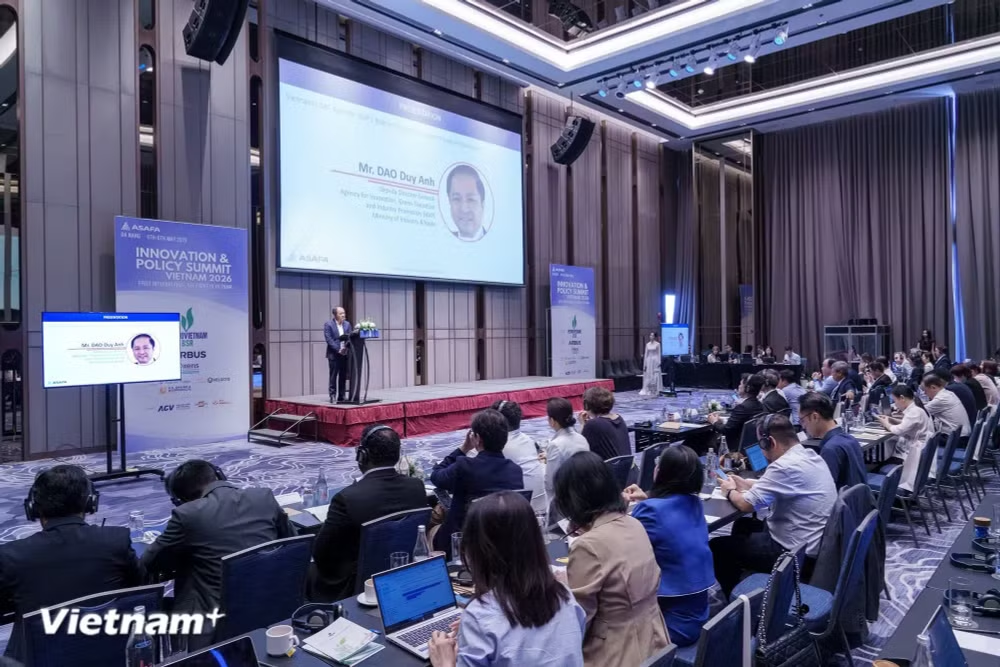
Policymakers and foreign experts mapped out that new energy reality at the ASAFA Innovation & Policy Summit (IPS) Vietnam 2026 that opened in the central city of Da Nang on May 7.
A market with enormous growth potential
Scaling production remains the single biggest choke point in the aviation sector’s energy transition, participants said.
Hitting the industry’s 2050 net-zero target means SAF must cover 60%-70% of all jet fuel burned, or a more than 100-fold production surge over the next two decades, according to Fabrice Espinosa, CEO of the Asia Sustainable Aviation Fuel Association (ASAFA).
That’s not a fuel swap, but a whole-of-economy industrial overhaul, he said.
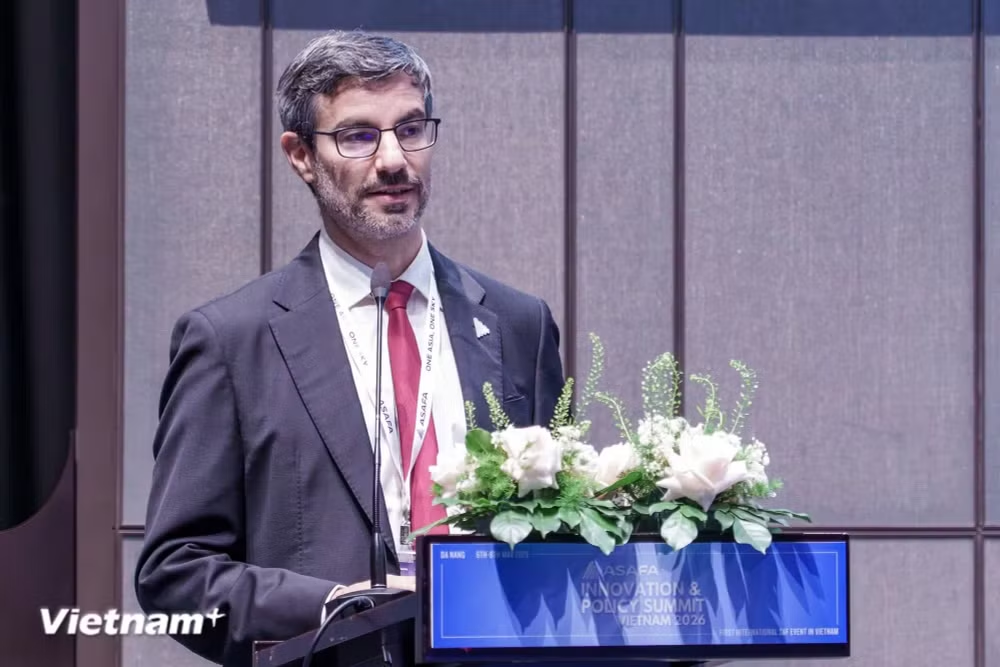
In Southeast Asia alone, a 5% SAF blending mandate by 2030 would drive annual demand to 8–10 million tonnes, unlocking a 25 billion USD-a-year energy market. A global capacity race is already underway, and emerging economies that move fast stand to capture the spoils.
Vietnam's competitive edges
Vietnam already possesses the key building blocks for a competitive SAF ecosystem, foreign delegates said.
The country’s biggest edge is feedstock. Rice straw, sugarcane bagasse, cashew-processing by-products, used cooking oil, animal fats and fish oil offer a deep, steady, low-cost raw material base.
On top of that, existing industrial base, such as modern refineries and petrochemical operations run by Binh Son Refining and Petrochemical and State giant Petrovietnam, provides a ready-made production backbone.
Vietnam has also shown that SAF can work commercially. Its first SAF-powered domestic flights took off in the central region through a tie-up between Vietnam Airlines, Skypec and BSR. Those test flights signal that the entire aviation value chain is finally moving in sync, said Vice Chairman of the Da Nang People’s Committee Ho Quang Buu.
Building an integrated green aviation ecosystem
Decarbonisation goes well beyond the fuel tank. Airport infrastructure and operational efficiency carry equal weight.
Le Hoai Nam, Deputy Director of the Da Nang International Airport, said the airport is adopting a green Airport Collaborative Decision Making (A-CDM) model to slash engine-idling time on the ground.
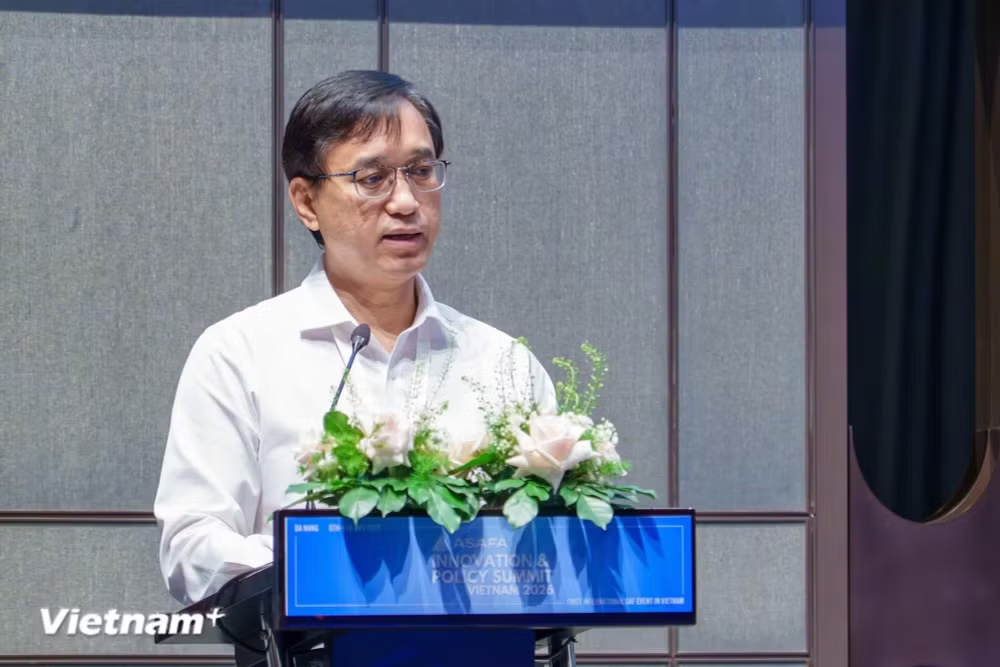
"Optimising flight routes and air traffic management can deliver immediate emissions reductions", Nam said. "We are also redesigning runway operations into a one-way circular pattern to reduce congestion-related emissions, laying the groundwork to become a certified green hub”.
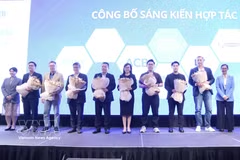
The forum also featured the signing of several strategic memoranda of understanding to nurture cooperation between international organisations and State management agencies.
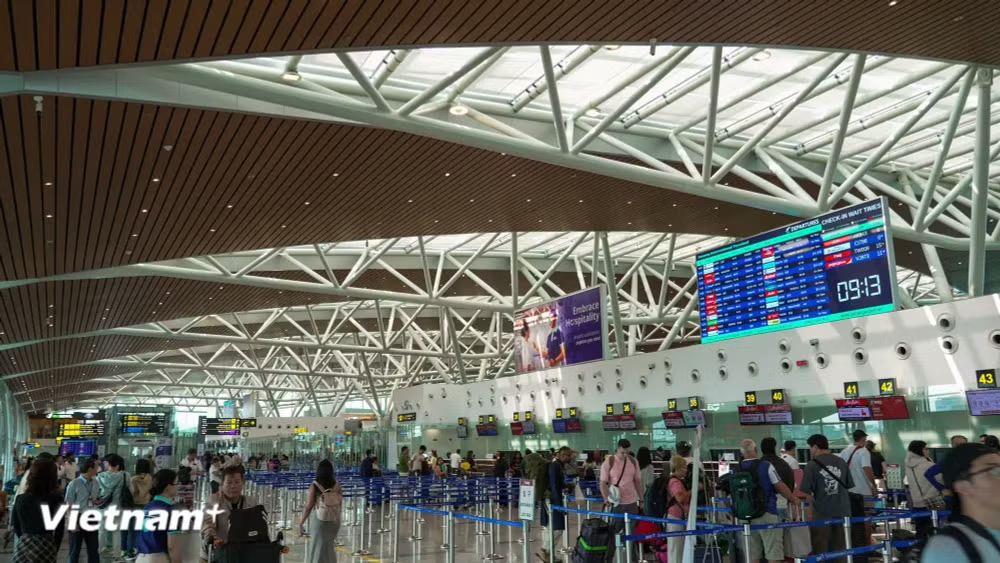
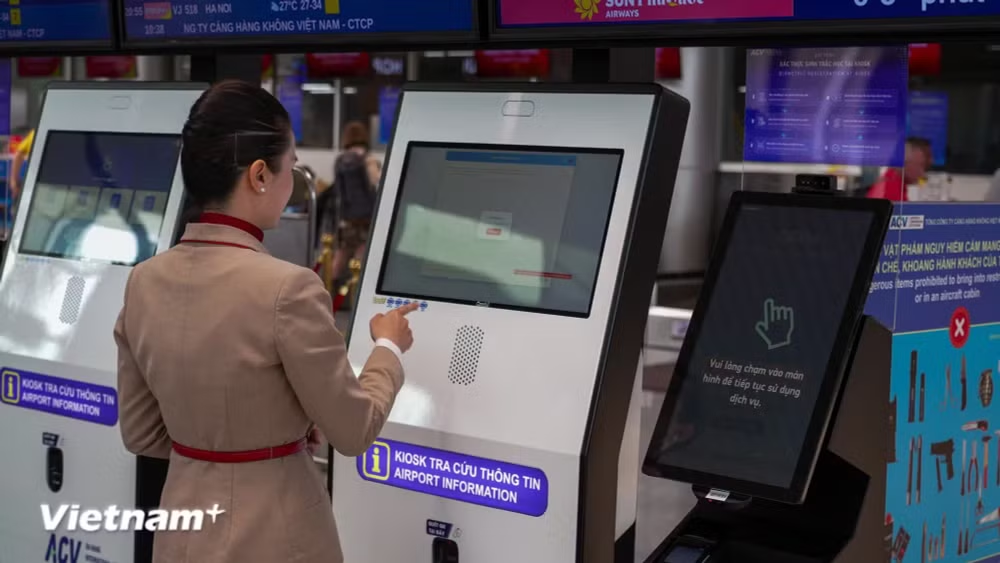

Among the key agreements was a partnership between the ASAFA and the Agency for Innovation, Green Transition and Industry Promotion under the Vietnamese Ministry of Industry and Trade, and a separate memorandum of understanding with the Da Nang Innovation Startup Support Centre to unlock cross-sector collaboration.
The rise of Vietnam's SAF industry stands to start up new economic engines, anchoring the country's net-zero commitment while accelerating the shift to a circular economy./.