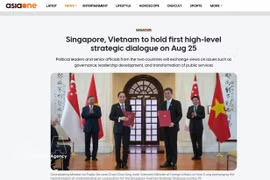
Hanoi (VNA) – Politburo member and Standing Member of the Secretariat of the Communist Party of Vietnam (CPV) Central Committee Tran Cam Tu’s official visit to Singapore and his co-chairing of the first Vietnam-Singapore Strategic Dialogue on August 24-25 are expected to inject fresh momentum into trade, investment and emerging areas of cooperation between the two countries.
A model of cooperation
As complementary economies, Vietnam and Singapore have promoted the implementation of trade agreements to strengthen bilateral economic ties. Both members of the Comprehensive and Progressive Agreement for Trans-Pacific Partnership (CPTPP) and the Regional Comprehensive Economic Partnership (RCEP), the two countries have effectively tapped the benefits offered by these free trade agreements.
Singapore is among Vietnam’s leading economic partners in investment, trade and human resource training. It is currently Vietnam’s second-largest foreign investor, with more than 4,500 valid projects and total registered capital of nearly 97 billion USD. Its projects span processing and manufacturing, infrastructure, logistics, real estate, finance, high technology and modern services, contributing to economic growth, job creation and economic restructuring.
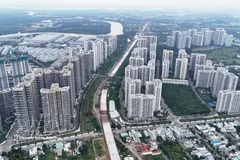
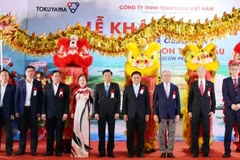
A prominent symbol of bilateral cooperation is the network of Vietnam-Singapore Industrial Parks (VSIPs). Since the first VSIP was launched in 1996, the network has grown to 22 parks in localities nationwide, becoming not only an effective economic cooperation model but also a symbol of trust, long-term vision and strategic connectivity between the two countries.
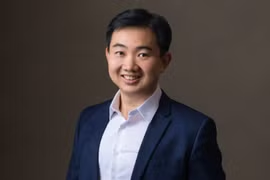
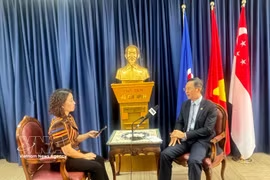
Cao Xuan Thang, Trade Counsellor at the Vietnamese Trade Office in Singapore, said Vietnam-Singapore economic and trade ties have made strong progress over the past half century, becoming a successful model of cooperation in Southeast Asia.
According to Singapore’s Enterprise Singapore (ESG), in the first seven months of 2026, Vietnam remained Singapore’s 10th-largest trading partner, with two-way trade reaching nearly 33 billion SGD, up 43.1% year-on-year. Singapore’s exports to Vietnam stood at 17.8 billion SGD, up 9%, while imports from Vietnam surged 126.8% to 15.1 billion SGD, highlighting the significant role of transit and re-export activities.
New room for cooperation
The two economies are highly complementary, with Singapore serving as a leading regional hub for finance, logistics and innovation, while Vietnam offers a dynamic market, a young workforce and growing integration into global supply chains.
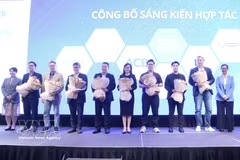
Their economic ties are also shifting from traditional cooperation towards technology, innovation and green development. Recent initiatives include a memorandum of understanding between the Quang Trung Software City Development Co. Ltd. and the Singapore Semiconductor Industry Association (SSIA) to connect the two countries’ semiconductor ecosystems and promote investment, R&D, technology transfer and human resource training.
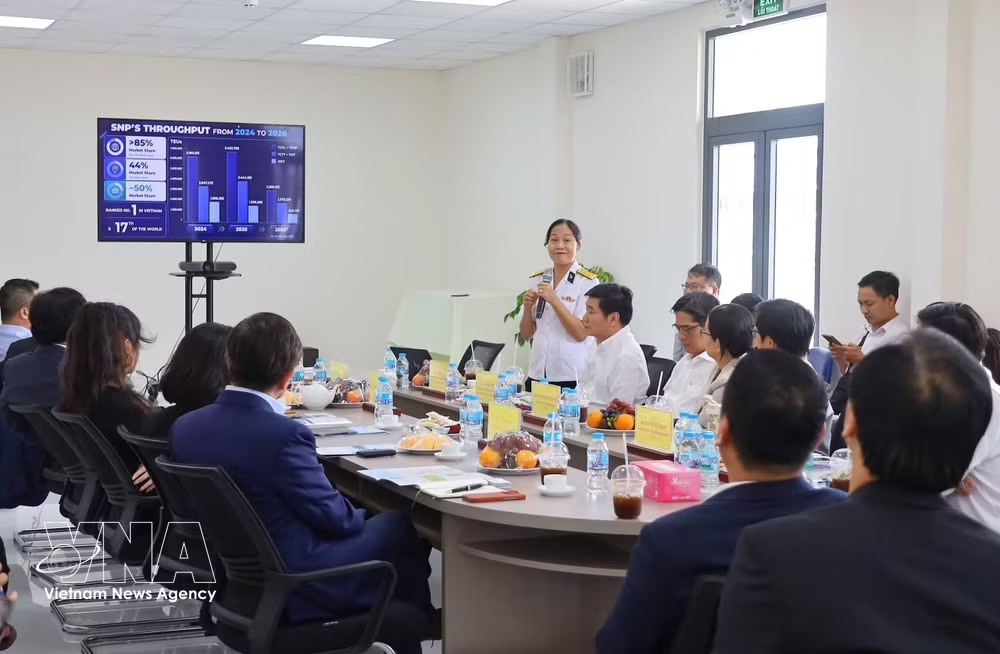
Singaporean businesses are also showing growing interest in investment opportunities in Can Tho and Quang Ngai, particularly in manufacturing, logistics, food processing, digital transformation, energy and sustainable supply chains.
Thang said digital economy, innovation and green transformation offer substantial room for expanded cooperation. The two sides could develop next-generation VSIPs featuring smart, low-emission models integrating data centres, green logistics and renewable energy.
High-tech fields such as artificial intelligence, fintech, semiconductors, cybersecurity, e-commerce and cross-border payments are also expected to become new growth drivers.
“Singapore has strengths in capital, technology, management and international financial networks, while Vietnam has advantages in its market, production capacity and high growth,” Thang said, stressing that the complementary strengths would create new opportunities in high technology, logistics, clean energy and green manufacturing.
The Vietnamese Trade Office in Singapore will continue updating market information and policies, supporting business connections, trade promotion and access to Singapore’s distribution and e-commerce networks, while helping Singaporean businesses seek Vietnamese suppliers and investment opportunities.
Thang recommended that Vietnamese enterprises leverage Singapore’s strengths in innovation, finance and logistics and strengthen links with business associations, distributors and investors to expand markets and pursue long-term cooperation./.