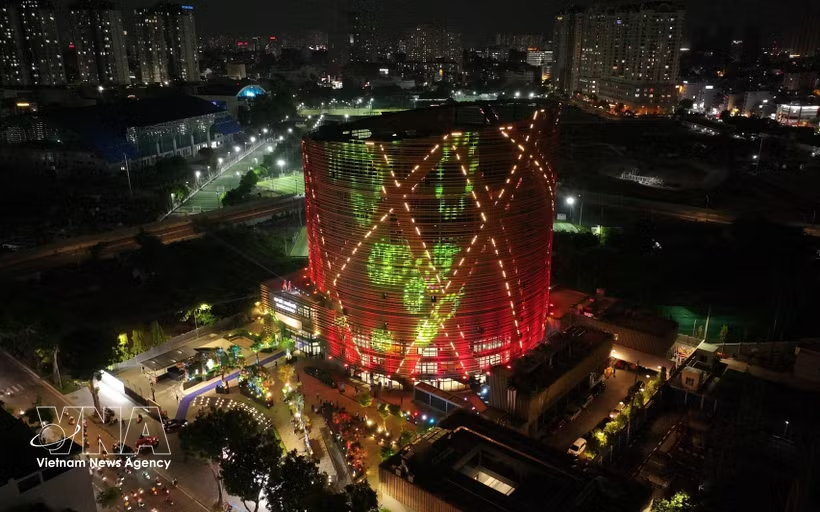
Ho Chi Minh City (VNA) – Ho Chi Minh City has significant potential to build a vibrant world-class night-time economy by making better use of its cultural industries, experts said.
According to the National Statistics Office, cultural industries contributed about 3.54% of the city's gross regional domestic product (GRDP) in 2020. The figure rose to around 5.7% in 2025 and is expected to continue growing.
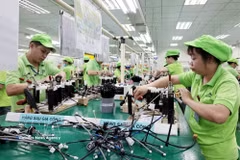
Ho Chi Minh City currently has the country's largest cultural industry ecosystem, with around 97,000 professional workers and more than 17,600 businesses operating in key cultural sectors.
Under its cultural industry development programme through 2030, the city will prioritise eight sectors where it already has strong advantages, including advertising, fashion, exhibitions, film, cultural tourism, performing arts, photography and fine arts. Revenue from these sectors is expected to reach about 148 trillion VND (over 5.62 billion USD), with cultural industries contributing 7-8% of GRDP by 2030.
The night-time economy offers an ideal platform for these industries to grow. International experience shows that more than 70% of night-time economy revenue comes from cultural, entertainment, artistic and food-related activities.
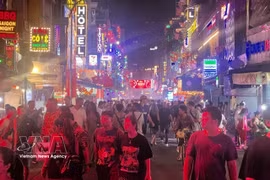
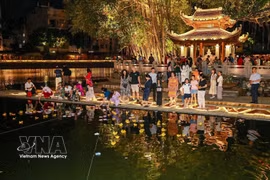
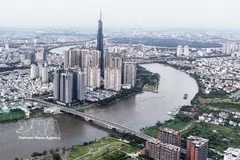
With its young population, diverse cultural background and vibrant urban life, Ho Chi Minh City is well placed to develop a 24-hour economy. Existing attractions such as Nguyen Hue and Bui Vien walking streets, theatres, cinemas and riverside performances along the Saigon River have already helped create demand for evening entertainment among both local residents and international visitors.
Nguyen Thi Thanh Thuy, Deputy Director of the Ho Chi Minh City Department of Culture and Sports, said for the 2026–2030 period, the programme outlines the sustainable, diversified, synchronised, and modern development of all cultural industries across Ho Chi Minh City. The city will prioritise appropriate resource allocation, encourage social participation and private-sector engagement, and foster the creation of distinctive cultural products and services that will make meaningful and effective contributions to socio-economic development.
The combination of cultural attractions and night-time services is expected to strengthen tourism by encouraging visitors to extend their stays and increase spending, she noted.
Regarding the importance of this strategy, Doan Ngoc Duy, an expert in urban culture studies, said that when culture is treated as an economic product, properly invested and competing in the international market, it can generate added value not only for the cultural sector but also for the overall economy.
However, despite its advantages, the city still faces major challenges in turning its vision into reality.
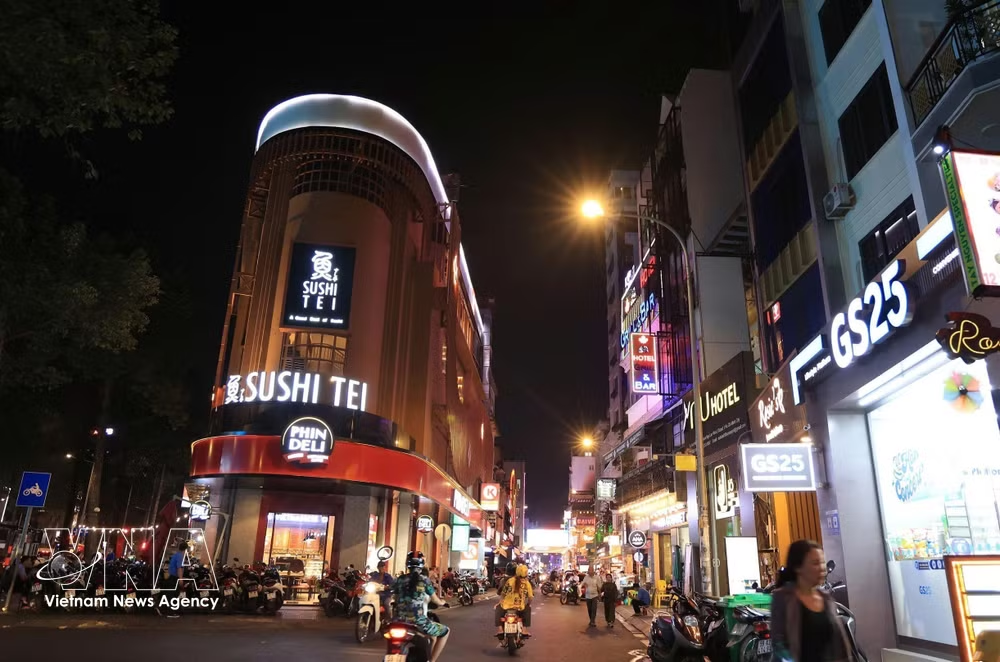
Experts said a successful night-time economy is much more than keeping restaurants, bars and markets open later. It requires a complete ecosystem of safe, high-quality services supported by culture, entertainment and efficient public management.
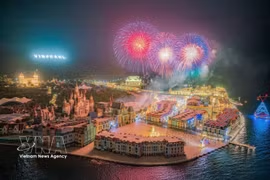
At present, most night-time activities remain concentrated in the central area, putting pressure on transport infrastructure while creating noise and security concerns for nearby residential communities. The city also lacks large-scale cultural performances and internationally recognised venues capable of attracting visitors throughout the evening.
Meanwhile, businesses in the creative sector continue to face legal and administrative barriers relating to operating hours, performance licences, noise regulations, taxation and access to finance.
To address these issues, Ho Chi Minh City is preparing a new master plan for 2025-2050, with a 100-year vision. The plan proposes dividing the city into ten specialised development zones to ease pressure on the city centre and better distribute economic activities.
The historic urban core, including Sai Gon, Cho Lon, Thu Thiem and both banks of the Saigon River, is expected to become a centre for finance, high-end services, public culture and heritage. The night-time economy will be supported by transit-oriented development (TOD), with metro lines, bus rapid transit, waterways and riverside pedestrian spaces connecting cultural and entertainment destinations.
Experts said clearer zoning will allow dedicated night-time entertainment districts to develop while reducing their impact on residential areas. It will also create favourable conditions for private investors to build large-scale creative facilities such as exhibition centres, film studios, fashion streets and public art spaces.
Alongside better planning, economists believed that new financial mechanisms will be essential to unlock investment.
Between 2021 and 2025, the city's Department of Culture and Sports invested more than 3.5 trillion VND in 67 cultural infrastructure projects. Another 22 major projects have been proposed for the 2026-2030 period to expand modern cultural and sports facilities.
However, public investment alone will not be enough. Private capital must play a much larger role, according to experts.
Truong Minh Huy Vu, Director of the Ho Chi Minh City Institute for Development Studies and Chairman of the Executive Agency of the Vietnam International Financial Centre in Ho Chi Minh City, suggested establishing venture-style cultural investment funds under the legal framework of the International Financial Centre.
Combined with tax incentives, preferential land policies and streamlined administrative procedures, such financial tools could attract greater investment into creative businesses and cultural projects, he said.
Experts also called for a dedicated legal framework for the night-time economy, with clear regulations on business hours, zoning, public safety, food hygiene, waste management and noise control, alongside a specialised agency to coordinate policies across different sectors./.