Hue turns waste into resource through tech-enabled scrap collectors

Through the mGreen application, women who once earned their living by collecting recyclable waste have become “green warriors” connected to a digital recycling supply chain. The initiative is not only improving livelihoods and enhancing social status but also forming a sustainable waste circulation loop, reinforcing Hue’s image as a green city.

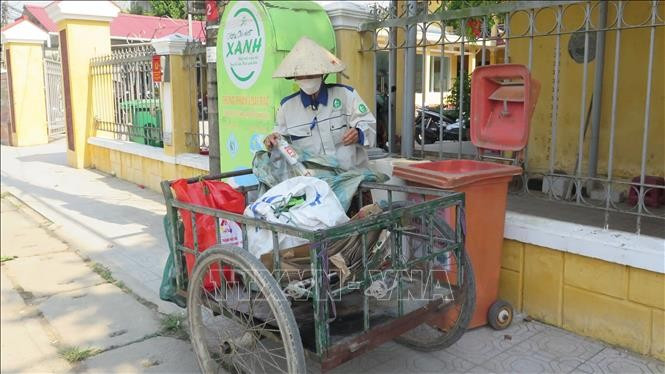
Nguyen Thi Vang is the oldest member of the scrap-collecting cooperative group in An Dong ward in Hue city. (Photo: VNA)

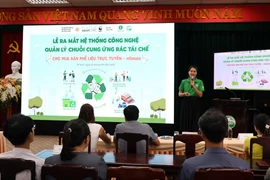
Hue (VNA) – A pioneering waste management model in the central city of Hue is transforming the lives of informal waste collectors, mostly women, and reshaping how the city approaches its circular economy goals.

Through the mGreen application, women who once earned their living by collecting recyclable waste have become “green warriors” connected to a digital recycling supply chain. The initiative is not only improving livelihoods and enhancing social status but also forming a sustainable waste circulation loop, reinforcing Hue’s image as a green city.

After an online meeting with members of the mGreen waste-collection cooperative, Truong Thi Xuan Mai, 63, from An Cuu ward, recalled the early days when only three out of ten members owned smartphones. “Now, everyone knows how to create collection orders, receive schedules via the mGreen Collector app, even join virtual meetings,” she said.

Launched in 2023 under the project “Hue – A Plastic Smart City in Central Vietnam”, funded by WWF-Norway through WWF-Vietnam, and implemented in partnership with the mGreen initiative, the project initially seemed ambitious. Yet, just two years later, the once-fragmented network of traditional scrap collectors has evolved into organised tech-enabled cooperatives across various wards. Residents can now schedule recyclable waste pick-ups from home, saving time while fostering a community habit of waste sorting.

Instead of cycling aimlessly through the streets, these women now operate with pre-booked orders and clear schedules – leading to a remarkable increase in income. Each completed order earns points on the app, which can be redeemed for shopping vouchers. Some of the cooperative’s profits are allocated to a revolving fund that provides small loans to members.

More than income, however, the model has restored confidence and dignity. Those who used to feel embarrassed about their work now know they are part of something bigger – they are helping build a greener, cleaner city. They also act as grassroots environmental ambassadors, guiding neighbours on how to sort and sell recyclables.

Under the 2020 Law on Environmental Protection, from 2025, waste sorting at source will be a mandatory responsibility for all individuals, replacing flat-rate waste collection fees with a pay-as-you-throw system. The mGreen digital collection model in Hue not only anticipates this policy shift but also enables households to earn extra income by properly sorting their waste.

So far, members of the city’s three tech-enabled scrap-collecting cooperatives have collected 180 tonnes of recyclables, 20% of which were plastics, through the mGreen platform. With nearly 4,000 collection orders processed – each averaging several dozen kilogrammes - their waste now flows into a connected online marketplace, the mGreen recyclable exchange, which links collectors with recycling plants and scrap buyers.
ve-chai-2.jpg
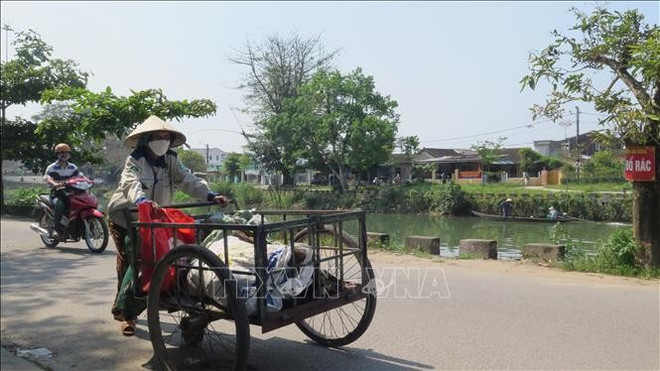
Members of the scrap-collecting cooperative group tirelessly travel through every street of Hue city, collecting and purchasing discarded items regardless of the weather. (VNA File photo)

According to Hoang Ngoc Tuong Van, the manager of the “Hue – A Plastic Smart City in Central Vietnam” project, the system ensures that discarded materials and packaging are delivered to certified recycling facilities. This creates a transparent mechanism that allows actors in the recycling supply chain, particularly those handling plastic waste, to benefit from financial contributions from producers and importers for their work, she explained.

By combining grassroots participation, digital technology, and supportive policy frameworks, Hue’s scrap-collecting cooperatives are proving that waste management can evolve into a sustainable value chain. The city is now moving beyond compliance with national regulations towards establishing a true circular waste economy, where waste becomes a resource./.


VNA

See more

Official heritage plaque i sinstalled on the 12 recognised Shan Tuyet tea trees in Dong Phuc commune. (Photo: VNA)

Thai Nguyen: 12 ancient Shan Tuyet tea trees win national heritage status

The recognition honours the biological, cultural and historical values of these centuries-old Shan Tuyet tea trees – natural treasures deeply woven into the livelihoods, traditions and identity of local ethnic communities. The title affirms the community’s commitment to preserving and promoting the value of this iconic local tea variety.

Sarus cranes at Tram Chim National Park (Photo: VNA)

Return of sarus cranes: Hope takes wing in Dong Thap wetland

Beneath the wide Mekong Delta sky, Tram Chim National Park is racing against time, pouring heart and science into a decade-long (2022–2032) plan to rescue the Eastern sarus crane – an elegant, scarlet-headed bird listed as endangered on the International Union for the Conservation of Nature (IUCN) Red List and a living emblem of both the park and all of Dong Thap province

French Ambassador Olivier Brochet speaks at the press conference in Hanoi on December 11 to mark the 10th anniversary of the Paris Agreement on climate change and highlighting the COP30 outcomes. (Photo: VNA)

International community ready to support Vietnam in energy transition, climate response

In a video message to the press conference, UN Resident Coordinator in Vietnam Pauline Tamesis said the UN is ready to support Vietnam in building a pipeline of projects capable of absorbing financing mobilised under the Political Declaration on establishing the Just Energy Transition Partnership (JETP), as well as from global climate finance sources, including the Green Climate Fund and the Loss and Damage Fund.

Forest rangers in Son La province apply technological devices and software to forest management, monitoring, and protection. (Photo: nhandan.vn)

Digital technology application enhances forest management, protection

With a total forest area of over 14 million hectares, including more than 10 million hectares of natural forests, forests exist in all 34 provinces and cities across the country. Given the large area and limited workforce, applying digital solutions in forest management and protection has become a top priority for the forestry sector.

Sunda pangolins (Manis javanica), also known as the Javan pangolin, are listed in Group IB – critically endangered and strictly protected from all commercial exploitation (Photo: VNA)

Quang Ngai releases rare pangolin back into nature

Initial verification showed that the animal weighed 3.7kg and measured over 60cm. It was identified as a Sunda pangolin (Manis javanica), also known as the Javan pangolin, listed in Group IB – critically endangered and strictly protected from all commercial exploitation.

Residents of Tuyen Quang province take part in the One Billion Trees Programme. (Photo: VNA)

Tree-planting programme exceeds one-billion-tree goal

The total comprises 573.9 million scattered trees and 865.2 million trees grown in concentrated plantations, equivalent to 429,125 hectares of forest. Provinces posting the strongest results include Phu Tho with 177.9 million trees, Lao Cai with 108.8 million, and An Giang with 98.5 million.

Construction activity is one of the causes of air pollution in Hanoi. (Photo: VNA)

Hanoi takes urgent measures to curb air pollution

The city requires the enhanced application of advanced technologies and remote monitoring systems, including satellite remote sensing, drones, and AI-integrated traffic cameras, to monitor, detect, and strictly address the illegal burning of garbage, straw, and agricultural by-products.