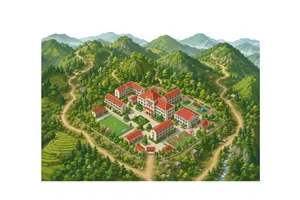
Hung Yen (VNA) – Le Quy Don commune, carved from the merger of Minh Tan, Doc Lap and Hong An, spans 21.72 sq.km and counts more than 23,500 residents. Named for the 18th-century scholar Le Quy Don, the locality is converting a heritage of scholarship, solidarity and upward drive into a brisk development sprint.
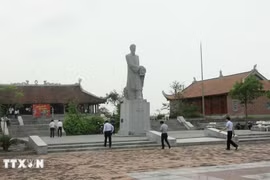
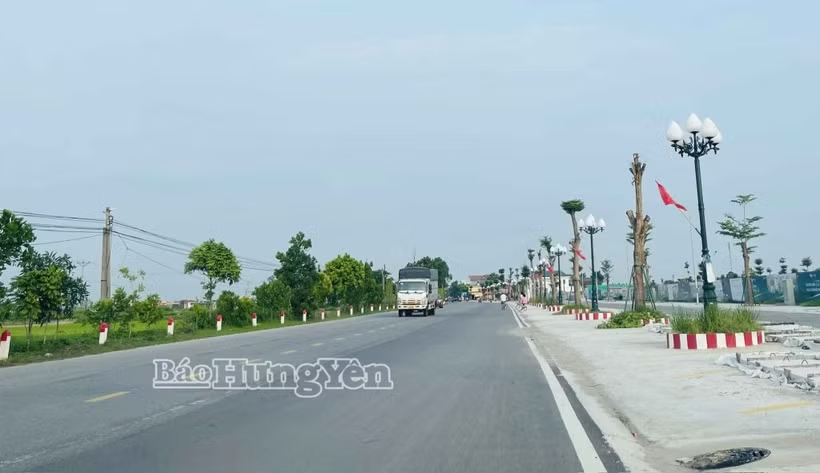
A new road connecting the Tran Tien Duc Temple special national relic site with the Le Quy Don memorial has just opened, bringing joy to Dong Phu village. It shortens travel times, boosts trade, and creates fresh opportunities for cultural tourism.
Every local road has been paved. Schools, health clinics and community houses have been upgraded in lockstep, while the environment is markedly brighter, greener and cleaner. In the push to build a new-style countryside, residents have donated land and injected more than 50 billion VND (1.92 million USD), alongside thousands of workdays, into public works. Streetlights now span 38 km of roads. A 7.3-ha model residential zone, Doc Lap, is channelling 115 billion VND of investment into 175 villas under construction, delivering new momentum and gradually shaping a modern, orderly rural landscape.
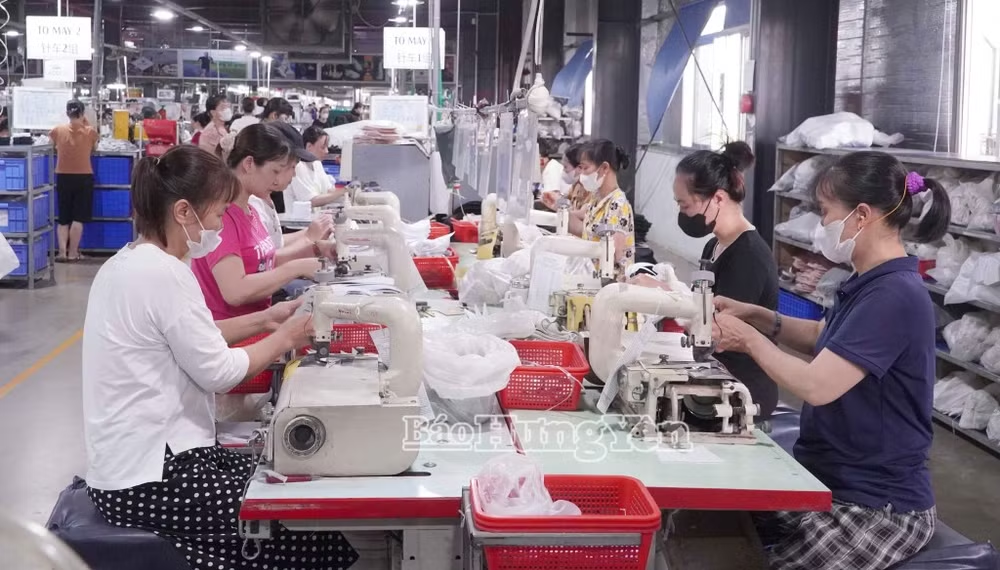
An economic bright spot is Tien Phong Co., a leather-footwear exporter serving European and American buyers. The factory provides stable jobs for nearly 1,600 local workers, lifting incomes and tilting the labour structure toward industrialisation.
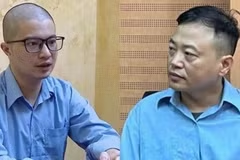
Luu Quang Dong, Chairman of the company’s trade union, said the plant churns out more than 7,000 pairs of shoes and 1,000 other units a day, generating annual revenue above 250 billion VND. Active support and tight coordination from local authorities have let the company expand production, add headcount and improve worker welfare.
Alongside industry, the farm economy is pivoting hard toward commercial output. Specialised zones cover 42 ha of melons and winter squash, 30 ha of safe vegetables and nearly 50 ha of aquaculture, while more than 130 farms and family-run livestock operations generate steady incomes.
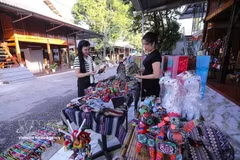
Traditional trades, such as dried longan processing, textile weaving and towel making, have been scaled, diversifying livelihoods and adding economic value.
By tapping its potential and strengths, Le Quy Don commune delivered an estimated total production value of nearly 2 trillion VND in the first half, a 9.5% year-on-year gain. State budget receipts exceeded 185 billion VND.
By 2030, the commune targets average annual economic growth of 11.06% and per capita income of 110 million VND, aiming to lock in status as a prosperous, civilised and sustainably developed locality.
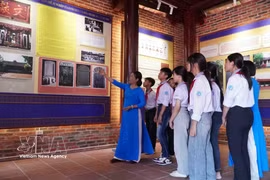
Nguyen Duy Hoan, Chairman of the communal People’s Committee, said the locality will keep its focus on finalising planning, rolling out coordinated infrastructure and scaling clean, hi-tech agriculture linked to enterprises. At the same time, it will preserve and leverage cultural heritage, launching projects to restore and upgrade the Le Quy Don memorial site, the Temple of President Ho Chi Minh and other historical landmarks, all ahead of the 300th birth anniversary of Le Quy Don.
With a proud tradition and the aspiration to build a prosperous and beautiful homeland, the commune is expected to continue making breakthroughs and emerge as a bright spot for development, living up to the legacy of the land that gave birth to a great scholar of the nation./.