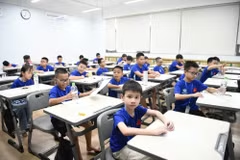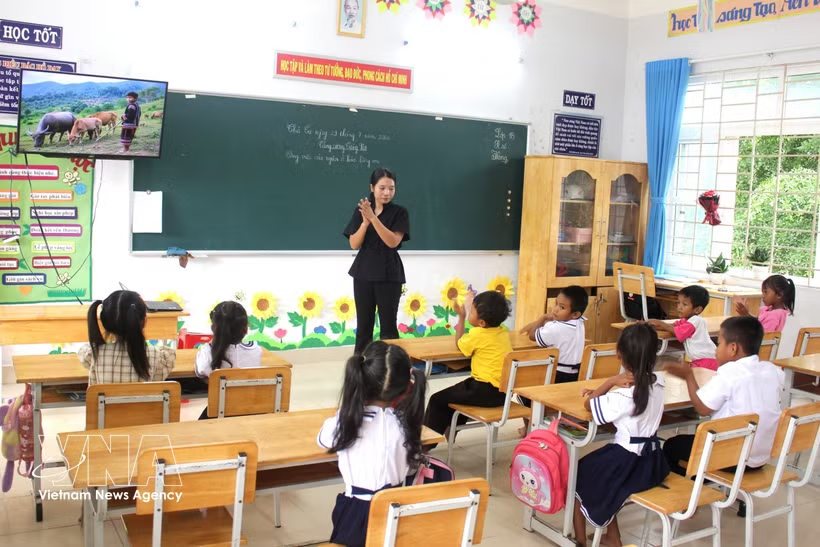
Can Tho (VNA) – More than 8,000 ethnic minority children in the Mekong Delta city of Can Tho will receive free Vietnamese language instruction before entering first grade in the 2026–2027 school year, as part of efforts to remove language barriers and improve access to education.
Backed by more than 4.2 billion VND (161,000 USD) from the State budget, the programme aims to strengthen children's Vietnamese communication skills before they begin primary school, helping them integrate more smoothly into the classroom and improve learning outcomes from the outset.
In the 2025–2026 school year, Can Tho recorded 51,910 first-grade pupils, including 10,857 ethnic minority students, who accounted for nearly 21% of total enrolment.
Director of the city's Department of Education and Training Tran Thi Huyen said 8,067 ethnic minority children currently have limited proficiency in Vietnamese and need language support before starting school, representing 74.3% of ethnic minority children preparing to enter first grade.
The city plans to provide the programme to about 8,059 children in the coming school year, with 319 teachers assigned to deliver the classes.
The initiative targets ethnic minority children living in communities where opportunities to use Vietnamese remain limited. It is designed to familiarise children with the language used in school, easing their transition from home to formal education. Similar pre-primary Vietnamese programmes have been implemented for years by the Ministry of Education and Training in localities with large ethnic minority populations.
Educational studies have consistently shown that Vietnamese proficiency is critical to learning across all primary school subjects. Children with limited language skills often struggle with reading comprehension, classroom communication and overall academic performance during their early school years.
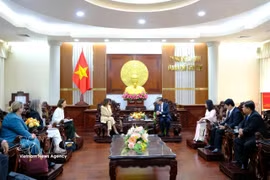
Vice Chairman of the Can Tho People's Committee Nguyen Van Khoi said the city will allocate more than 4.2 billion VND to fund teaching materials, learning resources and the organisation of classes.
Each participating child will receive learning materials worth up to 100,000 VND per course, and each teacher will be provided teaching materials valued at up to 340,000 VND, in line with Ministry of Education and Training regulations.
To maintain high teaching standards, schools will favour experienced teachers, especially those who speak ethnic minority languages and understand local customs and culture, ensuring each class has its own dedicated teacher.
According to Khoi, the programme aims to better prepare ethnic minority children for primary school by enhancing their Vietnamese language skills, communication abilities to engage with the national curriculum, thereby narrowing educational disparities and improving equal access to quality education.
The initiative is also expected to support Vietnam's broader goals of improving education quality in ethnic minority communities and advancing national socio-economic development programmes for ethnic minority and mountainous areas during the 2021–2030 period./.