Hanoi (VNA) - From the sacred soul of the Muong ethnic people to a journey onto the global stage, Mo Muong, part of the National Intangible Cultural Heritage, is presented with a major opportunity to affirm its value in the modern era.
More than the “Sacred Soul of the Muong Land”, Mo Muong is to be inscribed by UNESCO as an Intangible Cultural Heritage of Humanity. The journey is not only about safeguarding a valuable cultural tradition, but also about creating new opportunities for Muong culture to thrive in contemporary life.
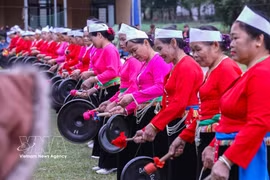
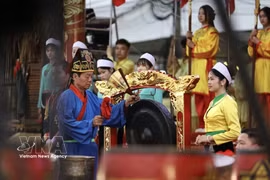
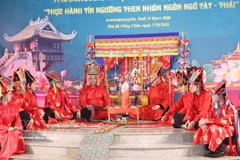
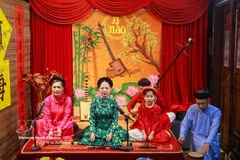
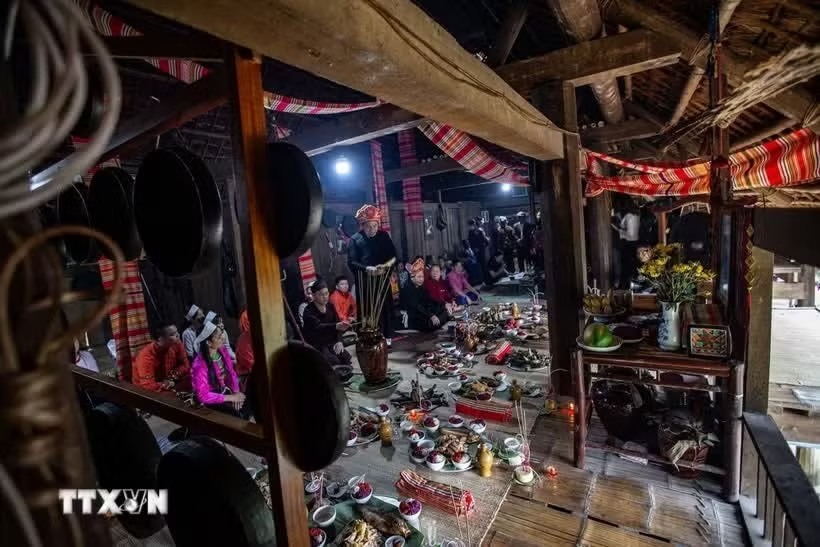
Mo is a folk performance carried out by Mo masters in rituals associated with the spiritual life of the Muong people, from birth to the return to their ancestors.
Mo masters are the custodians of this knowledge. They memorise tens of thousands of verses, have a deep understanding of rituals and customs, and are highly respected by their communities. Mo verses have been passed down from one generation to the next in the oral transmission, and preserved through traditional spiritual practices.
Researchers describe Mo Muong as a “folk encyclopaedia”, with tens of thousands of verses reflecting almost every aspect of Muong life, from cosmology and community history to customs, beliefs, production, and social conduct.
The heritage also preserves a rich vocabulary of the ancient Muong language, contributing to the cultural identity, spirit and vitality of the Muong people over generations.
Recognising the importance of Mo Muong, Vietnam has taken several measures to preserve and promote the heritage. In 2023, the Ministry of Culture, Sports and Tourism added the social practices and beliefs associated with Mo Muong in the former Ba Vi, Thach That and Quoc Oai districts of Hanoi to the National Intangible Cultural Heritage List.
In 2024, the Government agreed with a proposal from the Ministry of Culture, Sports and Tourism to submit Mo Muong, practised in Hoa Binh, Thanh Hoa, Ninh Binh, Phu Tho, Son La, Hanoi and Dak Lak, to UNESCO for consideration for inclusion on the List of Intangible Cultural Heritage in Need of Urgent Safeguarding.
Since then, a range of activities have been carried out, including collecting and cataloguing materials, compiling a Mo Muong dictionary, recording and filming rituals, documenting and digitising the heritage, and organising national and international scientific conferences.
Importantly, the dossier preparation process has received strong support from Muong communities in various localities. Community consent forms, an important UNESCO requirement, have been completed, demonstrating the community's agreement to preserve and pass the heritage on to future generations.
However, Mo Muong faces a number of challenges. Most Mo verses are still passed down orally, while many knowledgeable artisans are now elderly and there are relatively few younger people ready to carry on the tradition. Changes in social life have also meant that many traditional rituals are performed less frequently.
Against this backdrop, digital transformation is seen as an important solution. Politburo Resolution No. 80-NQ/TW sets a target of digitising 100% of nationally recognised cultural heritage by 2026, with the process to be completed by 2030.
In Muong areas of Phu Tho province, efforts are underway to record, film, collect and preserve Mo Muong materials. Artisans are also using smartphones, cameras and social media to document and share Mo verses and traditional rituals. Bringing the heritage into the digital space not only helps preserve valuable materials but also makes them more accessible to the public, particularly younger generations.
Mo Muong is not only a heritage tradition in need of preservation but also holds significant potential as a cultural resource for socio-economic development. Its rich collection of epics, myths and folk tales could provide valuable material for literature, film, theatre, animation and other creative industries.
In tourism, traditional festivals, Muong cultural spaces, ancient stilt houses, local cuisine and rituals associated with Mo Muong are increasingly attracting visitors. Many experts have proposed developing themed conservation areas centred on Mo Muong to create distinctive tourism products and promote Muong identity to domestic and international visitors. The heritage could serve as a valuable resource for education.
From the sacred soul of the Muong people to a journey onto the global stage, Mo Muong now has a major opportunity to reaffirm its value in the modern era. If inscribed by UNESCO, it would not only recognise a distinctive cultural heritage but also provide fresh impetus for communities to preserve, pass on, and promote the cultural values nurtured over thousands of years./.