Esports opens new growth avenues for Vietnam’s sports economy

Sports economic value is not measured solely by ticket sales, broadcasting rights, or sponsorships. An event can generate broader economic benefits by promoting a locality, attracting tourists, increasing consumption, creating jobs, and opening investment opportunities.

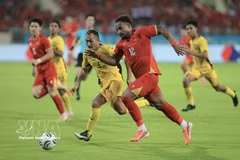
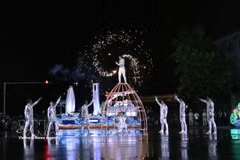
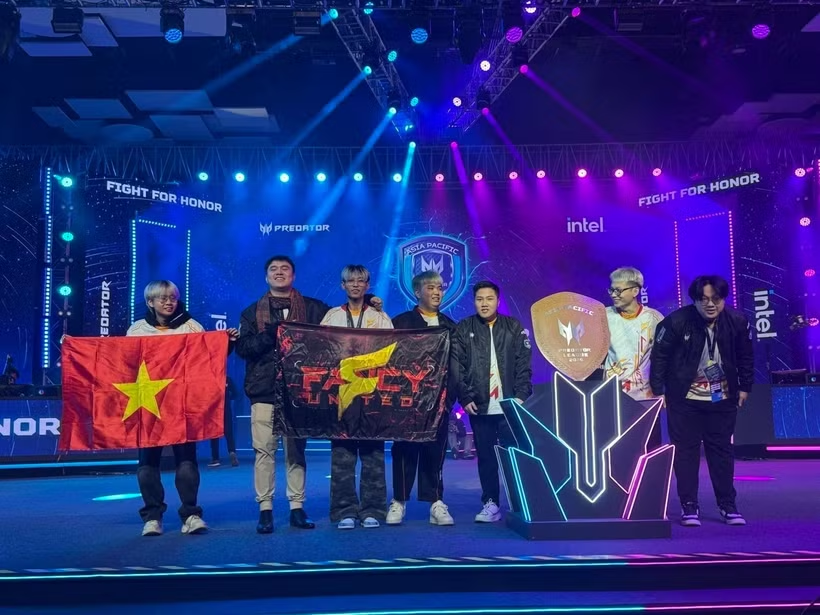
Vietnamese representative Team Fancy United Esports at the APAC Predator League 2026. (Photo published by VNA)

Hanoi (VNA) - Amid digital transformation and the rise of cultural industries, sports are increasingly emerging as an economic sector that generates added value, drives innovation, and creates new growth opportunities, with Esports offering a clear example of this shift.

Sports create value beyond medals

A match ends with the final whistle and a sporting event closes after weeks of competition, but the value generated by sports today extends far beyond results and medals. Images, stories, digital content, media rights, commercial activities, tourism, and fan communities built around events can extend their economic life well beyond the competition itself.

​This trend is taking place globally and is prompting Vietnam to rethink its approach to sports development.

For years, sports development was mainly assessed through international achievements or the number of people participating in physical activities. While these indicators remain important, they no longer fully capture the economic value that sports can generate.

​An increasing number of countries view sports as a comprehensive economic sector, with each event creating opportunities for media, tourism, trade, technology, advertising, and innovation.

​Digital transformation is accelerating this process. Technology is changing not only how people watch sports but also how businesses invest, competitions are organised, and value is created. Content from a match continues to reach audiences on digital platforms long after the event ends, while athletes can become content creators, brand ambassadors, and hubs of fan communities.

​Vietnam is gradually moving in this direction. Decision No. 1189/QD-TTg approving the national sports development strategy to 2045 sets the goal of developing the sports market, mobilising social resources, and promoting growth in the sports economy.

​According to Do Viet Hung, Chairman of the Vietnam Recreational and Electronic Sports Association (VIRESA), viewing sports solely from the competition perspective would make it difficult to fully tap their potential.

​“Esports is not simply a sport but a digital economic ecosystem built on technology, data, digital content and communities,” he said, adding that the model offers new approaches to creating value for the sports economy.

Sports economy enters digital era

​Sports economic value is not measured solely by ticket sales, broadcasting rights, or sponsorships. An event can generate broader economic benefits by promoting a locality, attracting tourists, increasing consumption, creating jobs, and opening investment opportunities.

​As a result, many countries are shifting from organising individual events to developing sports economic ecosystems involving event organisers, media companies, advertisers, equipment manufacturers, training institutions, tourism businesses, and e-commerce firms.

​The digital space is increasingly becoming a “second arena” for sports. Fans can watch, comment, share content, interact with athletes, and participate in online communities, extending an event’s lifespan through data, digital content, and audience engagement.

​Deputy Minister of Culture, Sports and Tourism Hoang Dao Cuong said Esports is not only a sport of the digital age but also a new industry. Under the “Esports+” approach, it should be connected with technology, education, culture, innovation, and international integration to become a driver of cultural industries, the sports economy, and the digital economy.

​In this sense, Esports offers a window into the future of Vietnam’s sports economy, where data, digital rights, fan communities, and technology-based business models can create value far beyond the playing field./.
VNA

See more

Spectators cheer on the teams in the final of the pickleball competition held by the Vietnamese Embassy in Laos in coordination with Vietnam's representative agencies and community in the country. (Photo: VNA)

Vietnamese community in Laos celebrates August Revolution, National Day

The celebration provides an opportunity for Vietnamese representative agencies and people in Laos to recall the nation’s proud traditions and express profound gratitude to late President Ho Chi Minh, revolutionary predecessors, fallen soldiers and all those who devoted and sacrificed themselves for national independence, freedom, peace and reunification.

Members of the organising committee announce information about the GBA Oktoberfest Vietnam 2026 cultural exchange festival. (Photo: VNA)

GBA Oktoberfest deepens Vietnam-Germany friendship

GBA Oktoberfest Vietnam 2026 in Da Nang will recreate a lively Bavarian atmosphere with performances by German-Austrian band O’zapft, traditional German cuisine prepared by experienced chefs, imported German beers and a range of non-alcoholic beverages.

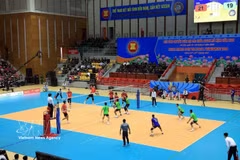
A men’s volleyball match between the Vietnam People’s Army team and the Myanmar Army team (Photo: VNA)

ASEAN Armies' Open Volleyball Tournament 2026 kicks off in Hanoi

Taking place until August 26, the tournament features six teams divided into two groups. Group A comprises the army teams of Vietnam, Myanmar and Cambodia, while Group B includes Ho Chi Minh City's police team, the Lao People’s Army's team and the Singapore Armed Forces' team.

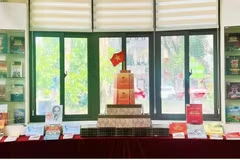
The exhibition features a selection of key documents on the August Revolution of 1945. (Photo: Hanoi Cultural and Library Centre)

Hanoi showcases hundreds of documents, books, newspapers on August Revolution

Featuring more than 300 documents, books and newspapers, the display highlights the role of the Communist Party of Vietnam and President Ho Chi Minh in the victory of the August Revolution, the historical significance and epochal stature of the 1945 Declaration of Independence, as well as Vietnam’s journey of renewal, international integration and development.

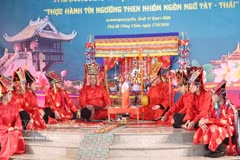
A Then master performs a ritual song to pray for blessings and good fortune at the programme in Vientiane. (Photo: VNA)

Culture helps strengthen Vietnam - Laos ties

Held at the Vietnam Cultural Centre in Laos, the programme featured 54 photographs, 119 representative artefacts and 12 excerpts from Then rituals, arranged around five themes covering traditional settlements and rice farming, weaving and indigo-dyed brocade, Then practices, the preservation of Then singing and the Tinh lute, and performances of ancient Then pieces.

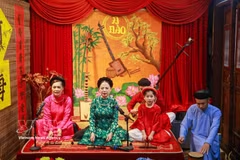
A performance of Ca tru, a traditional Vietnamese genre combining singing, poetry and instrumental music. (Photo: VNA)

Vietnam seeks to build national brand for cultural industries

The draft law on cultural industry development seeks to establish a formal legal status for cultural industries within the national economic structure and connect their value chains to boost economic value, exports and strategic investment while promoting Vietnamese identity and soft power internationally.

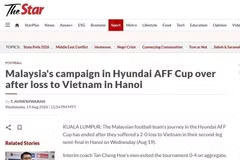
A story published on The Star about the second leg of the ASEAN Cup 2026 semifinals between Vietnam and Malaysia (Photo: Screenshot)

ASEAN Cup 2026: Xuan Son hailed as key to Vietnam’s final berth

The Asian Football Confederation (AFC) website particularly highlighted head coach Kim Sang Sik’s decision to bring Nguyen Xuan Son on in the 60th minute, saying Son’s introduction proved decisive, helping Vietnam break through Malaysia’s defensive setup.

National treasures on display at the Can Tho Museum feature QR codes that visitors can scan to access more information. (Photo: VNA)

Can Tho steps up digitalisation of cultural heritage

A digital portal on cultural heritage data of Can Tho will be built, supporting the city’s digital transformation targets in heritage management under Politburo Resolution No. 80-NQ/TW on developing Vietnamese culture.