Cuisine key to boosting Vietnam’s tourism brand

Cuisine should be viewed not merely as food but as a cultural resource, creative asset and driver of economic development amid the country's efforts to promote innovation, digital transformation, private-sector development, tourism and cultural industries.

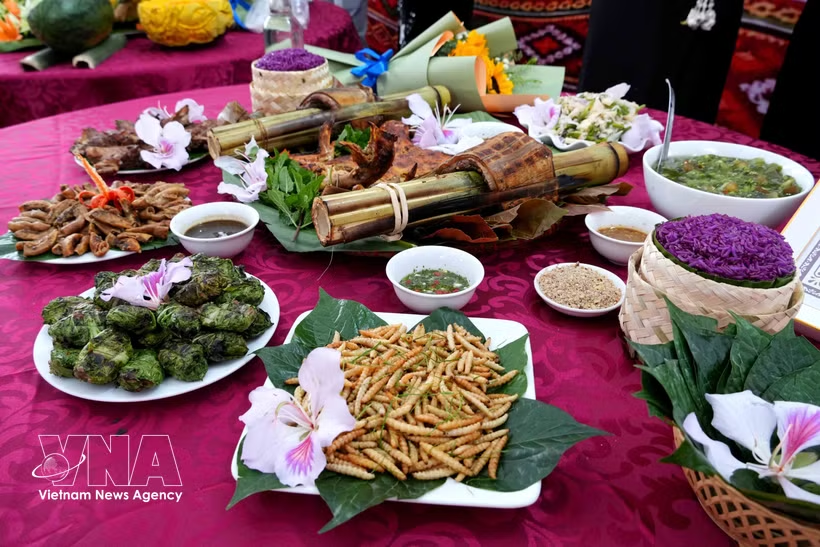
A meal imbued with the distinctive cultural identity of the Thai ethnic community in Dien Bien province. (Photo: VNA)

Hanoi (VNA) – Cuisine, which accounts for around 25-35% of tourists’ total trip spending, is emerging as a key factor in their destination choices while contributing to the development of cultural and creative industries, the night-time economy, regional connectivity and longer tourist stays.

Vietnam boasts a rich and diverse culinary heritage shaped over thousands of years and reflecting the cultural identities of its 54 ethnic groups. From royal and traditional cuisine to street food, craft villages and local specialties, the country has abundant resources for tourism development.

​The Vietnam National Authority of Tourism (VNAT) has advised the Ministry of Culture, Sports and Tourism to submit to the Government a project on promoting Vietnamese tourism and cuisine abroad for 2026-2030. The project aims to make cuisine a core element in positioning the national tourism brand and improving the competitiveness of Vietnamese destinations, with a goal of making Vietnam one of Asia’s five most attractive culinary destinations.

The project proposes building a national brand for culinary tourism, developing standardised food streets, completing quality standards, expanding networks of Vietnamese restaurants overseas and promoting Vietnamese cuisine in international markets. It also calls for developing Halal tourism and strengthening cooperation among localities and businesses in creating tourism products.
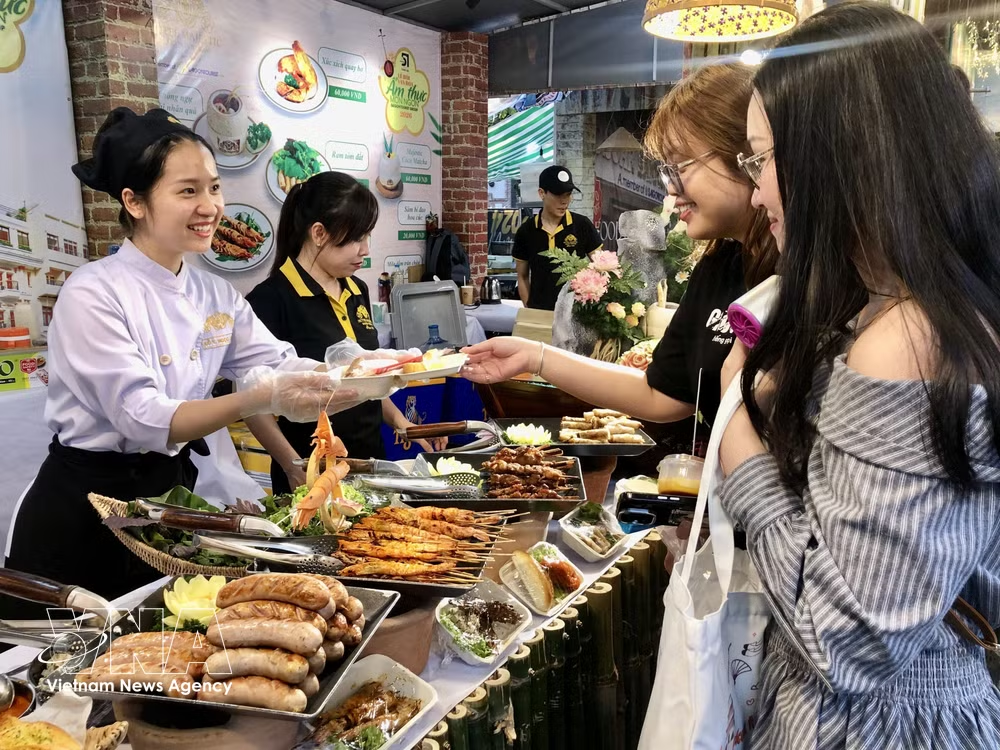
vnanet-am-thuc-2.jpg
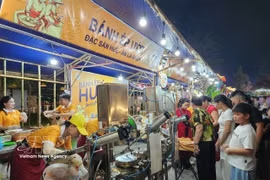
Visitors attend Saigontourist Group Culinary Culture, Delicacies Fesstival 2026, which takes place in Ho Chi Minh City on March 26. (Photo: VNA)

VNAT Vice Chairwoman Nguyen Thi Hoa Mai said countries such as Japan, Thailand, the Republic of Korea, Italy and China have developed national strategies to promote food tourism, focusing not only on promoting dishes but also on showcasing culinary culture and telling stories of history, customs and national identity.

The Vietnamese project similarly seeks to promote tourism based on culinary culture rather than cuisine alone.

"Every Vietnamese dish has its own historical and cultural values and indigenous knowledge, which could be shared through fascinating stories that would offer visitors deeper experiences," Mai said.

She stressed the need for a unified national strategy to connect and promote initiatives by localities and businesses, helping turn culinary tourism into an important driver of tourism development.

Building professional, sustainable culinary tourism ecosystem

Dr. Hoang Thi Binh, Deputy Director of the Vietnam Institute of Culture, Arts, Sports and Tourism, said cuisine should be viewed not merely as food but as a cultural resource, creative asset and driver of economic development amid the country's efforts to promote innovation, digital transformation, private-sector development, tourism and cultural industries.

She called for food producers and processors to improve quality and food safety while strengthening cultural storytelling, brand building and promotion. The sector should also develop culinary heritage spaces, strengthen human-resource training and promote street food, beverages and multisensory experiences.

​Nguyen Thi Lan Huong from the institute’s Tourism Research Department, said culinary tourism is becoming increasingly important as global tourists seek authentic, personalised and culturally distinctive experiences.

She suggested shifting from "selling food" to "building co-created experiences", allowing visitors to participate in cooking, explore craft villages and traditional markets, and interact with artisans.

Such experiences can enhance visitor satisfaction, preserve culinary heritage, create sustainable livelihoods for communities and improve Vietnam’s tourism competitiveness.

Le Thi Kim Phuong, Rector of Hoa Sua School of Economics and Tourism, said cuisine is a major competitive advantage for Vietnam but service quality and comprehensive standards are essential to turning culinary diversity into competitive and sustainable tourism products.

She called for standardised criteria and procedures for culinary tourism products, better human-resource training and closer links among management agencies, businesses, training institutions and communities.

Digital transformation should also be accelerated in promotion and quality management, towards professional and sustainable culinary tourism, Phuong said./.
VNA

See more

Fansipan dons a vibrant facade to usher in the Northwest's brilliant autumn festival season this September

Immerse in vibrant colours on the Roof of Indochina this autumn

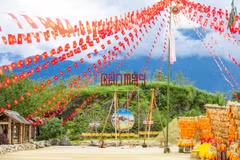
Fansipan has long been a must-visit destination for anyone exploring Vietnam’s Northwest. The journey to conquer the "Roof of Indochina" typically begins with a spectacular cable car ride soaring above the clouds. Nestled at the foot of the cable car station, Ban May Village welcomes visitors as a charming stopover, showcasing a different beauty in every season of the year.

Streets adorned with national flags to celebrate Vietnam's National Day on September 2nd

A journey through southern Vietnam during National Day

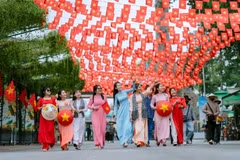
In the days surrounding National Day, the red flag with its five-pointed golden star appears across city streets, outside homes and on public buildings. For Vietnamese people, it is one of the most significant occasions of the year. For international visitors, it also offers a rare opportunity to observe, more vividly than usual, the connection between history, national pride and everyday life in contemporary Vietnam.

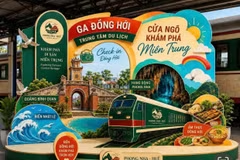
A new railway tourism service linking the former imperial city of Hue with Phong Nha-Ke Bang National Park is scheduled to begin operation on September 1. (Photo: hanoimoi.vn)

Tickets for Hue–Phong Nha tourist train go on sale

Rather than serving solely as a means of transport, the railway service will become an integral part of the tourism product, connecting Hue with Quang Tri’s historical, cultural and natural attractions, as well as Phong Nha-Ke Bang National Park.

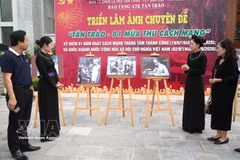
Visitors listen to an introduction to the thematic photo exhibition on Tan Trao and 81 autumns of revolution at the ATK Tan Trao Museum in Tuyen Quang province. (Photo: VNA)

Tuyen Quang's Tan Trao builds cultural-tourism brand around National Day celebrations

Hoang Van Canh, Standing Vice Chairman of the Tan Trao People’s Committee, said National Day is an occasion for local people to recall the nation’s glorious traditions and pay tribute to President Ho Chi Minh, revolutionary predecessors, fallen heroes and all those who sacrificed their lives for the independence and freedom of the Fatherland.

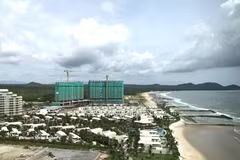
A host of tourism projects in the Ho Tram area of Ho Chi Minh City are helping shape a “world-class tourism hub”. (Photo: VNA)

Ho Chi Minh City tourism takes lead in expanding into international markets

Nguyen Cong Vinh, Vice Chairman of the municipal People's Committee, said tourism programmes combining air travel, trade, shopping, conferences, exhibitions, resorts, entertainment and cultural experiences should form an integrated service chain, increasing added value while extending visitors’ stays and boosting their spending. The tourism sector must strengthen resource sharing and work together to develop interconnected products capable of competing at both national and international levels.

Tourists explore Ky Anh Tunnels, Da Nang city. (Photo: VNA)

Vietnam finds ways to lure international tourists

Vietnam welcomed about 12.3 million international visitors in the first six months of 2026, up nearly 15% year-on-year, with China and the Republic of Korea remaining the two largest source markets. However, experts noted that growth in visitor numbers should go hand in hand with improvements in spending, length of stay, satisfaction and environmental and cultural sustainability.

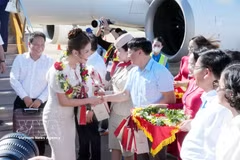
Aboard a Vietjet aircraft (Photo: VNA)

Vietjet adds 82,000 seats for National Day holiday peak

Additional flights will focus on routes connecting Ho Chi Minh City and Hanoi with popular economic and tourism hubs and destinations such as Da Nang, Nha Trang, Phu Quoc, Hue and Da Lat, giving passengers more choices in terms of travel times and itineraries during the peak period.

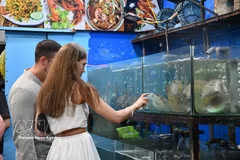
Russian tourists buy fresh seafood in Khanh Hoa province. (Photo: VNA)

Russian tourist wave hits Vietnam at record pace

The Association of Tour Operators of Russia (ATOR) expects Russian demand to keep surging in the second half. Russian Express sees a highly positive outlook, citing easy transport, a variety of resorts and limited seasonality.

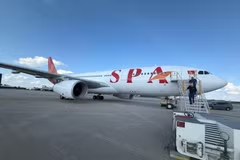
Sun PhuQuoc Airways to expand long-haul network with eight A330s

Sun PhuQuoc Airways to expand long-haul network with eight A330s

Sun PhuQuoc Airways has finalised plans to receive eight Airbus A330 wide-body aircraft, with four expected to join its fleet in 2026 and the remaining four to be delivered during the first four months of 2027. The move marks a key step in the airline’s strategy to expand its operations and progressively connect Phu Quoc with more distant international markets.