Destination links create longer, more attractive journeys

The goal is not simply to attract more visitors to individual provinces, but to create longer, richer journeys that boost local economies while preserving heritage, cultural identity and community livelihoods.

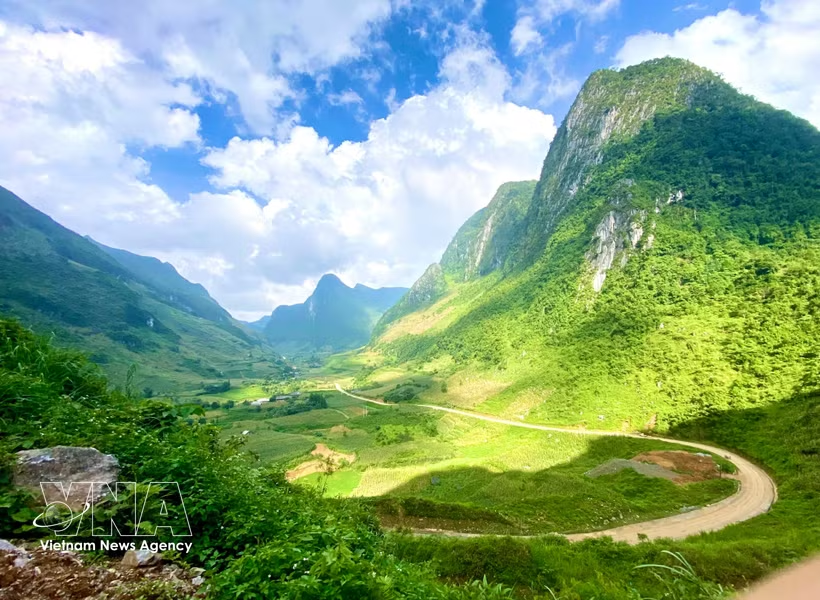
Xuan Truong Valley is located within the Non Nuoc Cao Bang UNESCO Global Geopark in Cao Bang province. (Photo: VNA)

Thai Nguyen (VNA) – The tourism industry is shifting from developing individual destinations to building connected journeys, with localities sharing resources, markets and value.

In the northern region, Thai Nguyen, Bac Ninh, Phu Tho, Tuyen Quang, Cao Bang and Lang Son hold strong potential to form an interprovincial tourism network thanks to their diverse landscapes, heritage, culture and tourism products.

Yet turning that potential into competitive products requires better infrastructure, services, business cooperation and coordination.

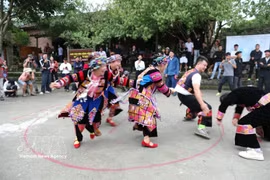
Each province offers distinctive attractions. Thai Nguyen is known for tea culture, revolutionary relics, forest landscapes and community-based tourism; Phu Tho for the Hung Kings heritage and Xoan singing; Bac Ninh for Quan ho folk songs, Kinh Bac culture and traditional craft villages; Tuyen Quang for revolutionary history and ethnic minority cultures; Cao Bang for mountains, waterfalls, caves, revolutionary history and local culture; and Lang Son for mountains, ethnic minority cultures and border tourism.

Linked together, these destinations could create longer, more diverse itineraries with multi-layered experiences, encouraging visitors to stay and spend more.

Pham Van Thuy, Deputy Director-General of the Vietnam National Authority of Tourism, said cooperation should go beyond joint promotion to shared products, markets and value chains, shifting from “locality-to-locality cooperation” to “destination-to-destination connectivity”.

To Vu Ninh, Director of the Cao Bang Department of Culture, Sports and Tourism, said the province could serve as both a northern gateway for international visitors, particularly from China, and an end destination for tourists travelling from the South.

Ha Thi Bich Hong, Director of the Thai Nguyen Department of Culture, Sports and Tourism, said her province’s expanded development space following the merger of administrative units offers opportunities to connect its industrialised southern area with the northern area’s forests, lakes, heritage and community-based tourism.

Improved highways and interprovincial roads are helping shorten travel times and facilitate multi-day tours. However, better transport must be matched by attractive products, quality services and convenient information access.

The six provinces are recommended to develop common themes covering heritage and culture, revolutionary history, nature and ecotourism, community-based tourism, cuisine and local specialties. Each locality should handle a specific link in the chain, but the final product should be designed as a unified journey.

Thai Hai village in Thai Nguyen's Tan Cuong commune, recognised among the World's Best Tourism Villages, demonstrates the potential of community-based tourism.

Le Thi Nga, deputy head of the village, said visitors are increasingly seeking authentic cultural and community experiences. If destinations are effectively linked, each locality can both showcase its unique identity and become part of a broader journey of discovery for travellers.

Tourism businesses need stronger cooperation in designing tours, sharing visitor markets, promoting products and maintaining service standards, said Do Trong Hiep, Chairman of the Thai Nguyen Tourism Association.

Service-quality gaps remain a challenge. Connectivity must therefore extend beyond roads to accommodation, food, guiding, transport, environmental standards and promotion.

Thuy suggested the six provinces develop annual action plans with clear responsibilities, resources and deadlines, alongside regular assessments of cooperation. Digital transformation should also be leveraged to strengthen destination competitiveness and build a smart tourism ecosystem.

Ultimately, the goal is not simply to attract more visitors to individual provinces, but to create longer, richer journeys that boost local economies while preserving heritage, cultural identity and community livelihoods./.​

VNA

See more

Fansipan dons a vibrant facade to usher in the Northwest's brilliant autumn festival season this September

Immerse in vibrant colours on the Roof of Indochina this autumn

Fansipan has long been a must-visit destination for anyone exploring Vietnam’s Northwest. The journey to conquer the "Roof of Indochina" typically begins with a spectacular cable car ride soaring above the clouds. Nestled at the foot of the cable car station, Ban May Village welcomes visitors as a charming stopover, showcasing a different beauty in every season of the year.

Streets adorned with national flags to celebrate Vietnam's National Day on September 2nd

A journey through southern Vietnam during National Day

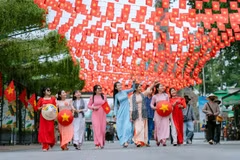
In the days surrounding National Day, the red flag with its five-pointed golden star appears across city streets, outside homes and on public buildings. For Vietnamese people, it is one of the most significant occasions of the year. For international visitors, it also offers a rare opportunity to observe, more vividly than usual, the connection between history, national pride and everyday life in contemporary Vietnam.

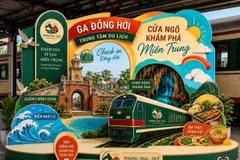
A new railway tourism service linking the former imperial city of Hue with Phong Nha-Ke Bang National Park is scheduled to begin operation on September 1. (Photo: hanoimoi.vn)

Tickets for Hue–Phong Nha tourist train go on sale

Rather than serving solely as a means of transport, the railway service will become an integral part of the tourism product, connecting Hue with Quang Tri’s historical, cultural and natural attractions, as well as Phong Nha-Ke Bang National Park.

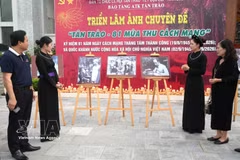
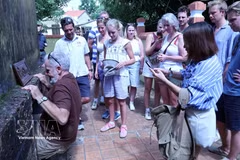
Visitors listen to an introduction to the thematic photo exhibition on Tan Trao and 81 autumns of revolution at the ATK Tan Trao Museum in Tuyen Quang province. (Photo: VNA)

Tuyen Quang's Tan Trao builds cultural-tourism brand around National Day celebrations

Hoang Van Canh, Standing Vice Chairman of the Tan Trao People’s Committee, said National Day is an occasion for local people to recall the nation’s glorious traditions and pay tribute to President Ho Chi Minh, revolutionary predecessors, fallen heroes and all those who sacrificed their lives for the independence and freedom of the Fatherland.

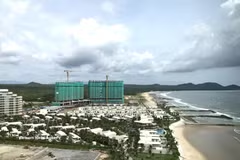
A host of tourism projects in the Ho Tram area of Ho Chi Minh City are helping shape a “world-class tourism hub”. (Photo: VNA)

Ho Chi Minh City tourism takes lead in expanding into international markets

Nguyen Cong Vinh, Vice Chairman of the municipal People's Committee, said tourism programmes combining air travel, trade, shopping, conferences, exhibitions, resorts, entertainment and cultural experiences should form an integrated service chain, increasing added value while extending visitors’ stays and boosting their spending. The tourism sector must strengthen resource sharing and work together to develop interconnected products capable of competing at both national and international levels.

Tourists explore Ky Anh Tunnels, Da Nang city. (Photo: VNA)

Vietnam finds ways to lure international tourists

Vietnam welcomed about 12.3 million international visitors in the first six months of 2026, up nearly 15% year-on-year, with China and the Republic of Korea remaining the two largest source markets. However, experts noted that growth in visitor numbers should go hand in hand with improvements in spending, length of stay, satisfaction and environmental and cultural sustainability.

Aboard a Vietjet aircraft (Photo: VNA)

Vietjet adds 82,000 seats for National Day holiday peak

Additional flights will focus on routes connecting Ho Chi Minh City and Hanoi with popular economic and tourism hubs and destinations such as Da Nang, Nha Trang, Phu Quoc, Hue and Da Lat, giving passengers more choices in terms of travel times and itineraries during the peak period.

Russian tourists buy fresh seafood in Khanh Hoa province. (Photo: VNA)

Russian tourist wave hits Vietnam at record pace

The Association of Tour Operators of Russia (ATOR) expects Russian demand to keep surging in the second half. Russian Express sees a highly positive outlook, citing easy transport, a variety of resorts and limited seasonality.

Sun PhuQuoc Airways to expand long-haul network with eight A330s

Sun PhuQuoc Airways to expand long-haul network with eight A330s

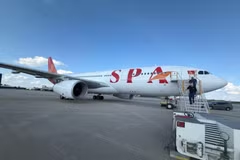
Sun PhuQuoc Airways has finalised plans to receive eight Airbus A330 wide-body aircraft, with four expected to join its fleet in 2026 and the remaining four to be delivered during the first four months of 2027. The move marks a key step in the airline’s strategy to expand its operations and progressively connect Phu Quoc with more distant international markets.

Hoi An Ancient Town in Da Nang city is a magnet for both domestic and foreign visitors. (Photo: VNA)

More European travellers love to visit Vietnam

A recent report from Agoda has revealed that Vietnam has been ranked among the top spots as the most-searched Asian destinations by European travellers, showcasing a surge in interest among global tourists.